暑い, 熱い, 暖かい, 温かい: four temperature words, two of them homophones暑い・熱い・暖かい・温かい: 四つの言葉と、二組の同じ読み方
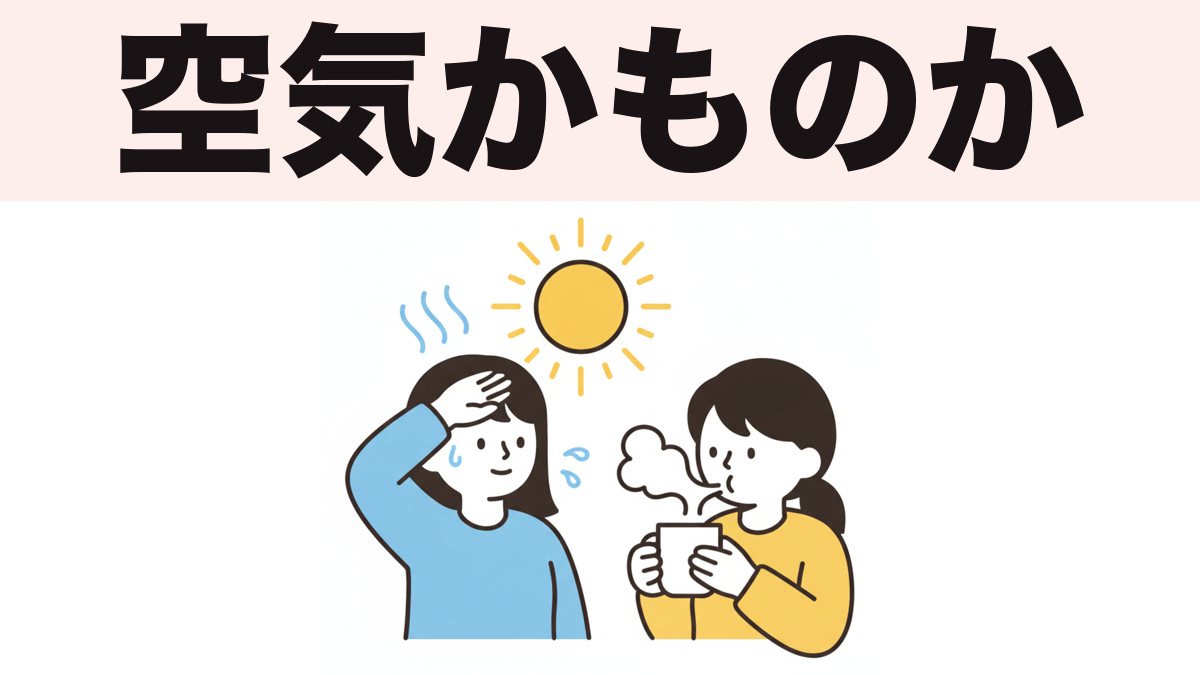
暑い and 熱い are both あつい; 暖かい and 温かい are both あたたかい. In each pair, the first one is about the air around you and the second is about a thing you could touch. That single rule covers almost every case.
「暑い」と「熱い」はどちらも「あつい」です。「暖かい」と「温かい」はどちらも「あたたかい」です。どちらの組でも、はじめの方は「まわりの空気」、あとの方は「さわれるもの」です。このルールでほとんど決まります。
Spoken Japanese does not distinguish them at all, which is why this is a reading and writing problem rather than a listening one. The trouble arrives the moment you type, because your input method will offer you both and pick the wrong one if you let it.
The basics
暑い vs 熱い
暑い is hot weather, or the sensation of being hot because of the environment. 熱い is a hot object — coffee, a bath, a pan.
今日は暑いですね。 — It's hot today, isn't it. (polite — the weather) このコーヒーは熱いです。 — This coffee is hot. (polite — an object)
The kanji tell you: 暑 contains 日, the sun. 熱 contains the fire radical at the bottom. Sun for the weather, fire for the thing.
暖かい vs 温かい
The same split at a lower temperature. 暖かい is warm air or a warm environment; 温かい is a warm thing you could touch, including food and drink.
春は暖かいです。 — Spring is warm. (polite — the season) 温かいスープが飲みたい。 — I want some warm soup. (casual — an object)
温かい also extends to people and feelings: 温かい言葉, "kind words", 温かい人, "a warm person". 暖かい cannot do this, because air has no personality.
寒い vs 冷たい — the cold side works the same way
The cold pair is easier because the readings are different, but the same logic applies.
今日は寒いです。 — It's cold today. (polite — the air) 手が冷たい。 — My hands are cold. (casual — a thing)
寒い is the environment, 冷たい is an object. And 冷たい, like 温かい, extends to people: 冷たい人 is a cold-hearted person. The full weather set is in Japanese weather vocabulary.
Beyond the basics
Your own body is an object
This is the exception that catches people. If a part of you is hot or cold, it is a thing, not an environment.
頭が熱い。 — My head feels hot. (casual — possibly a fever) 足が冷たい。 — My feet are cold. (casual)
But if you as a whole are hot because the room is hot, that is 暑い: 暑いから窓を開けよう. Whole person in an environment takes the environment word; a body part takes the object word.
The figurative 熱い
熱い is the one with emotional range: passionate, intense, heated.
熱い試合だった。 — It was an intense match. (casual) 熱い人 — a passionate person (casual, positive)
暑い cannot be used this way. A 熱い人 is fired up; an 暑い人 is just someone who is too warm.
Why your keyboard will get it wrong
Typing あつい gives you a list, and the conversion picks whichever candidate it used last. This means the most common written error is not a knowledge error at all — it is a conversion the writer did not check.
The fix is a habit: when you type あつい or あたたかい, look at what came out before you send it. Air or object. This is the same problem that makes 変換ミス a recognised category of Japanese typo, and it is why native speakers make these errors too.
あったかい and あっつい
In casual speech both words get a small っ inserted for emphasis.
あったかい! — Ooh, warm! (casual — holding a hot drink) あっつ! — Ow, hot! (casual — an exclamation, often cut short)
These are not misspellings; they are spoken emphasis, written as heard. あっつ on its own, cut off before the い, is the standard reaction to touching something too hot.
Which one for a bath?
お風呂 is 熱い when it is too hot to get into, and 温かい when it is pleasantly warm. Both appear on the same evening. The bath is unambiguously an object, so 暑い never applies to it — a common learner error, and one that reads as a category mistake rather than a spelling slip.
All four words are い-adjectives, so they change form the same way (暑かった, 温かくない). If that pattern is new, see い-adjectives vs な-adjectives.
Common mistakes
- Using 暑い for coffee. Coffee is a thing: 熱いコーヒー. 暑いコーヒー suggests the coffee is experiencing summer.
- Using 温かい for the weather. Warm weather is 暖かい. 温かい天気 sounds like the weather is a bowl of soup.
- Saying 暑い about your hands. A body part is an object: 手が熱い.
- Trusting the kanji conversion. Check what came out. This is where most written errors happen.
- Using 暑い figuratively. Passion is 熱い. 暑い試合 would be a match played in hot weather.
The four-way table
| Word | Reading | Applies to | Example |
|---|---|---|---|
| 暑い | あつい | Weather, environment | 今日は暑い |
| 熱い | あつい | Objects; passion | 熱いコーヒー, 熱い試合 |
| 暖かい | あたたかい | Weather, environment | 暖かい春 |
| 温かい | あたたかい | Objects; people, feelings | 温かいスープ, 温かい人 |
| 寒い | さむい | Weather, environment | 今日は寒い |
| 冷たい | つめたい | Objects; cold-hearted people | 冷たい水, 冷たい人 |
FAQ
Do Japanese people ever mix these up? In writing, yes — the kanji conversion does it for them, and 変換ミス of exactly this kind is common enough to be a running joke.
Which one do I use for a hot spring? 温泉 itself is a place, but the water is an object: お湯が熱い if it is too hot to enter.
Is 暖かい ever used for objects? For clothing and bedding it does appear — 暖かいコート — because the coat's job is to make the air around you warm. This is the main crossover case.
How do I say "warm-hearted"? 温かい人 or 心が温かい. 暖かい人 is not used, because 暖 belongs to the air.
What is the difference between 冷たい and 涼しい? 涼しい is pleasantly cool air — a nice breeze. 冷たい is a cold object. 涼しい is positive; 寒い is the uncomfortable version of the same environment.
Does this matter if I only speak? Less, since the readings are identical. It matters the moment you type or read, which for most learners is daily.
Practice
Build each answer before opening it. Questions 1 and 2 are a pair — same reading, different kanji.
1. Say "it's hot today."
Show answer
今日は暑いですね — 暑 contains 日, the sun. Weather. This is the pair to question 2.
2. Say "this coffee is hot."
Show answer
このコーヒーは熱いです — 熱 has the fire radical. An object. This is the pair to question 1.
3. Say "spring is warm."
Show answer
春は暖かいです — the environment takes 暖.
4. Say "I want some warm soup."
Show answer
温かいスープが飲みたい — food is an object, so 温.
5. Something is wrong here: 暑いコーヒーを飲みました。
Show answer
熱いコーヒーを飲みました — 暑い would suggest the coffee is experiencing hot weather.
6. Say "my hands are cold."
Show answer
手が冷たい — a body part is an object. 寒い is for the environment.
7. Say "it was an intense match."
Show answer
熱い試合だった — only 熱い has the figurative, passionate meaning.
8. Describe someone as warm-hearted.
Show answer
温かい人 — 暖かい belongs to air and cannot describe a person.
9. You are hot because the room is hot. Which word?
Show answer
暑い — a whole person in an environment takes the environment word. A body part would take 熱い.
10. You touch a pan and pull your hand back. What do you say?
Show answer
あっつ! — the emphatic spoken form of 熱い, usually cut off before the い.
Vocabulary from this article
Tap the block to select all of it, then copy. In Anki: File → Import, note type Basic, separator Tab — the first column becomes the front, the second the back.
暑い	あつい — hot (weather)
熱い	あつい — hot (object); passionate
暖かい	あたたかい — warm (weather)
温かい	あたたかい — warm (object, person)
寒い	さむい — cold (weather)
冷たい	つめたい — cold (object, person)
涼しい	すずしい — pleasantly cool
春	はる — spring
天気	てんき — weather
風呂	ふろ — bath
湯	ゆ — hot water
手	て — hand
足	あし — foot, leg
試合	しあい — match, game
言葉	ことば — words
飲む	のむ — to drink
I'm Yuuki, a Japanese teacher based in Tokyo. I've taught on italki as a Top 1% teacher and watched over 1,500 anime. Air or object is the only rule you need here, and it has held up for every student I have given it to — including for the bath, which is the case people always ask about next.
Sources: the author's own lessons and standard reference grammars.
話すときは、まったく同じ音です。だから、これは読み書きのもんだいです。こまるのは、書くときです。へんかんが両方出して、見ないと まちがった方をえらびます。
基本
暑い と 熱い
「暑い」は天気です。まわりのせいで暑いときも使います。「熱い」はものです。コーヒー、おふろ、フライパンなどです。
今日は暑いですね。 — It's hot today, isn't it. (polite — the weather) このコーヒーは熱いです。 — This coffee is hot. (polite — an object)
漢字を見てください。「暑」には「日」(たいよう)が入っています。「熱」には下に火のぶぶんがあります。天気は日、ものは火です。
暖かい と 温かい
低いおんどでも同じです。「暖かい」は空気やきせつ、「温かい」はさわれるもの、食べもの、のみものです。
春は暖かいです。 — Spring is warm. (polite — the season) 温かいスープが飲みたい。 — I want some warm soup. (casual — an object)
「温かい」は人や気もちにも使えます。「温かい言葉」「温かい人」。「暖かい」は使えません。空気に気もちはないからです。
寒い と 冷たい
さむい方も同じ考え方です。読み方がちがうので、こちらはかんたんです。
今日は寒いです。 — It's cold today. (polite — the air) 手が冷たい。 — My hands are cold. (casual — a thing)
「寒い」はまわり、「冷たい」はものです。「冷たい人」は心のつめたい人です。→ 天気の言葉
もう少しくわしく
自分の体は「もの」
ここがまちがえやすいところです。体のぶぶんは「もの」です。
頭が熱い。 — My head feels hot. (casual — possibly a fever) 足が冷たい。 — My feet are cold. (casual)
でも、へやが暑くて自分も暑いときは「暑い」です。「暑いから窓を開けよう」。人ぜんたいは「まわり」の言葉、体のぶぶんは「もの」の言葉です。
気もちの「熱い」
「熱い」には、気もちの意味もあります。
熱い試合だった。 — It was an intense match. (casual) 熱い人 — a passionate person (casual, positive)
「暑い」はこの意味では使えません。「暑い人」は、ただあつがっている人です。
へんかんでまちがえる
「あつい」と打つと、いくつも出ます。へんかんは、前に使ったものをえらびます。だから、いちばん多いまちがいは「知らなかった」ではなく「見なかった」です。
打ったら見る、というしゅうかんをつけてください。空気か、ものか。日本語話者もまちがえます。
「あったかい」「あっつ」
会話では、小さい「っ」を入れて強く言います。
あったかい! — Ooh, warm! (casual — holding a hot drink) あっつ! — Ow, hot! (casual — an exclamation, often cut short)
まちがった書き方ではありません。聞こえたとおりに書いた形です。
おふろは?
入れないほど熱いときは「熱い」、ちょうどいいときは「温かい」です。同じ夜に両方出ます。おふろは「もの」なので、「暑い」は使いません。
よくあるまちがい
- コーヒーに「暑い」を使う。 「熱いコーヒー」です。
- 天気に「温かい」を使う。 「暖かい天気」です。
- 手に「暑い」を使う。 体のぶぶんは「熱い」です。
- へんかんをたしかめない。 書いたまちがいのほとんどはここです。
- 気もちに「暑い」を使う。 気もちは「熱い」です。
四つの表
| 言葉 | よみ | 使うもの | 例 |
|---|---|---|---|
| 暑い | あつい | 天気・まわり | 今日は暑い |
| 熱い | あつい | もの・気もち | 熱いコーヒー・熱い試合 |
| 暖かい | あたたかい | 天気・まわり | 暖かい春 |
| 温かい | あたたかい | もの・人・気もち | 温かいスープ・温かい人 |
| 寒い | さむい | 天気・まわり | 今日は寒い |
| 冷たい | つめたい | もの・心のつめたい人 | 冷たい水・冷たい人 |
よくある質問
日本語話者もまちがえる? 書くときはまちがえます。へんかんのミスはよくあります。
温泉はどちら? 温泉は場所ですが、お湯は「もの」です。入れないほどなら「お湯が熱い」です。
「暖かい」をものに使うことは? 服やふとんには使います。「暖かいコート」。コートはまわりの空気をあたためるものだからです。
「心があたたかい」はどちら? 「温かい人」「心が温かい」です。「暖」は空気の漢字です。
「冷たい」と「涼しい」のちがいは? 「涼しい」は気もちのいいすずしさです。「冷たい」はものです。
話すだけなら関係ない? 読み方は同じなので、話すときは関係ありません。でも、打つとき・読むときに毎日出てきます。
練習
答えを見る前に、自分で作ってください。1番と2番はペアです。
1. 「今日は暑いですね」と言う。
答えを見る
今日は暑いですね — 「暑」には「日」が入っています。天気です。2番とペアです。
2. 「このコーヒーは熱いです」と言う。
答えを見る
このコーヒーは熱いです — 「熱」には火のぶぶんがあります。ものです。1番とペアです。
3. 「春はあたたかいです」と言う。
答えを見る
春は暖かいです — きせつは「暖」です。
4. 「あたたかいスープが飲みたい」と言う。
答えを見る
温かいスープが飲みたい — 食べものは「温」です。
5. まちがいをなおす: 暑いコーヒーを飲みました。
答えを見る
熱いコーヒーを飲みました — 「暑い」だとコーヒーが夏にいるようです。
6. 「手がつめたい」と言う。
答えを見る
手が冷たい — 体のぶぶんは「もの」です。
7. 「もりあがった試合だった」と言う。
答えを見る
熱い試合だった — 気もちの意味があるのは「熱い」だけです。
8. 「心があたたかい人」と言う。
答えを見る
温かい人 — 「暖かい」は空気の漢字です。
9. へやが暑くて、自分も暑いです。どちら?
答えを見る
暑い — 人ぜんたいは「まわり」の言葉です。体のぶぶんなら「熱い」です。
10. フライパンにさわって手を引きました。何と言う?
答えを見る
あっつ! — 「熱い」を強く言った形です。
この記事に出た単語
上のブロックをタップしてぜんぶ選んで、コピーしてください。Ankiでは ファイル → インポート、ノートタイプは 基本、区切りは タブ です。左が表、右がうらになります。
暑い	あつい — hot (weather)
熱い	あつい — hot (object); passionate
暖かい	あたたかい — warm (weather)
温かい	あたたかい — warm (object, person)
寒い	さむい — cold (weather)
冷たい	つめたい — cold (object, person)
涼しい	すずしい — pleasantly cool
春	はる — spring
天気	てんき — weather
風呂	ふろ — bath
湯	ゆ — hot water
手	て — hand
足	あし — foot, leg
試合	しあい — match, game
言葉	ことば — words
飲む	のむ — to drink
More drills like the ones above, plus a timed JLPT-style mock test: Practice · N5上のような練習問題と、時間つきのJLPT形式のもぎ試験: 練習ページ · N5
Want to try this in a real conversation?
本当の会話で、ためしてみませんか?
30-minute trial lesson, $13. Times shown in your own timezone.
30分の体験レッスン、$13。時間はあなたのタイムゾーンで表示されます。
Book a trial lesson · $13