How long does it really take to learn Japanese?日本語を身につけるのに本当はどれくらいかかるか
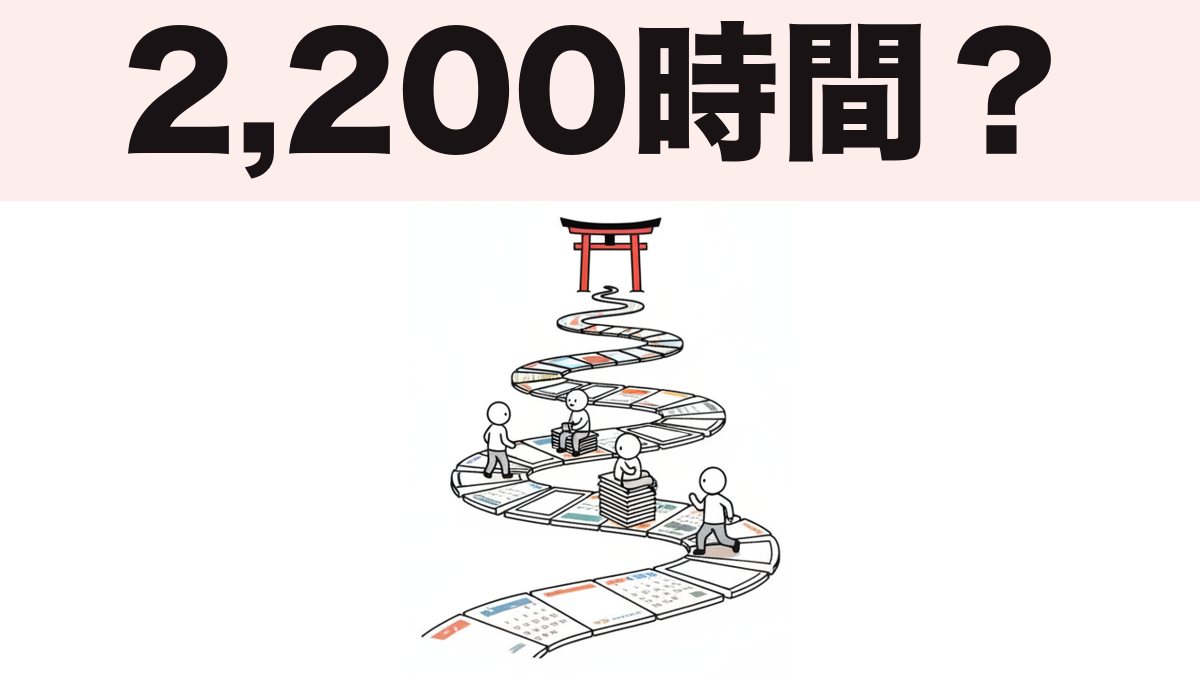
The number people quote is 2,200 hours, and it answers a question most learners are not asking. Holding a real ten-minute conversation takes roughly 200 to 500 hours, and the single biggest variable is not talent but how often you speak. Decide which finish line you actually want, convert it into weekly hours, and the timeline stops being mysterious.
日本語の勉強でよく出てくる数字は2,200時間です。
“How long does it take?” is the first question I get in almost every trial lesson, and the honest answer is a question back: how long until what? Ordering lunch, following an anime scene without subtitles, and reading a contract are three different projects with three different price tags. This guide breaks the road into stages you can recognise from the inside, converts each stage into a realistic calendar, and explains which habits actually move the number.
The basics
Where the 2,200 hour number comes from
The US Foreign Service Institute trains diplomats and publishes rough expectations for how long its courses take. Japanese sits in the hardest group, alongside Chinese, Korean and Arabic, at around 88 weeks of intensive instruction, commonly summarised as 2,200 class hours. It is a real figure from a real programme, so it is worth respecting.
It is also worth reading carefully. Those hours describe full-time study by selected adults working towards professional working proficiency, which includes reading newspapers and handling meetings. That is a specific, demanding target. Most people asking me this question want to talk to someone, watch a show, or travel without freezing at a ticket machine, and those goals sit much earlier on the same road.
What the hours actually buy you
This is the breakdown I use with students. The hours are total contact with the language, not only lesson time: self-study, listening, reading and conversation all count.
| Hours | What you can usually do | What still breaks |
|---|---|---|
| 0–50 | Greetings, self-introduction, numbers, ordering food | You cannot understand the reply |
| 50–200 | Start a conversation and ask simple questions | The conversation dies after two turns |
| 200–500 | Hold a ten-minute conversation on a familiar topic | Unfamiliar topics and fast speech |
| 500–1,200 | Follow two Japanese people talking, handle new topics by asking | Reading, keigo, abstract subjects |
| 1,200–2,200 | Work, nuance, sustained reading | Everything specialised, for years |
The interesting row is the third one. Somewhere around 200 to 500 hours, most students stop translating in their heads and start recognising. That is the moment people mean when they say they can speak Japanese, and it arrives at roughly a fifth of the famous number.
The first sentences, and what they hide
Within the first few weeks you can produce genuinely useful Japanese.
はじめまして。ユウキです。よろしくお願いします。 — Nice to meet you. I am Yuuki. I look forward to talking with you. すみません、これをください。 — Excuse me, I will take this one, please.
These feel like enormous progress, and they are. What they hide is that speaking and understanding grow at different speeds. You can say a sentence correctly and still miss the answer entirely, because the answer was not on your list. That gap is normal, and it is why the next two sentences matter more than any vocabulary set.
もう一度お願いします。 — One more time, please. ゆっくり話してもらえますか。 — Could you speak slowly?
A learner who can ask for a repeat stays in the conversation. A learner who cannot leaves it. If you want more of these repair tools before your first real exchange, my guide to a Japanese self-introduction covers the opening, and two questions that keep a conversation alive covers what to do once the opening is over.
Beyond the basics
Converting hours into a calendar
Hours only become a timeline once you decide on a weekly budget. This table assumes total contact time, and it rounds generously.
| Weekly hours | Reach 200 hours | Reach 500 hours | Reach 1,200 hours |
|---|---|---|---|
| 2 | about 2 years | about 5 years | about 12 years |
| 5 | about 9 months | about 2 years | about 4.5 years |
| 10 | about 5 months | about 1 year | about 2.5 years |
| 20 | about 2.5 months | about 6 months | about 1 year |
Two hours a week is a real commitment, and it is also slow. That is not a criticism; it is arithmetic. The students who reach conversation inside a year are almost never the ones with unusual talent. They are the ones whose Japanese leaked out of the lesson slot and into their commute, their watchlist and their messaging apps.
一週間に何時間ぐらい勉強していますか。 — About how many hours a week are you studying?
I ask this in the first lesson, and I ask it again three months later. The answer predicts the timeline better than any placement test.
Hours 50 to 200: the wall
This stage deserves its own name because it is where most people quit. You know enough to start a conversation and not enough to survive one. Every exchange runs out after two turns, and the feeling is that you have learned nothing.
日本語を三か月勉強しています。 — I have been studying Japanese for three months. それはどういう意味ですか。 — What does that mean?
Both of those sentences belong to the wall, and both are signs of progress rather than failure. The stage feels miserable for structural reasons: your production has outrun your comprehension, so you keep opening doors you cannot walk through. Nobody is bad at languages here. Everybody is at the same narrow part of the road.
The only reliable way through is volume of real exchanges, which is why I push students into conversation earlier than feels comfortable. Waiting until you are ready simply extends the stage.
What moves you fastest
Three things, in order of effect.
Speaking hours, not study hours. Time with your own mouth moving is worth several times the same time spent reading silently. It forces retrieval under pressure, which is the skill a conversation actually tests.
Frequency over duration. Three thirty-minute sessions a week beat one ninety-minute session, and it is not close. Memory responds to repeated intervals, not to marathons.
週に二回、三十分ずつ練習しています。 — I practise for thirty minutes twice a week. 短い練習を習慣にしました。 — I made short practice sessions a habit.
Material you care about. A student learning to follow their favourite show will out-study a student working through a textbook chapter about the post office, because they will actually do it. My notes on how to study Japanese by yourself go into how to build that into a week.
日本語で話すのが好きです。 — I like speaking in Japanese.
What slows people down
Waiting until you feel ready to speak. You will never feel ready. Speaking badly, early and often is the method, not a compromise on it.
Kanji-first study. Kanji is essential eventually and heavily demotivating first. It is a reading skill, and grinding characters in month one does not make you conversational. The sequencing question is worth its own read: see the order to learn hiragana, katakana and kanji.
Treating app streaks as progress. Twenty minutes a day for a year feels substantial and often produces a learner who cannot hold a conversation, because apps rarely make you produce a full sentence under time pressure with a person on the other end. I have written separately about what apps cannot teach.
Reading runs on a separate clock
Speaking and reading are not the same project, and they do not progress together. A student can be comfortable in conversation and still read slowly, or read essays and freeze when spoken to. The JLPT reflects this by describing what you can do at each level rather than promising a number of hours.
If your goal is anime, novels or exams, budget separate hours for kanji and reading rather than expecting conversation practice to deliver them. If your goal is talking to people, you can postpone most of that load without guilt.
二年ぐらい勉強しましたが、まだ難しいです。 — I have studied for about two years, but it is still difficult.
That sentence is not a complaint. A learner who can say it fluently in Japanese has already arrived somewhere real.
A realistic promise
If you speak Japanese for thirty minutes twice a week and add a little contact between lessons, this is the shape I see most often.
- Month 1: introduce yourself, order, ask basic questions
- Month 3: short conversations about your own life, with help
- Month 6: a real conversation about something you care about, slowly
- Year 1: comfortable if unhurried, with a patient speaker
- Year 2: you stop calling yourself a beginner
今の目標は、友だちと会話を続けることです。 — My goal right now is to keep a conversation going with a friend. 毎日少しずつ続けるのが一番大事だと思います。 — I think continuing a little every day is the most important thing. まだ上手じゃないですが、楽しいです。 — I am not good yet, but it is fun.
Common mistakes
- Quoting 2,200 hours as the time to speak Japanese. That figure targets professional proficiency including reading. Conversation sits far earlier on the same scale.
- Counting only lesson time. Listening on a commute, reading subtitles and messaging a friend are all contact hours, and they are where most of your total will come from.
- Setting an undefined goal. “Fluent” has no finish line. “Ten minutes about my job without switching to English” does, and you can measure it.
- Choosing intensity you cannot sustain. Two hours a week for three years beats ten hours a week for five weeks, every time.
- Reading the wall as a talent problem. Hours 50 to 200 feel bad for everyone. Quitting there is the only way to make it permanent.
- Expecting reading and speaking to arrive together. They run on separate clocks and need separate hours.
Practice
Work through these ten questions before opening the answers. Several are about planning rather than grammar, because the planning is what actually decides your timeline.
1. What proficiency does the 2,200 hour FSI figure describe?
Show answer
Professional working proficiency, including reading and meetings. — It comes from full-time diplomatic training, not from a goal of everyday conversation.
2. Roughly which hour range is associated with holding a ten-minute conversation on a familiar topic?
Show answer
About 200 to 500 hours. — This is where most learners stop translating in their heads and start recognising.
3. At five hours a week of total contact time, roughly how long does 500 hours take?
Show answer
About two years. — 500 divided by 5 is 100 weeks, which rounds to roughly two years.
4. Say “I have been studying Japanese for three months” in Japanese.
Show answer
日本語を三か月勉強しています。 — The ています form covers an activity continuing up to now.
5. Your conversation partner is speaking too quickly. Give two Japanese requests that keep you in the conversation.
Show answer
もう一度お願いします。 and ゆっくり話してもらえますか。 — Asking for a repeat or a slower pace keeps the exchange alive instead of ending it.
6. Which is likely to produce faster progress: one ninety-minute session per week, or three thirty-minute sessions?
Show answer
Three thirty-minute sessions. — The total is the same, but memory responds to repeated intervals rather than to a single long block.
7. Why does the stage between 50 and 200 hours feel so discouraging?
Show answer
Production has outrun comprehension. — You can open conversations you cannot yet sustain, so every exchange stalls after about two turns.
8. Ask someone how many hours a week they study, in Japanese.
Show answer
一週間に何時間ぐらい勉強していますか。 — ぐらい keeps the question approximate, which makes it easier to answer honestly.
9. A learner does twenty minutes of app drills daily for a year and still cannot converse. What is the structural gap?
Show answer
No production under time pressure with a person. — Recognition exercises rarely require a full spoken sentence in real time, which is exactly what a conversation tests.
10. Rewrite this goal so that it can be measured: “I want to be fluent in Japanese.”
Show answer
Example: “Ten minutes about my work with a patient speaker, without switching to English.” — A measurable goal converts into weekly hours; an undefined one cannot.
FAQ
Is Japanese really one of the hardest languages for English speakers? For English speakers, yes, in the specific sense that it shares almost no vocabulary or structure with English and uses three scripts. That is why the FSI places it in its most demanding category. It does not mean each individual piece is hard. Japanese pronunciation is relatively forgiving, there are no genders or plurals to memorise, and verb conjugation is unusually regular. The difficulty is volume and distance, not complexity, and volume responds to time.
Can I learn Japanese in a year? You can reach comfortable everyday conversation in a year if you are putting in roughly ten hours a week of real contact, including speaking. At two hours a week you will have a solid foundation and short conversations, which is a genuine result but a different one. The question is never whether a year is enough in the abstract; it is how many hours fit inside your year.
Do I need to learn kanji to speak Japanese? Not to speak. You need kana early, because they carry pronunciation and grammar, but kanji is a reading skill. Many conversational learners postpone serious kanji work for months and lose nothing in speaking. If your goals include manga, novels, menus or the JLPT, start earlier and give it its own budget rather than borrowing hours from conversation.
How much of the 2,200 hours can come from anime or podcasts? More than most people expect, but not all of it, and only if you are actually processing the language rather than reading subtitles on autopilot. Listening builds comprehension, which is exactly the half that lags in early learners. It does not build production. A week of heavy listening plus one real conversation beats a week of either alone.
Why do two students with the same study time progress so differently? Usually because their hours are made of different things. An hour of speaking, an hour of focused listening and an hour of passive app tapping are not interchangeable. Sleep, frequency, and how much output the hour demands all change the return. When a student stalls, I look at the composition of the week before I look at the total.
Vocabulary from this article
Every entry below appears earlier in the explanation or the examples. The readings given are the ones used here.
| Word | Reading | Meaning |
|---|---|---|
| 日本語 | にほんご | Japanese language |
| 勉強 | べんきょう | study |
| 練習 | れんしゅう | practice |
| 会話 | かいわ | conversation |
| 毎日 | まいにち | every day |
| 続ける | つづける | to continue |
| 意味 | いみ | meaning |
| 難しい | むずかしい | difficult |
| ゆっくり | ゆっくり | slowly |
| 話す | はなす | to speak |
| 時間 | じかん | time, hour |
| 目標 | もくひょう | goal |
| 上手 | じょうず | good at, skilled |
| 習慣 | しゅうかん | habit |
| 一番 | いちばん | most, number one |
| 友だち | ともだち | friend |
| 楽しい | たのしい | fun, enjoyable |
| 短い | みじかい | short |
Tap the block to select all of it, then copy. In Anki: File → Import, note type Basic, separator Tab.
日本語	にほんご — Japanese language
勉強	べんきょう — study
練習	れんしゅう — practice
会話	かいわ — conversation
毎日	まいにち — every day
続ける	つづける — to continue
意味	いみ — meaning
難しい	むずかしい — difficult
ゆっくり	ゆっくり — slowly
話す	はなす — to speak
時間	じかん — time, hour
目標	もくひょう — goal
上手	じょうず — good at, skilled
習慣	しゅうかん — habit
一番	いちばん — most, number one
友だち	ともだち — friend
楽しい	たのしい — fun, enjoyable
短い	みじかい — short
I'm Yuuki, a Japanese teacher based in Tokyo. The honest answer to “how long” is “how often,” so I build a week you can actually sustain and then protect the speaking hours inside it. To turn your own timeline into a plan, see Japanese lessons explained in English or Book a trial lesson · $13.
Sources
- US Department of State, Foreign Service Institute, Foreign Language Training. Source of the category system and the 88 week figure commonly cited as 2,200 hours.
- Japan Foundation and JEES, JLPT level summary. Describes what each level expects a learner to be able to do, rather than a number of study hours.
- Eri Banno et al., Genki: An Integrated Course in Elementary Japanese I, third edition, The Japan Times Publishing. Reference for the elementary patterns used in the example sentences; the practice questions here are original.
これはアメリカ国務省の研究所が出した数字で、日本語を中国語・韓国語・アラビア語と同じ、いちばん難しいグループに入れています。
本物の数字ですが、あなたが本当に知りたいことの答えではありません。外交官になるまでの時間を知りたいわけではないはずです。知りたいのは、いつになったら人と話せるようになるか、です。
その答えは、もっと短くて、もっと元気が出るものです。
正直に言うと、こんな段階です
0〜50時間 ― 「相手に向かって、ことばを言えるようになる」 あいさつ、自己紹介、注文、数字。短い言葉なら、通じるようになります。でも、返事は理解できません。この段階は気持ちよく感じますが、すぐに終わります。
50〜200時間 ― 壁の時期。 会話を始めるだけの力はついていますが、続けるほどの力はまだありません。本物のやりとりは、2往復で止まってしまいます。多くの人がここでやめてしまい、「自分は語学の才能がない」と思ってしまいます。でもそうではありません。この段階は、だれにとっても、つらいようにできているだけです。
200〜500時間 ― 会話が始まる。 何かが変わります。頭の中で訳すのをやめて、そのまま分かるようになってきます。やさしく話してくれる相手となら、なじみのある話題で10分間、会話ができるようになります。これがごほうびの時期で、2,200時間よりずっと早く来ます。 わたしの生徒の多くは、半年から2年くらいでここに届きます。どれだけの頻度で話したかによって変わります。
500〜1,200時間 ― 楽になる時期。 日本人同士の会話も、だいたい聞き取れるようになります。アニメを字幕なしで見て、本物の文が聞き取れることもあります。知らない話題でも、質問をしながらなんとか進められます。
1,200時間以上 ― 長く続く道のり。 読むこと、敬語、仕事、微妙なニュアンス。ここがFSIの数字が意味する部分で、本当に長い道のりです。でも、なぜ日本語を始めたかによっては、ここまで進む必要はまったくありません。
いちばん上達が早くなること
大事な順に、3つあります。
1. 話した時間。勉強した時間ではありません。 自分の口を動かした時間は、同じ時間を読むことに使うよりも、何倍も価値があります。わたしが生徒を見ていて、いちばん上達を予測できるのがこれです。
2. 続けた回数。1回の長さではありません。 週に30分を3回のほうが、週に90分を1回よりも、はっきり効果があります。語学は、まとめて詰め込むより、くり返しの間隔で身につきます。
3. 自分が好きな題材。 好きな作品を理解したくて勉強している生徒は、郵便局についての教科書の章を進めている生徒より、たくさん勉強します。ただ単に、実際に取り組む量が多いからです。
上達を遅くすること
準備ができるまで待つこと。 準備ができたと感じる日は、永遠に来ません。早いうちから、何度も、下手に話すこと。それがすべてです。
漢字から先に勉強すること。 漢字はいずれ欠かせませんが、最初にやるとやる気をとても消耗します。漢字は「読む力」で、会話ができるようにはなりません。
アプリの継続記録に頼りすぎること。 アプリを1年間毎日20分やると、進歩しているように感じますが、それだけでは会話ができない学習者になってしまいます。アプリはほとんどの場合、時間制限のある中で、目の前の人に向かって完全な文を作らせてくれないからです。
現実的な見通し
週に2回、30分ずつ日本語を話して、レッスンの合間に少し自分でも勉強するなら:
- 1か月目: 自己紹介、注文、簡単な質問ができる
- 3か月目: 助けを借りながら、自分の生活について短い会話ができる
- 6か月目: 自分が興味のあることについて、本物の会話ができる
- 1年目: ゆっくりでも、やさしい相手となら、心地よく話せる
- 2年目: 自分を「初心者」と呼ばなくなる
これは2,200時間ではありません。だいたい週2時間と、それを続けることです。
レッスンでは
「どれくらいかかりますか」の正直な答えは、「どれくらいの頻度でやりますか」です。6週間で燃え尽きるやり方より、ずっと続けられるやり方のほうが、最後には勝ちます。
自分にとって続けられるやり方がどんなものか、見つけに来てください。体験レッスンは30分。ちょうど、今話した「単位」と同じ長さです。
More drills like the ones above, plus a timed JLPT-style mock test: Practice · N5上のような練習問題と、時間つきのJLPT形式のもぎ試験: 練習ページ · N5
Want to try this in a real conversation?
本当の会話で、ためしてみませんか?
30-minute trial lesson, $13. Times shown in your own timezone.
30分の体験レッスン、$13。時間はあなたのタイムゾーンで表示されます。
Book a trial lesson · $13