How to ask "what does this mean?" in Japanese「どういう意味ですか」の聞き方
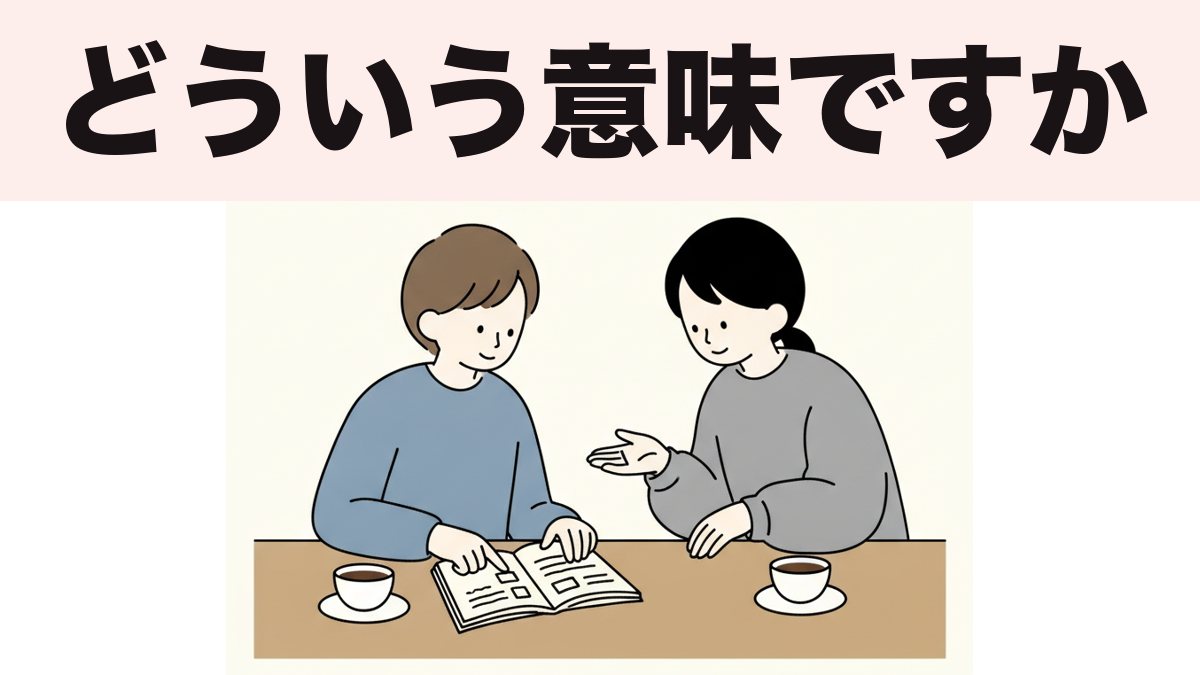
どういう意味ですか asks what a word means. 何と言いますか asks how to say something. 何と読みますか asks how to read a kanji. These are three different questions, and learners lose whole conversations by reaching for 何ですか instead of the right one.
「どういう意味ですか」はことばの意味を聞きます。「何と言いますか」はことばを聞きます。「何と読みますか」は読み方を聞きます。3つはちがう質問です。ぜんぶ「何ですか」で聞こうとすると、会話が止まります。
This is the most useful set of sentences a beginner can carry, and it is barely taught. Every textbook gives you vocabulary for ordering food and none for the moment you do not understand the answer — which is the moment that actually decides whether a conversation continues or quietly ends.
The basics
"What does this mean?" — どういう意味ですか
Use this when you have heard or read a word and you want its meaning.
「めんどくさい」はどういう意味ですか。 — What does 面倒くさい mean? mean?それ、どういう意味ですか。 — What does that mean? (polite, about something just said) どういう意味? — What's that mean? (casual)
どういう literally means "what kind of," so the sentence is "what kind of meaning is it?" You will also see 意味は何ですか, which is understood but sounds stiffer and slightly like a quiz question. Produce どういう意味ですか.
"How do you say X in Japanese?" — 何と言いますか
Use this when you have the concept and need the word.
これは日本語で何と言いますか。 — What do you call this in Japanese? "stapler" は日本語で何と言いますか。 — How do you say "stapler" in Japanese? これ、何て言うの? — What's this called? (casual — 何て is the spoken form of 何と)
Point at the thing while you say これ and the sentence works even if the rest of your Japanese is shaky. This single question is how you build vocabulary out in the world rather than out of a list.
"How do you read this?" — 何と読みますか
Japanese needs a separate question for this, because knowing what a kanji means and knowing how to say it out loud are genuinely different problems.
この漢字は何と読みますか。 — How do you read this kanji? お名前は何とお読みしますか。 — How do I read your name? (polite — names are the main reason this question exists)
Even native speakers ask this about names constantly, so it carries no embarrassment at all.
The three, side by side
| You want | Ask | Literally |
|---|---|---|
| The meaning of a word you heard | 〜はどういう意味ですか | "what kind of meaning?" |
| The Japanese word for a thing | 〜は日本語で何と言いますか | "what do you say?" |
| The reading of a kanji | 〜は何と読みますか | "how do you read?" |
| The name of an object in front of you | これは何ですか | "what is this?" |
| Someone to repeat | もう一度お願いします | "once more, please" |
| Someone to slow down | ゆっくりお願いします | "slowly, please" |
That fourth row is the trap, and it is worth lining up against the ordinary question words: これは何ですか asks what an object is — perfect when you are holding an unfamiliar snack, wrong when you want a word defined.
Beyond the basics
って: the casual shortcut that does all of this
In real conversation, って does the work of は and と and quotation marks all at once.
「やばい」ってどういう意味? — What does yabai mean? (casual) それって何? — What's that? (casual) 「ホッチキス」って何ですか。 — What's a hotchkisu? (semi-polite — って with です is completely normal)
って is how Japanese speakers quote a word they are asking about. It is casual but not rude, and it is what you will hear far more often than the textbook forms. Mixing って with です is normal and lands as friendly rather than sloppy.
The four sentences that keep a conversation alive
Asking what a word means only helps if you can also buy time. These four do that, and each one is a complete turn on its own:
すみません、もう一度お願いします。 — Sorry, one more time please. もう少しゆっくりお願いします。 — A little more slowly, please. すみません、聞き取れませんでした。 — Sorry, I couldn't catch that. えーっと、何でしたっけ… — Umm, what was it again… (casual, buying time out loud)
That last one is worth having ready. Japanese conversation tolerates visible thinking — えーっと and あの is what native speakers do while they search for a word, and using them makes a pause sound like thought rather than failure. The same principle drives the two questions that keep a conversation going: what keeps you talking is not vocabulary, it is having a move ready when the vocabulary runs out.
Checking rather than asking
Once you have a guess, confirm it instead of asking from scratch. This is faster and shows you were following.
「大丈夫」は "it's okay" という意味ですか。 — Does 大丈夫 mean "it's okay"? mean "it's okay"?これで合っていますか。 — Is this right? 「行きます」でいいですか。 — Is 行きます okay here?
Offering your guess gives the other person something to correct, which is much easier for them than explaining from nothing. In a lesson it is the difference between a two-second answer and a two-minute detour.
分かりません and 知りません are not the same
This one catches everybody.
分かりません。 — I don't understand. / I don't know (having thought about it). 知りません。 — I don't know it. (and it can sound cold — "that's not my business")
If someone asks you something and you answer 知りません, it can land as dismissive. 分かりません is the safe default. For "I've never heard of it," 知らないです or 聞いたことがありません is softer than a bare 知りません.
How does this sound in anime?
The casual forms dominate, and they are short enough to catch on a first listen:
どういうこと? — What do you mean? (about a situation, not a word) えっ、何? — Huh, what? 意味わかんない。 — I don't get it. (casual, often exasperated)
どういうこと is worth separating from どういう意味. 意味 asks about a word; こと asks about a situation. "What does this word mean?" versus "what is going on here?" — same question shape, completely different scope.
Common mistakes
- Using これは何ですか to ask what a word means. That asks what an object is. For a word, use どういう意味ですか.
- もう一度言ってください without すみません. Grammatically fine, but a bare imperative-style request to a stranger is blunt. すみません、もう一度お願いします is the natural shape.
- 知りません as a default "I don't know." Use 分かりません unless you specifically mean "I have no knowledge of that thing."
- 意味は何ですか as your main form. Understood, but stiff. どういう意味ですか is what people say.
- Asking 何と読みますか about a whole sentence. That question is for a kanji or a name. For a sentence, ask 読んでもらえますか ("could you read it for me?").
- Not asking at all. The most expensive mistake here is silence — nodding through a word you did not catch costs you the rest of the conversation, and asking costs you four seconds.
Practice
Answers are hidden — build yours first, then open. Questions 1 and 2 are a pair: the situations look identical and need different questions.
1. You heard the word 「めんどくさい」 and don't know it. Ask politely.
Show answer
「めんどくさい」はどういう意味ですか — どういう意味 asks for the meaning of a word you already heard.
2. Someone hands you an unfamiliar snack. Ask what it is.
Show answer
これは何ですか — this asks what an object is, not what a word means. This is the pair to question 1: same "what?", completely different question.
3. You want to know the Japanese word for a stapler. Ask.
Show answer
これは日本語で何と言いますか — point at it as you say これ. 何と言いますか asks for the word, not the meaning.
4. You see a kanji you can't pronounce. Ask.
Show answer
この漢字は何と読みますか — reading and meaning are separate questions in Japanese, so this has its own verb: 読む.
5. Make 「やばい」はどういう意味ですか casual.
Show answer
「やばい」ってどういう意味? — って replaces は when quoting a word, and ですか drops to a rising intonation.
6. You didn't catch what someone said. Ask them to repeat, politely.
Show answer
すみません、もう一度お願いします — the すみません is doing real work. Without it, a bare request to a stranger sounds blunt.
7. You think 大丈夫 means "it's okay." Check instead of asking from scratch.
Show answer
「大丈夫」は "it's okay" という意味ですか — offering your guess gives the other person something to confirm or correct, which is much faster than making them explain from nothing.
8. Someone asks you a question you can't answer. Why is 知りません risky?
Show answer
It can sound dismissive — 知りません is "I have no knowledge of that," and to a stranger it can read as "not my problem." 分かりません is the safe default.
9. What is the difference between どういう意味 and どういうこと?
Show answer
意味 is about a word, こと is about a situation — どういう意味ですか asks what a word means. どういうことですか asks what is going on.
10. Someone is speaking too fast. Ask them to slow down.
Show answer
もう少しゆっくりお願いします — お願いします turns almost any noun or adverb into a polite request, which makes it one of the highest-value phrases for a beginner.
FAQ
Is it rude to interrupt to ask what a word means? No, and in Japan it is generally welcomed — it shows you are following. A quick すみません before the question is all the softening you need, and stopping early is far better than letting three more sentences pile up on a word you missed.
What is the most useful single phrase here? お願いします. Attached to almost anything, it becomes a polite request: もう一度お願いします, ゆっくりお願いします, 日本語でお願いします, 英語でお願いします. It does more work than any other four syllables in the language.
Why is って so common if it's casual? Because Japanese quotes things constantly and と is heavy. って is the spoken contraction, and it appears in polite conversation too — 「〜」って何ですか is entirely normal. Reserve the full と for writing and formal speech.
How do I ask someone to write it down? 書いてもらえますか ("could you write it?") or ここに書いてください ("please write it here"). For a kanji you heard but cannot picture, どんな漢字ですか ("which kanji is it?") is the question native speakers use.
What do I say when I understand? 分かりました ("got it") is the standard, and なるほど ("ah, I see") is the warm one that signals you actually followed rather than just heard. なるほど is one of the most satisfying words to start using naturally.
Should I ask in English if I'm stuck? 英語でお願いします is a perfectly polite escape hatch and nobody will think less of you for it. But try the guess-and-confirm form first — 「〜」という意味ですか gets you a one-word answer and keeps the conversation in Japanese, which is where the practice is.
Vocabulary from this article
Tap the block to select all of it, then copy. In Anki: File → Import, note type Basic, separator Tab — the first column becomes the front, the second the back.
意味	いみ — meaning
言う	いう — to say
読む	よむ — to read
漢字	かんじ — kanji
名前	なまえ — name
日本語	にほんご — Japanese (language)
英語	えいご — English (language)
もう一度	もういちど — one more time
ゆっくり	ゆっくり — slowly
聞き取る	ききとる — to catch, to make out (by ear)
分かる	わかる — to understand
知る	しる — to know
合う	あう — to be correct, to match
書く	かく — to write
大丈夫	だいじょうぶ — all right, okay
面倒くさい	めんどくさい — a hassle, can't be bothered
なるほど	なるほど — ah, I see
お願いします	おねがいします — please (making a request)
I'm Yuuki, a Japanese teacher based in Tokyo. I've taught on italki as a Top 1% teacher and watched over 1,500 anime. These six sentences do more for a beginner than any amount of vocabulary — a learner who can ask どういう意味ですか keeps talking, and a learner who nods politely runs out of conversation in about four minutes.
Sources: the author's own lessons and standard reference grammars.
これは初級の人にいちばん役に立つ文のセットです。でも、あまり教えません。教科書は「食べ物のたのみ方」を教えますが、「返事が分からなかった時」を教えません。会話が続くか終わるかは、そこで決まります。
基本
ことばの意味を聞く — どういう意味ですか
聞いたことば、読んだことばの意味を知りたい時に使います。
「めんどくさい」はどういう意味ですか。 — What does 面倒くさい mean? mean?それ、どういう意味ですか。 — What does that mean? どういう意味? — What's that mean? (くだけた形)
「どういう」は「どんな」という意味です。だから「どんな意味ですか」になります。「意味は何ですか」も通じますが、少しかたくて、テストみたいです。
ことばを聞く — 何と言いますか
もののことは分かるけれど、ことばが分からない時に使います。
これは日本語で何と言いますか。 — What do you call this in Japanese? "stapler" は日本語で何と言いますか。 — How do you say "stapler" in Japanese? これ、何て言うの? — What's this called? (くだけた形。「何て」は「何と」の話しことば)
「これ」と言いながら指をさせば、ほかの日本語が分からなくても通じます。この1つの質問で、リストではなく、世界からことばを増やせます。
読み方を聞く — 何と読みますか
日本語には、この質問がべつに必要です。漢字の意味が分かることと、声に出せることは、ちがう問題だからです。
この漢字は何と読みますか。 — How do you read this kanji? お名前は何とお読みしますか。 — How do I read your name?
日本の人も、名前についてはいつも聞きます。はずかしいことではありません。
3つを並べると
| 知りたいこと | 聞き方 | もとの意味 |
|---|---|---|
| 聞いたことばの意味 | 〜はどういう意味ですか | どんな意味? |
| もののことばが分からない | 〜は日本語で何と言いますか | 何と言う? |
| 漢字の読み方 | 〜は何と読みますか | どう読む? |
| 目の前のものの名前 | これは何ですか | これは何? |
| もう一度言ってほしい | もう一度お願いします | もう一度、おねがい |
| ゆっくり話してほしい | ゆっくりお願いします | ゆっくり、おねがい |
4つめが落とし穴です。「これは何ですか」は「もの」を聞きます。ことばの意味を聞く時には使えません。
もう少し先へ
「って」— 会話でぜんぶをやる形
会話では「って」が「は」と「と」とかぎかっこの仕事を、いっぺんにします。
「やばい」ってどういう意味? — What does yabai mean? それって何? — What's that? 「ホッチキス」って何ですか。 — What's a hotchkisu? (「って」と「です」はいっしょに使えます)
「って」はことばを引用する形です。くだけていますが、失礼ではありません。教科書の形より、ずっとよく聞きます。
会話を止めない4つの文
意味を聞けても、時間をかせげないと続きません。この4つは、それぞれ1つで返事になります。
すみません、もう一度お願いします。 — Sorry, one more time please. もう少しゆっくりお願いします。 — A little more slowly, please. すみません、聞き取れませんでした。 — Sorry, I couldn't catch that. えーっと、何でしたっけ… — Umm, what was it again…
さいごの1つを持っておいてください。日本語の会話は、考えているのが見えてもだいじょうぶです。「えーっと」「あの」は、日本の人がことばをさがす時の音です。使うと、だまった時間が「しっぱい」ではなく「考えている」に聞こえます。
聞くより、たしかめる
考えが1つあるなら、ゼロから聞かないで、たしかめてください。早いですし、話を聞いていたことも伝わります。
「大丈夫」は "it's okay" という意味ですか。 — Does 大丈夫 mean "it's okay"? mean "it's okay"?これで合っていますか。 — Is this right? 「行きます」でいいですか。 — Is 行きます okay here?
自分の考えを出すと、相手は直すだけでよくなります。ゼロから説明するより、ずっとかんたんです。
「分かりません」と「知りません」はちがいます
ここでみんなつまずきます。
分かりません。 — I don't understand. / 考えたけれど分かりません。 。知りません。 — I don't know it. (冷たく聞こえることがあります)
聞かれて「知りません」と答えると、「私には関係ありません」に聞こえることがあります。「分かりません」が安全です。「聞いたことがありません」もやわらかいです。
アニメではどう聞こえますか?
くだけた形が多いです。短いので、聞き取りやすいです。
どういうこと? — What do you mean? (ことばではなく、じょうきょうについて) えっ、何? — Huh, what? 意味わかんない。 — I don't get it.
「どういうこと」と「どういう意味」は分けてください。「意味」はことばについて、「こと」はじょうきょうについてです。
よくある間違い
- ことばの意味を「これは何ですか」で聞くこと。 それは「もの」を聞く形です。ことばなら「どういう意味ですか」です。
- 「すみません」なしの「もう一度言ってください」。 文法は正しいですが、知らない人にはきつく聞こえます。「すみません、もう一度お願いします」が自然です。
- いつも「知りません」と答えること。 「分かりません」を使ってください。
- 「意味は何ですか」をメインにすること。 通じますが、かたいです。「どういう意味ですか」が自然です。
- 文ぜんぶに「何と読みますか」を使うこと。 これは漢字か名前の質問です。文なら「読んでもらえますか」です。
- 何も聞かないこと。 いちばん高くつくまちがいです。分からないままうなずくと、その後の会話ぜんぶをなくします。聞けば4秒です。
練習
答えはかくれています。まず自分の答えを作ってから開いてください。1番と2番は対になっています。
1. 「めんどくさい」ということばを聞きました。意味をていねいに聞いてください。
答えを見る
「めんどくさい」はどういう意味ですか — 「どういう意味」は、もう聞いたことばの意味を聞く形です。
2. 知らないおかしをもらいました。何か聞いてください。
答えを見る
これは何ですか — これは「もの」を聞く形で、ことばの意味ではありません。1番と対です。同じ「何」でも、ぜんぜんちがう質問です。
3. ホッチキスの日本語が分かりません。聞いてください。
答えを見る
これは日本語で何と言いますか — 「これ」と言いながら指をさします。意味ではなく、ことばを聞く形です。
4. 読めない漢字があります。聞いてください。
答えを見る
この漢字は何と読みますか — 日本語では、読み方と意味はべつの質問です。だから動詞も「読む」になります。
5. 「「やばい」はどういう意味ですか」をくだけた形にしてください。
答えを見る
「やばい」ってどういう意味? — ことばを引用する時、「は」が「って」になります。「ですか」は上げる声にかわります。
6. 聞き取れませんでした。ていねいにもう一度おねがいしてください。
答えを見る
すみません、もう一度お願いします — 「すみません」が大事な仕事をしています。なしだと、知らない人にはきつく聞こえます。
7. 「大丈夫」は "it's okay" だと思います。ゼロから聞かないで、たしかめてください。
答えを見る
「大丈夫」は "it's okay" という意味ですか — 自分の考えを出すと、相手は直すだけでよくなります。説明してもらうより早いです。
8. 答えられない質問をされました。「知りません」がなぜあぶないですか。
答えを見る
冷たく聞こえることがあるからです — 「知りません」は「私には関係ありません」に聞こえることがあります。「分かりません」が安全です。
9. 「どういう意味」と「どういうこと」はどうちがいますか。
答えを見る
「意味」はことば、「こと」はじょうきょう — 「どういう意味ですか」はことばの意味、「どういうことですか」は「何が起きているのか」です。
10. 相手が速すぎます。ゆっくり話してもらってください。
答えを見る
もう少しゆっくりお願いします — 「お願いします」は、ほとんどのことばをていねいなおねがいにします。初級でいちばん役に立つ形です。
よくある質問
とちゅうで止めて聞くのは失礼ですか。 失礼ではありません。話を聞いているしるしになります。「すみません」を先に言えばじゅうぶんです。分からないまま3文進む方が、ずっと大きな問題になります。
いちばん役に立つ1つは何ですか。 「お願いします」です。前にことばをつけると、ていねいなおねがいになります。もう一度お願いします、ゆっくりお願いします、日本語でお願いします、英語でお願いします。
「って」はくだけているのに、なぜよく使いますか。 日本語は引用がとても多くて、「と」は重いからです。「って」は話す時の短い形で、ていねいな会話にも出ます。「〜って何ですか」はふつうです。
書いてもらいたい時は何と言いますか。 「書いてもらえますか」「ここに書いてください」です。聞いた漢字が思いうかばない時は「どんな漢字ですか」と聞きます。
分かった時は何と言いますか。 「分かりました」がふつうです。「なるほど」はあたたかい形で、本当に分かったことが伝わります。
分からない時、英語で聞いてもいいですか。 「英語でお願いします」はていねいな言い方で、だれも変だと思いません。でも、まず「〜という意味ですか」でたしかめてみてください。一言で答えが返ってきて、会話が日本語のまま続きます。
この記事に出た単語
ブロックをタップすると全部選べます。そのままコピーしてください。Anki では ファイル → 読み込み、ノートタイプ 基本、区切り タブ。1列目が表、2列目が裏になります。
意味	いみ — meaning
言う	いう — to say
読む	よむ — to read
漢字	かんじ — kanji
名前	なまえ — name
日本語	にほんご — Japanese (language)
英語	えいご — English (language)
もう一度	もういちど — one more time
ゆっくり	ゆっくり — slowly
聞き取る	ききとる — to catch, to make out (by ear)
分かる	わかる — to understand
知る	しる — to know
合う	あう — to be correct, to match
書く	かく — to write
大丈夫	だいじょうぶ — all right, okay
面倒くさい	めんどくさい — a hassle, can't be bothered
なるほど	なるほど — ah, I see
お願いします	おねがいします — please (making a request)
私はユウキです。東京で日本語を教えています。 italki の Top 1% の先生で、アニメは1,500本以上見ました。この6つの文は、たくさんの単語より役に立ちます。「どういう意味ですか」が言える人は話し続けられます。ていねいにうなずくだけの人は、4分で話すことがなくなります。
More drills like the ones above, plus a timed JLPT-style mock test: Practice · N5上のような練習問題と、時間つきのJLPT形式のもぎ試験: 練習ページ · N5
Want to try this in a real conversation?
本当の会話で、ためしてみませんか?
30-minute trial lesson, $13. Times shown in your own timezone.
30分の体験レッスン、$13。時間はあなたのタイムゾーンで表示されます。
Book a trial lesson · $13