How to say "haircut" in Japanese: 切る, 刈る, 剃る and the sentence that means you did it yourself髪を切る: 切る・刈る・剃る と、「自分で切りました」になる文
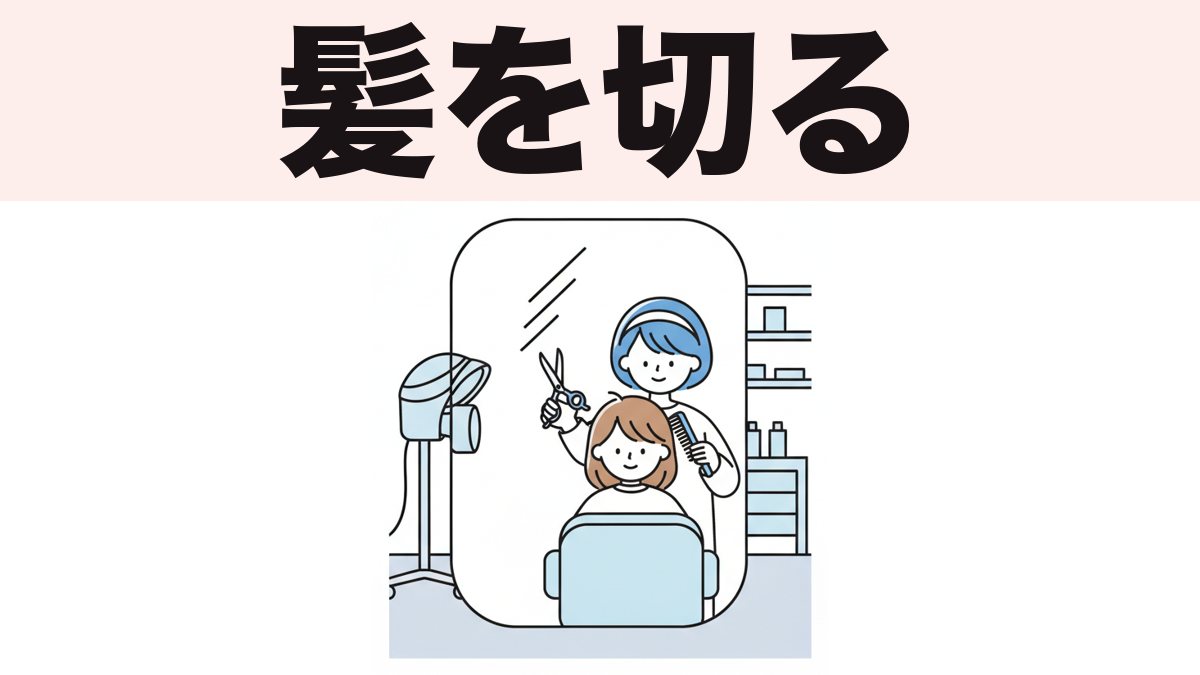
Japanese splits "cut your hair" across three verbs — 切る (cut with scissors), 刈る (clip short with a machine), 剃る (shave with a blade) — and there is a fourth problem on top: 髪を切りました literally says *you* cut it. The natural way to say you got a haircut is 髪を切ってもらいました.
日本語は「髪を切る」を3つの動詞に分けます。切る(はさみ)・刈る(バリカン)・剃る(かみそり)。そしてもう1つ問題があります。「髪を切りました」は、自分で切ったという意味です。美容院で切ってもらったなら「髪を切ってもらいました」です。
This is a small conversation that comes up constantly, because hair is the safest small talk there is and someone will notice you had it cut within a week of arriving. It is also a good illustration of a bigger habit in Japanese: the language cares about who did the action far more than English does.
The basics
The three verbs
| Verb | Reading | What it does |
|---|---|---|
| 切る | きる | Cut, with scissors. The general one. |
| 刈る | かる | Clip or crop short, usually with clippers. Also used for grass. |
| 剃る | そる | Shave, with a blade. Skin-level. |
| そろえる | そろえる | Trim to even it up |
| すく | すく | Thin out, take weight out |
髪を切りました。 — I cut my hair. (literally: you did the cutting yourself) ひげを剃りました。 — I shaved. (a blade, on the face) 短く刈りました。 — I had it clipped short. (clippers, a crop)
刈る is worth noticing because it is also the verb for mowing a lawn (草を刈る). The image is "cut down close to the surface", which is exactly what a clipper does.
Why 髪を切りました is usually wrong
Japanese does not blur the line between doing something and having it done for you. 髪を切りました states that you performed the cut. If a barber did it, the natural sentence is:
髪を切ってもらいました。 — I got my hair cut. (literally: I received the favour of having it cut) 美容院で髪を切ってもらいました。 — I got my hair cut at the salon. (polite, the standard sentence)
〜てもらう marks that someone did the action for your benefit. It is the same structure covered in あげる・くれる・もらう, and this is one of the most common everyday places it shows up.
In practice, native speakers do sometimes say 髪を切った about a salon visit, the way English speakers say "I cut my hair" when they mean a barber did it. But the てもらう version is the one that is never ambiguous, and it is the one that sounds like a fluent speaker rather than a translated one.
Where do you go?
- 美容院 (びよういん) — hair salon, used by everyone.
- 美容室 (びようしつ) — the same thing; both signs exist.
- 床屋 (とこや) — barber, casual word.
- 理容室 (りようしつ) — barber, the formal word on the sign.
One trap worth memorising: 美容院 (びよういん, salon) and 病院 (びょういん, hospital) differ by one small sound. びよういん has four beats, びょういん has three. Getting it wrong produces a genuinely funny sentence, and it is a good drill for the small ょ.
Beyond the basics
What do you actually say in the chair?
The staff will ask 今日はどうされますか ("what are we doing today?"). These cover most answers:
全体的に短くしてください。 — Please make it shorter overall. (polite) 2センチくらい切ってください。 — Please cut about two centimetres. (polite; giving a number is the clearest option) 毛先をそろえるだけでお願いします。 — Just a trim on the ends, please. (polite) 軽くしてください。 — Please thin it out / take some weight out. (polite — 軽く literally "lightly") 前髪は眉毛の上でお願いします。 — Bangs above the eyebrows, please. (polite)
Two more that save the appointment:
- このままでお願いします — "same as it is now, please" (a maintenance cut).
- 写真を見せてもいいですか — "may I show you a photo?" Showing a picture is completely normal and removes every vocabulary problem at once.
The words for the parts
| Word | Reading | Meaning |
|---|---|---|
| 髪 / 髪の毛 | かみ / かみのけ | hair (on the head) |
| 前髪 | まえがみ | bangs, fringe |
| 毛先 | けさき | the ends |
| 襟足 | えりあし | nape, back hairline |
| もみあげ | — | sideburns |
| ひげ | — | facial hair generally |
| 枝毛 | えだげ | split ends |
ひげ covers beard, moustache and stubble as one word; if you need to be specific, 口ひげ (moustache), あごひげ (beard) and ほおひげ (cheek/side) exist.
ひげ and はげ
These two are one vowel apart and mean very different things: ひげ is facial hair, はげ is baldness. Saying はげを剃りました instead of ひげを剃りました turns a routine sentence into something else entirely.
The general point is worth more than the joke: Japanese has a lot of short words separated by a single vowel or by vowel length, which is why pronunciation length is not a detail you can leave for later. おじさん and おじいさん are the textbook version of the same problem.
Colour, perms and the rest
- カラー or 染める (そめる) — to dye. 髪を染めました.
- パーマをかける — to get a perm. The verb is かける, not する.
- ブリーチ — bleach.
- セット — styling.
- 伸ばす (のばす) — to grow it out. 髪を伸ばしています ("I'm growing my hair out").
髪を伸ばしているので、毛先だけお願いします。 — I'm growing my hair out, so just the ends please. (polite — the single most useful sentence if you are between lengths)
Talking about someone else's haircut
The safe compliment is short and about the change, not the person:
髪、切りましたか。似合いますね。 — Did you get your hair cut? It suits you. (polite, warm, standard)
似合う ("to suit someone") is the verb you want. 可愛い and かっこいい are fine with friends but can land oddly at work; 似合いますね is safe with anyone.
Common mistakes
- Saying 髪を切りました about a salon visit. Understandable, but it literally says you did it. 切ってもらいました is the clear version.
- Using 切る for shaving. ひげを切る is scissors on a beard. A razor is 剃る.
- Mixing up 美容院 and 病院. Four beats versus three. Worth drilling once.
- Saying はげ when you mean ひげ. One vowel, completely different sentence.
- パーマをする. The verb is かける: パーマをかける.
- Describing a style in adjectives instead of numbers or a photo. 短く is vague; 2センチ or a photo is not.
Practice
Say each answer out loud first. Questions 1 and 2 are a pair: the same event, two very different claims.
1. Translate: 髪を切りました。
Show answer
I cut my hair (myself) — the sentence says you performed the action. Grammatically fine, factually usually wrong.
2. Translate: 髪を切ってもらいました。
Show answer
I got my hair cut — 〜てもらう marks that someone did it for you. This is the natural sentence after a salon visit.
3. Which verb do you use for shaving with a razor?
Show answer
剃る (そる) — ひげを剃る. 切る is scissors; 剃る is a blade at skin level.
4. What does 刈る mean, and what else is it used for?
Show answer
To clip or crop short — also to mow grass — 草を刈る. The image is cutting down close to the surface.
5. Ask for about two centimetres off.
Show answer
2センチくらい切ってください — a number is the clearest instruction you can give, and it needs almost no vocabulary.
6. Ask for just a trim on the ends.
Show answer
毛先をそろえるだけでお願いします — そろえる is "even up", 毛先 is the ends.
7. What is the difference between 美容院 and 病院?
Show answer
びよういん (4 beats) is a hair salon; びょういん (3 beats) is a hospital — the small ょ is the whole difference.
8. Say you are growing your hair out.
Show answer
髪を伸ばしています — 伸ばす, in the ている form because it is an ongoing state.
9. Fix this: パーマをしました。
Show answer
パーマをかけました — perms take かける. This is a fixed verb–noun pairing, like 風邪をひく.
10. A colleague has had their hair cut. Say something safe and friendly.
Show answer
髪、切りましたか。似合いますね。 — 似合う ("it suits you") is the compliment that works with anyone, including at work.
FAQ
Do I need to speak Japanese to get a haircut in Japan? Not really. A photo plus 2センチくらい切ってください or このままでお願いします covers most appointments. Salons in bigger cities are used to visitors and many take reservations online.
Is tipping expected at a salon? No. Tipping is not customary in Japan, at salons or anywhere else, and it is not a case of politely declining — the system simply does not include it.
What is the difference between 美容院 and 床屋? 床屋 (barber) traditionally serves men and offers a shave; 美容院 (salon) serves everyone and focuses on cutting, colouring and styling. The distinction is softer than it used to be, and many men book salons.
How do I say I want it "the same as last time"? 前回と同じでお願いします. If you go back to the same stylist, this is the most efficient sentence in the language.
Why is 〜てもらう used so much in Japanese? Because Japanese tracks who benefits from an action. Getting something done for you is grammatically marked rather than implied, which is why it appears in everyday sentences where English uses a plain past tense.
Can I just say 髪を切った like native speakers do? Yes, in casual conversation — people do. But if you are still building the habit, 切ってもらった is worth saying deliberately, because the てもらう pattern transfers to dozens of other situations: 教えてもらう, 直してもらう, 手伝ってもらう.
Vocabulary from this article
Tap the block to select all of it, then copy. In Anki: File → Import, note type Basic, separator Tab — the first column becomes the front, the second the back.
切る	きる — to cut (with scissors)
刈る	かる — to clip short; to mow
剃る	そる — to shave
そろえる	そろえる — to trim even
すく	すく — to thin out (hair)
髪	かみ — hair
前髪	まえがみ — bangs, fringe
毛先	けさき — the ends of the hair
襟足	えりあし — nape hairline
ひげ	ひげ — facial hair
美容院	びよういん — hair salon
床屋	とこや — barber
病院	びょういん — hospital
染める	そめる — to dye
伸ばす	のばす — to grow out, extend
似合う	にあう — to suit (someone)
眉毛	まゆげ — eyebrow
枝毛	えだげ — split ends
I'm Yuuki, a Japanese teacher based in Tokyo. I've taught on italki as a Top 1% teacher and watched over 1,500 anime. Sorting out 切る, 刈る and 剃る is the kind of thing that eats ten minutes of a lesson — it looks like trivia until you are in the chair and the only sentence you have is the one that says you did it yourself.
Sources: the author's own lessons and standard reference grammars.
髪の話は、いちばん安全な世間話です。日本に来たら、1週間でだれかが気づきます。そして、この話は日本語の大きなくせを教えてくれます。だれがやったかを、日本語は英語よりずっと気にします。
基本
3つの動詞
| 動詞 | 読み方 | 意味 |
|---|---|---|
| 切る | きる | はさみで切る(ふつう) |
| 刈る | かる | バリカンで短くする。草にも使う |
| 剃る | そる | かみそりでそる |
| そろえる | そろえる | 長さをそろえる |
| すく | すく | 量を減らす |
髪を切りました。 — I cut my hair. (literally: you did the cutting yourself) ひげを剃りました。 — I shaved. (with a blade) 短く刈りました。 — I had it clipped short. (clippers)
「刈る」は草にも使います(草を刈る)。「表面の近くで切る」というイメージです。
なぜ「髪を切りました」は変なのか
日本語は「自分でする」と「してもらう」を分けます。
髪を切ってもらいました。 — I got my hair cut. (someone did it for me) 美容院で髪を切ってもらいました。 — I got my hair cut at the salon. (polite, the standard sentence)
「〜てもらう」は「相手がしてくれた」という印です。あげる・くれる・もらうと同じしくみで、日常でいちばんよく出る場面の1つです。
日本人も「髪切った」と言います。でも「切ってもらった」なら、ぜったいに意味がずれません。
どこへ行く?
- 美容院(びよういん) — だれでも行く
- 美容室(びようしつ) — 同じ意味
- 床屋(とこや) — 理髪店のカジュアルな言い方
- 理容室(りようしつ) — 看板の正式な言い方
気をつけるところ: 美容院(びよういん・4拍)と病院(びょういん・3拍)。小さい「ょ」だけのちがいです。
もう少し先へ
お店で言うこと
お店の人は「今日はどうされますか」と聞きます。
全体的に短くしてください。 — Please make it shorter overall. (polite) 2センチくらい切ってください。 — Please cut about two centimetres. (polite; a number is clearest) 毛先をそろえるだけでお願いします。 — Just a trim on the ends, please. (polite) 軽くしてください。 — Please thin it out. (polite) 前髪は眉毛の上でお願いします。 — Bangs above the eyebrows, please. (polite)
あと2つ。「このままでお願いします」(今の形のまま)と「写真を見せてもいいですか」。写真がいちばん早いです。
部分の名前
| 言葉 | 読み方 | 意味 |
|---|---|---|
| 髪/髪の毛 | かみ/かみのけ | hair |
| 前髪 | まえがみ | bangs |
| 毛先 | けさき | the ends |
| 襟足 | えりあし | nape |
| もみあげ | — | sideburns |
| ひげ | — | facial hair |
| 枝毛 | えだげ | split ends |
「ひげ」は、口ひげ・あごひげ・ほおひげを全部まとめた言い方です。
「ひげ」と「はげ」
母音が1つちがうだけで、意味がまったくちがいます。ひげ=facial hair、はげ=bald。
日本語には、1つの音や長さだけでちがう言葉がたくさんあります。だから発音の長さは、あとまわしにできません(3つの文字)。「おじさん」と「おじいさん」も同じです。
色・パーマ
- カラー/染める(そめる) — 髪を染めました。
- パーマをかける — 「する」ではなく「かける」です。
- ブリーチ/セット
- 伸ばす(のばす) — 髪を伸ばしています。
髪を伸ばしているので、毛先だけお願いします。 — I'm growing my hair out, so just the ends please. (polite)
人の髪をほめる時
髪、切りましたか。似合いますね。 — Did you get your hair cut? It suits you. (polite, safe with anyone)
「似合う」がいちばん安全です。「かわいい」「かっこいい」は友だちにはいいですが、仕事では少し強いです。
よくあるまちがい
- 美容院のあとに「髪を切りました」と言う。 「切ってもらいました」です。
- ひげに「切る」を使う。 かみそりなら「剃る」です。
- 美容院と病院をまちがえる。 4拍と3拍です。
- 「ひげ」を「はげ」と言う。 まったく別の文になります。
- 「パーマをする」。 「パーマをかける」です。
- 形容詞だけで説明する。 「短く」はあいまいです。数字か写真が確実です。
練習
まず声に出してから、答えを見てください。1番と2番はペアです。
1. 「髪を切りました」の意味は?
答えを見る
自分で切った — 文法は正しいですが、じっさいとちがうことが多いです。
2. 「髪を切ってもらいました」の意味は?
答えを見る
切ってもらった(お店で) — 「〜てもらう」は、相手がしてくれたという印です。
3. かみそりでそる動詞は?
答えを見る
剃る(そる) — ひげを剃る。「切る」ははさみです。
4. 「刈る」はほかに何に使いますか。
答えを見る
草を刈る — 表面の近くで短く切る、というイメージです。
5. 「2センチくらい切ってほしい」と言ってください。
答えを見る
2センチくらい切ってください — 数字がいちばん確実です。
6. 「毛先だけそろえてほしい」と言ってください。
答えを見る
毛先をそろえるだけでお願いします — 「そろえる」」長さをそろえる。
7. 「美容院」と「病院」のちがいは?
答えを見る
びよういん(4拍))salon、びょういん(3拍))hospital — 小さい「ょ」だけです。
8. 「髪を伸ばしている」と言ってください。
答えを見る
髪を伸ばしています — 続いている状態なので「ている」です。
9. 直してください: パーマをしました。
答えを見る
パーマをかけました — 「風邪をひく」と同じで、決まった組み合わせです。
10. 同僚が髪を切りました。何と言いますか。
答えを見る
髪、切りましたか。似合いますね。 — 「似合う」は、だれにでも使えるほめ言葉です。
よくある質問
日本語ができなくても美容院に行けますか。 行けます。写真と「2センチくらい切ってください」「このままでお願いします」で足ります。
チップはいりますか。 いりません。日本にチップの習かんはありません。
「美容院」と「床屋」のちがいは? 「床屋」は昔から男の人が多く、ひげそりもあります。「美容院」はだれでも行き、カットやカラーが中心です。今はあまり分かれていません。
「前と同じ」はどう言いますか。 「前回と同じでお願いします」。同じ人に切ってもらうなら、いちばん速い文です。
なぜ「〜てもらう」をよく使うのですか。 日本語は「だれのためにしたか」をはっきり言うからです。英語なら ふつうの過去形で言う場面でも出てきます。
「髪を切った」と言ってもいいですか。 カジュアルならOKです。でも練習中は「切ってもらった」を意識して言うといいです。教えてもらう・直してもらう・手伝ってもらう、と広がります。
この記事に出た単語
下のブロックをタップして全部えらび、コピーしてください。Anki では ファイル → 読み込み、ノートの種類は 基本、区切りは タブ です。
切る	きる — to cut (with scissors)
刈る	かる — to clip short; to mow
剃る	そる — to shave
そろえる	そろえる — to trim even
すく	すく — to thin out (hair)
髪	かみ — hair
前髪	まえがみ — bangs, fringe
毛先	けさき — the ends of the hair
襟足	えりあし — nape hairline
ひげ	ひげ — facial hair
美容院	びよういん — hair salon
床屋	とこや — barber
病院	びょういん — hospital
染める	そめる — to dye
伸ばす	のばす — to grow out, extend
似合う	にあう — to suit (someone)
眉毛	まゆげ — eyebrow
枝毛	えだげ — split ends
私はユウキです。東京で日本語を教えています。 italki の Top 1% の先生で、アニメは1,500本以上見ました。「切る・刈る・剃る」の整理は、レッスンで10分かかることがあります。どうでもいい話に見えますが、いすに座った時に、持っている文が「自分で切りました」だけだと困ります。
More drills like the ones above, plus a timed JLPT-style mock test: Practice · N4上のような練習問題と、時間つきのJLPT形式のもぎ試験: 練習ページ · N4
Want to try this in a real conversation?
本当の会話で、ためしてみませんか?
30-minute trial lesson, $13. Times shown in your own timezone.
30分の体験レッスン、$13。時間はあなたのタイムゾーンで表示されます。
Book a trial lesson · $13