I love you in Japanese: 好き, 大好き, 愛してる and why the last one is almost never said「好き」と「愛してる」: いちばん重いことばは、ほとんど言いません
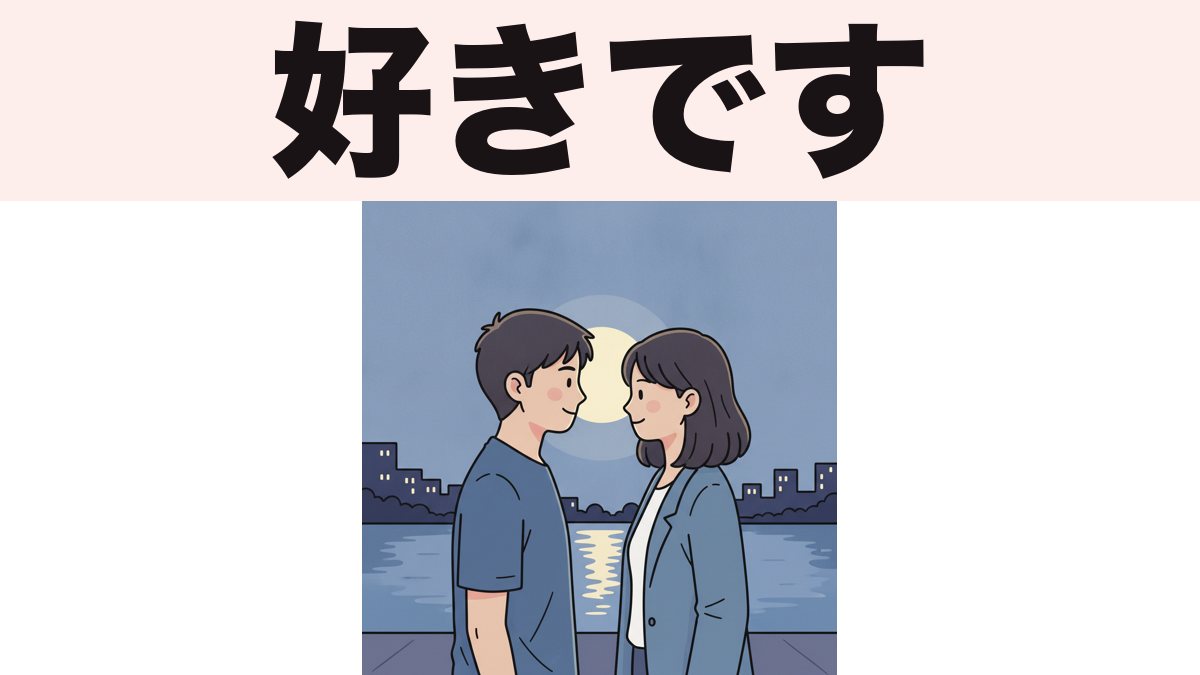
愛してる is the dictionary translation of "I love you" and it is used far less than English "I love you" — heavy, literary, and for many couples a once-in-a-relationship sentence. The everyday confession is 好きです, and the everyday expression of love is usually not a declaration at all.
「愛してる」は辞書の "I love you" です。でも、英語の "I love you" よりずっと少ししか使いません。重くて、文語に近くて、一生に何回か、という人も多いです。ふつうの告白は「好きです」。そして、ふだんの愛情は、ことばの宣言ではないことが多いです。
This is the topic where a direct translation misleads most. The words exist and are correct; the frequency and the weight are completely different, and that difference is the actual information.
The basics
The three levels
| Phrase | Reading | Weight |
|---|---|---|
| 好き | すき | Like / love. The workhorse. |
| 大好き | だいすき | Really like / love a lot. Warm, often light. |
| 愛してる | あいしてる | Love, in the heavy sense. Rare. |
好きです。 — I like you / I love you. (polite; this is the standard confession) 大好き! — I love it / I love you! (casual, warm — used for people and for things) 愛してる。 — I love you. (heavy, rare, serious)
The surprise for English speakers is that 好きです is a confession, not a lukewarm "I like you". Said to a person, in the right moment, it is the sentence — the 告白 (こくはく, confession) that Japanese romance is built around.
Why is it 好きが, not 好きを?
Because 好き is an adjective, not a verb. Japanese does not say "I love you" as an action; it says "you are likeable to me". The thing liked is marked with が.
君が好きだ。 — I love you. (casual; literally "you are liked [by me]") 日本語が好きです。 — I like Japanese. (polite; same structure, different object)
So 私はあなたを好きです is the mistake — を is for verbs, and 好き is not one. If particles are still shaky, this pattern is the clearest example of why は and が are worth getting straight.
And the pronouns usually vanish
A real confession rarely contains 私 or あなた. The context supplies both, and including them can make the sentence sound stiff or translated.
好きです。付き合ってください。 — I love you. Please go out with me. (polite; the classic confession, no pronouns at all)
付き合ってください ("please go out with me") is the other half of the standard confession. Japanese dating typically has an explicit start point rather than a gradual drift, and that sentence is it.
Beyond the basics
Why is 愛してる so rare?
Several reasons stack. It is a heavy, almost written-register word. It carries a sense of permanence that makes it awkward for everyday warmth. And Japanese affection is more often expressed through action and attention than through declaration — noticing, remembering, doing things without being asked.
There is also the famous version of this, widely retold: the novelist Sō widely retold: the novelist Sseki Natsume is said to have told students that "I love you" should be translated as 月が綺麗ですね ("the moon is beautiful, isn't it") — because a Japanese speaker would never say it outright. The story is almost certainly apocryphal, and it survives because it captures something true about the register.
月が綺麗ですね。 — The moon is beautiful, isn't it. (the famous indirect version — recognisable to most Japanese people as a reference)
Say 愛してる in an ordinary moment and it can land as unexpectedly grave, or as a line from a drama.
So what do couples actually say?
Short, frequent, low-weight things:
大好き。 — Love you. (casual; the everyday one) 一緒にいると楽しい。 — I have fun when I'm with you. (casual, warm) ずっと一緒にいたい。 — I want to stay together. (casual, serious without being heavy)
大好き is the real everyday "I love you" in most relationships — light enough to say often, warm enough to mean it.
好き for things, people and activities
好き covers everything from people to food to hobbies, and the strength comes from context and adverbs rather than from a different word:
アニメが大好きです。 — I love anime. (polite) 甘いものはあまり好きじゃないです。 — I don't much like sweet things. (polite; あまり + negative = "not much")
Note 好きじゃない for the negative. 嫌い (きらい, dislike) exists but is strong — much closer to "hate" than to "don't like" — so あまり好きじゃない is the polite way to decline a preference, in the same family as the soft refusals in how to say no.
恋 and 愛
Two nouns, both "love":
- 恋 (こい) — romantic love, falling in love, the feeling directed at one person.
- 愛 (あい) — love in the broad sense: family, humanity, lasting devotion.
- 恋人 (こいびと) — partner, sweetheart (gender-neutral).
- 愛情 (あいじょう) — affection.
Song lyrics run on both. In conversation, 恋 appears as 恋してる ("I'm in love") and 愛 mostly stays in compounds.
Useful adjacent words
好み (このみ, taste/preference), 気になる (to be interested in someone — a wonderfully vague pre-confession word), 片思い (かたおもい, unrequited love), 告白 (こくはく, confession), 付き合う (つきあう, to date), 惚れる (ほれる, to fall for someone, casual).
ちょっと気になってる人がいる。 — There's someone I'm kind of interested in. (casual; deliberately vague)
気になる is the word to have before the confession. It admits interest without committing to a declaration, which is exactly the job it does.
Common mistakes
- Using 愛してる as the everyday "I love you". It is heavy and rare. 大好き is the daily version.
- Saying 私はあなたを好きです. 好き is an adjective, so the particle is が, and the pronouns are usually dropped.
- Reading 好き as merely "like". Said to a person in the right moment it is a confession.
- Using 嫌い for "I don't like it". It is much stronger than English "dislike". Use あまり好きじゃない.
- Expecting a gradual start to a relationship. The 告白 is an explicit event, and 付き合ってください is the sentence that starts it.
- Taking the 月が綺麗ですね story as a real translation. It is an anecdote about register, not a phrase to use on someone who will not catch the reference.
Practice
Say each answer out loud first. Questions 1 and 2 are a pair: two sentences English would translate identically.
1. Translate: 好きです。
Show answer
I like you / I love you — said to a person in the right moment, this is a confession, not a lukewarm compliment.
2. Translate: 愛してる。
Show answer
I love you — but heavy, rare and serious. English would use the same words; Japanese would not use them nearly as often.
3. Fix this: 私はあなたを好きです。
Show answer
好きです (or 君が好きだ) — 好き is an adjective, so the particle is が, and the pronouns are normally dropped.
4. Say "I love anime."
Show answer
アニメが大好きです — が marks what is liked. 大好き raises the strength without changing the structure.
5. Politely say you are not keen on sweet things.
Show answer
甘いものはあまり好きじゃないです — あまり plus a negative. 嫌い would be far too strong.
6. What is the second half of a standard confession?
Show answer
付き合ってください — "please go out with me". Japanese relationships usually have an explicit start.
7. What does 気になる mean in this context?
Show answer
To be interested in someone — deliberately vague, and the word people use before any confession exists.
8. What is the difference between 恋 and 愛?
Show answer
恋 is romantic love for one person; 愛 is the broad, lasting kind — family, humanity, devotion.
9. Someone says 月が綺麗ですね. What might they be doing?
Show answer
Referencing the famous indirect "I love you" — or genuinely commenting on the moon. The ambiguity is the entire point of the story.
10. What do couples say day to day?
Show answer
大好き, or non-declarations like 一緒にいると楽しい — light enough to say often, which is what makes it the real everyday version.
FAQ
Do Japanese people never say 愛してる? They do — at weddings, in serious moments, in songs and drama. It is not extinct, it is reserved. Treating it as the everyday phrase is what misfires.
Is 好き too weak for a confession? No. In the confession context it is the phrase. English speakers hear "like" and assume it is mild; Japanese hears it as the declaration.
What is 告白 exactly? A confession of feelings, made as a distinct event, usually with 好きです and 付き合ってください. It is a recognised social ritual rather than a coincidence of conversation.
Can I say 大好き to a friend? Yes — 大好き is used for friends, food, places and pets as well as partners. That breadth is exactly why it is safe.
How do I say "boyfriend" or "girlfriend"? 彼氏 (かれし) and 彼女 (かのじょ), or the gender-neutral 恋人. Note 彼女 also just means "she", which is a genuine source of ambiguity.
Is 嫌い really that strong? Stronger than "dislike" — closer to "hate" in ordinary use. あまり好きじゃない is the everyday way to say you are not keen on something.
Vocabulary from this article
Tap the block to select all of it, then copy. In Anki: File → Import, note type Basic, separator Tab — the first column becomes the front, the second the back.
好き	すき — liked, loved
大好き	だいすき — loved a lot
嫌い	きらい — disliked, hated
愛	あい — love (broad, lasting)
恋	こい — romantic love
愛する	あいする — to love
恋人	こいびと — partner, sweetheart
彼氏	かれし — boyfriend
彼女	かのじょ — girlfriend; she
告白	こくはく — confession of feelings
付き合う	つきあう — to date, go out with
気になる	きになる — to be interested in; to bother
片思い	かたおもい — unrequited love
好み	このみ — taste, preference
一緒	いっしょ — together
月	つき — moon
綺麗	きれい — beautiful, clean
楽しい	たのしい — fun, enjoyable
I'm Yuuki, a Japanese teacher based in Tokyo. I've taught on italki as a Top 1% teacher and watched over 1,500 anime. This is the topic where anime is most useful and most misleading at once: the confession scenes are accurate about the ritual and wildly generous with 愛してる, which is a word most people say a handful of times in a life.
Sources: the author's own lessons and standard reference grammars.
ここは、直訳がいちばん人をまよわせる所です。ことばは正しいのに、使う回数と重さがぜんぜんちがいます。そのちがいが情報です。
基本
3つの強さ
| ことば | 読み方 | 重さ |
|---|---|---|
| 好き | すき | like / love。いちばん使う |
| 大好き | だいすき | とても好き。あたたかい |
| 愛してる | あいしてる | 重い love。少ない |
好きです。 — I like you / I love you. (polite; this is the standard confession) 大好き! — I love it / I love you! (casual, for people and things) 愛してる。 — I love you. (heavy, rare, serious)
英語の人がおどろくのは、「好きです」が告白だということです。「ちょっと好き」ではありません。日本の恋愛の中心にある、あの1文です。
なぜ「好きが」で「好きを」ではないの?
「好き」は動詞ではなく、形容詞だからです。「あなたを好む」ではなく、「あなたが好きだ」と言います。
君が好きだ。 — I love you. (casual; literally "you are liked") 日本語が好きです。 — I like Japanese. (polite; same structure)
だから「私はあなたを好きです」はまちがいです。助詞が不安なら、「は」と「が」を見てください。
「私」も「あなた」も言いません
本当の告白に、「私」「あなた」はほとんど入りません。
好きです。付き合ってください。 — I love you. Please go out with me. (the classic confession)
「付き合ってください」がもう半分です。日本の恋愛は、始まりがはっきりしていることが多いです。
もう少し先へ
なぜ「愛してる」を言わないの?
重いことばで、書き言葉に近く、「ずっと」という感じがあるからです。そして、日本の愛情は、ことばより行動で表すことが多いです。気づく、おぼえている、言われる前にする。
有名な話もあります。夏目漱石が「I love you は『月が綺麗ですね』と訳しなさい」と言った、というものです。本当かどうかは分かりません(作り話だと言われています)。でも、感じはよく表しています。
月が綺麗ですね。 — The moon is beautiful, isn't it. (the famous indirect version)
ふつうの場面で「愛してる」と言うと、急に重くなったり、ドラマのせりふのように聞こえたりします。
では、何と言うの?
短くて、よく言う、軽いことばです。
大好き。 — Love you. (casual; the everyday one) 一緒にいると楽しい。 — I have fun when I'm with you. (casual, warm) ずっと一緒にいたい。 — I want to stay together. (casual, serious but not heavy)
「大好き」が、ふだんの "I love you" です。
物や趣味にも「好き」
アニメが大好きです。 — I love anime. (polite) 甘いものはあまり好きじゃないです。 — I don't much like sweet things. (polite)
否定は「好きじゃない」です。「嫌い」は強くて、"hate" に近いです。だから「あまり好きじゃない」がていねいな言い方です(断り方と同じ考え方です)。
「恋」と「愛」
- 恋(こい) — 一人に向かう恋愛の気持ち
- 愛(あい) — 家族や広い意味の love
- 恋人(こいびと) — パートナー
- 愛情(あいじょう) — 愛する気持ち
歌にはどちらもよく出ます。会話では「恋してる」、「愛」は熟語の中が多いです。
近いことば
好み(このみ)、気になる、片思い(かたおもい)、告白(こくはく)、付き合う、惚れる(ほれる)。
ちょっと気になってる人がいる。 — There's someone I'm kind of interested in. (casual, deliberately vague)
「気になる」は、告白の前のことばです。はっきり言わずに、気持ちを見せます。
よくあるまちがい
- 毎日「愛してる」と言う。 重いです。ふだんは「大好き」です。
- 「私はあなたを好きです」。 助詞は「が」、そして主語は言いません。
- 「好き」を「ちょっと好き」だと思う。 告白になります。
- 「嫌い」を "don't like" の意味で使う。 強すぎます。「あまり好きじゃない」です。
- 関係が自然に始まると思う。 「告白」がはっきりした始まりです。
- 「月が綺麗ですね」を本当の訳だと思う。 話(エピソード)です。相手が知らないと通じません。
練習
まず声に出してから、答えを見てください。1番と2番はペアです。
1. 「好きです。」の意味は?
答えを見る
好きですです告白 — 「ちょっと好き」ではありません。
2. 「愛してる。」の意味は?
答えを見る
I love you(重い) — 英語では同じ訳ですが、使う回数がぜんぜんちがいます。
3. 直してください: 私はあなたを好きです。
答えを見る
好きです(君が好きだ) — 「好き」は形容詞なので「が」です。
4. 「アニメが大好きです」と言ってください。
答えを見る
アニメが大好きです — 「が」で、好きなものを示します。
5. 甘いものが苦手だと、ていねいに言ってください。
答えを見る
甘いものはあまり好きじゃないです — 「嫌い」は強すぎます。
6. 告白のもう半分は?
答えを見る
付き合ってください — 関係の始まりをはっきりさせます。
7. 「気になる」の意味は?
答えを見る
ちょっと好きかもしれない — わざとあいまいな言い方です。
8. 「恋」と「愛」のちがいは?
答えを見る
恋恋一人への恋愛、愛愛広くて長い love
9. 「月が綺麗ですね」と言われました。
答えを見る
有名な「I love you」の話かもしれません — 本当に月の話かもしれません。そのあいまいさが、この話のポイントです。
10. カップルはふだん何と言いますか。
答えを見る
大好き、または「一緒にいると楽しい」 — 軽いから、よく言えます。
よくある質問
「愛してる」はまったく言いませんか。 言う場面はあります。結婚式、大事な時、歌やドラマ。ただ「ふだんのことば」ではありません。
「好き」は弱くないですか。 弱くありません。告白の場面では、これが本命の1文です。
「告白」とは何ですか。 気持ちをはっきり伝える出来事です。「好きです。付き合ってください」がその形です。
友だちに「大好き」と言えますか。 言えます。友だち・食べ物・場所・ペットにも使います。
「彼氏」「彼女」は? 「彼氏」「彼女」、性別を言わないなら「恋人」。「彼女」は "she" の意味にもなります。
「嫌い」はそんなに強いですか。 強いです。"hate" に近いです。ふだんは「あまり好きじゃない」です。
この記事に出た単語
下のブロックをタップして全部えらび、コピーしてください。Anki では ファイル → 読み込み、ノートの種類は 基本、区切りは タブ です。
好き	すき — liked, loved
大好き	だいすき — loved a lot
嫌い	きらい — disliked, hated
愛	あい — love (broad, lasting)
恋	こい — romantic love
愛する	あいする — to love
恋人	こいびと — partner, sweetheart
彼氏	かれし — boyfriend
彼女	かのじょ — girlfriend; she
告白	こくはく — confession of feelings
付き合う	つきあう — to date, go out with
気になる	きになる — to be interested in; to bother
片思い	かたおもい — unrequited love
好み	このみ — taste, preference
一緒	いっしょ — together
月	つき — moon
綺麗	きれい — beautiful, clean
楽しい	たのしい — fun, enjoyable
私はユウキです。東京で日本語を教えています。 italki の Top 1% の先生で、アニメは1,500本以上見ました。この話は、アニメがいちばん役に立って、いちばんまよわせる所です。告白の形は本物ですが、「愛してる」の回数だけは、本物の何倍もあります。
More drills like the ones above, plus a timed JLPT-style mock test: Practice · N4上のような練習問題と、時間つきのJLPT形式のもぎ試験: 練習ページ · N4
Want to try this in a real conversation?
本当の会話で、ためしてみませんか?
30-minute trial lesson, $13. Times shown in your own timezone.
30分の体験レッスン、$13。時間はあなたのタイムゾーンで表示されます。
Book a trial lesson · $13