〜以外: "other than," "except" — and the two opposite answers it can produce〜以外: 反対の意味になることがあります
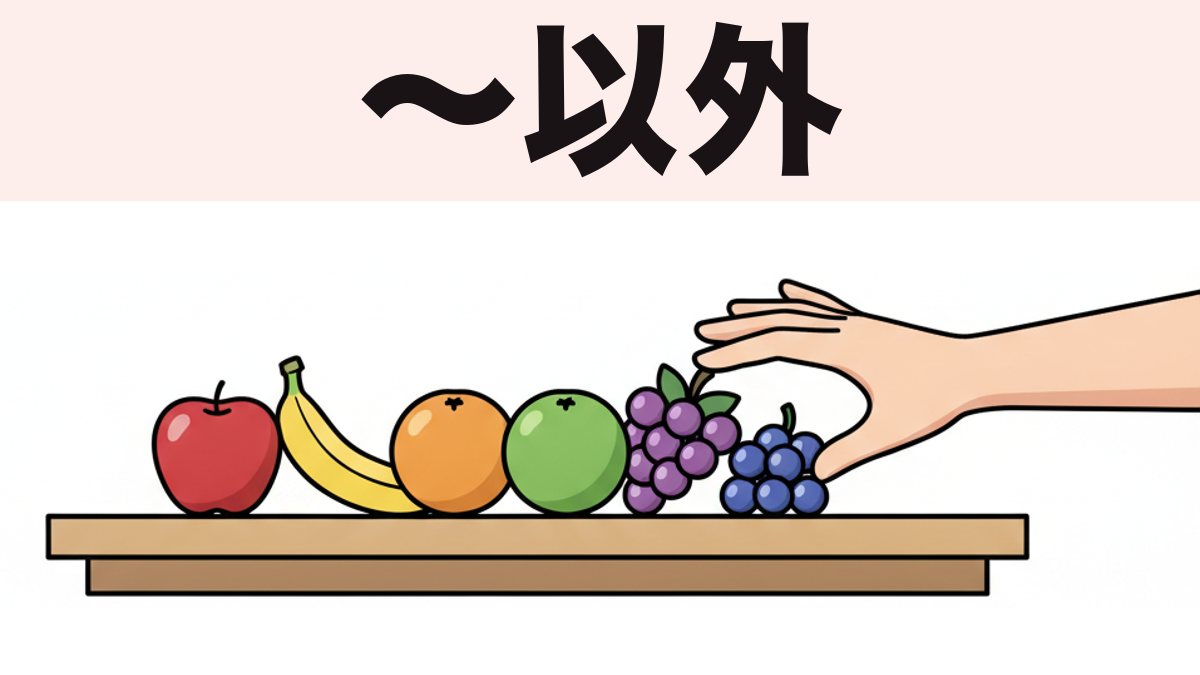
〜以外 means "other than X." What it does to the sentence depends entirely on the verb after it: 日本語以外話せます means "I can speak languages other than Japanese," while 日本語以外話せません means "I can't speak anything but Japanese." Same two characters, opposite conclusions.
「〜以外」は「Xのほか」です。でも、文の意味は後ろの動詞で決まります。「日本語以外話せます」は「日本語のほかも話せます」、「日本語以外話せません」は「日本語しか話せません」です。同じ2文字で、結論が反対になります。
以外 is a small, high-frequency piece of Japanese that beginners can read and intermediate learners still occasionally misparse, because the meaning lives in the verb rather than in the word itself.
The basics
How it attaches
以外 attaches directly to a noun with no particle.
日曜日以外は仕事です。 — Other than Sunday, I work. (polite) あなた以外に誰も知りません。 — Nobody but you knows. (polite)
The noun goes straight in front. 日曜日の以外 is wrong; it is 日曜日以外.
After 以外, you can add は, に, を or nothing at all, depending on what role the phrase plays in the sentence. 以外は is the most common, because you are usually contrasting the excluded thing with everything else.
The positive verb: exclusion
日本語以外の言語も話せます。 — I can speak languages other than Japanese too. (polite)
Here 以外 excludes Japanese and the sentence is about what is left over. This is the reading English speakers expect.
The negative verb: "only"
日本語以外話せません。 — I can't speak anything other than Japanese. (polite — i.e. Japanese only)
Here the negative verb flips the emphasis: the leftover set is empty, so the excluded item is the whole story. This is the reading that catches people, because the sentence ends up meaning "only Japanese" despite containing no word for "only."
The same logic runs through だけ vs しか — しか also requires a negative and produces "only" out of an exclusion.
Beyond the basics
以外の: modifying a noun
日本以外の国にも行きました。 — I also went to countries other than Japan. (polite)
To put an 以外 phrase in front of a noun, you need の. 日本以外国 is not a phrase; it is 日本以外の国.
ほかに and そのほか: the softer version
ほかに means "besides, in addition" and is more conversational.
ほかに質問はありますか。 — Are there any other questions? (polite — the standard end-of-meeting line) これのほかに何かありますか。 — Is there anything besides this? (polite)
ほかに looks forward to what else exists; 以外 looks at a set and removes something from it. In practice ほかに is warmer and appears in speech far more often.
を除いて: the formal exclusion
月曜日を除いて、毎日営業しています。 — We're open every day except Monday. (formal, a notice)
を除いて (をのぞいて) is written and official. You will see it on opening-hours notices and in contracts. Saying it in conversation sounds like reading from a sign, exactly like 〜場合 does.
以外 in time and number expressions
以外 belongs to a family of 以〜 words that all mark boundaries.
| Japanese | Reading | Meaning |
|---|---|---|
| 以外 | いがい | other than |
| 以内 | いない | within (inclusive) |
| 以上 | いじょう | or more (inclusive) |
| 以下 | いか | or less (inclusive) |
| 以前 | いぜん | before, previously |
| 以降 | いこう | from then on |
The 以 means "from this point," and every one of these is inclusive of the boundary. 三日以内 means within three days including the third; 十人以上 means ten or more, including exactly ten. That inclusivity matters in anything with a deadline or a price threshold.
以外に and 以外にも: "besides that, also"
Adding に turns 以外 into an adverbial phrase, and adding も on top of that makes it "and on top of that."
それ以外に何かありますか。 — Is there anything besides that? (polite) 日本語以外にも英語が話せます。 — Besides Japanese, I can also speak English. (polite — the も emphasizes the addition)
The difference between 以外は and 以外にも is which side of the line you are pointing at. 以外は sets the excluded thing aside and talks about the rest; 以外にも keeps the excluded thing in view and adds to it. 日本語以外は話せません says Japanese is all you have; 日本語以外にも話せます says Japanese is not all you have.
That も is doing the same additive work it does everywhere else in the language, which is worth noticing: most of the difficulty in 以外 sentences comes from the particles stacked after it rather than from 以外 itself.
意外 is a different word
意外 (いがい) is read identically and means "unexpected." It is a な-adjective and has nothing to do with 以外.
意外においしかったです。 — It was unexpectedly good. (polite)
In speech, context separates them instantly. In writing, they are two different kanji compounds and confusing them is a visible error.
Common mistakes
- Missing the negative flip. 以外 plus a negative verb means "only." Reading it as "other than" gives you the opposite of the intended meaning.
- Adding の before 以外. 日曜日の以外 is wrong. The noun attaches directly.
- Dropping の after 以外 before a noun. 日本以外国 is incomplete; it is 日本以外の国.
- Writing 意外 for 以外. Same reading, different word. 意外 means "unexpected."
- Assuming 以上 and 以下 exclude the boundary. They include it. 十人以上 includes exactly ten people.
- Using を除いて in conversation. Correct but official-sounding. Use 以外 or ほかに.
Ways to say "except"
| Japanese | Register | Example |
|---|---|---|
| 〜以外 | Neutral, very common | 日曜日以外は仕事です |
| 〜以外の + noun | Neutral | 日本以外の国 |
| ほかに | Conversational | ほかに質問はありますか |
| 〜を除いて | Formal, written | 月曜日を除いて営業 |
| 〜しか + negative | Neutral, means "only" | 日本語しか話せません |
| 〜だけ | Neutral, means "only" | 日本語だけ話せます |
Practice
Questions 1 and 2 are the pair: the same noun, two verbs, opposite meanings.
1. Say "I can speak languages other than Japanese too," politely.
Show answer
日本語以外の言語も話せます。 — Positive verb, so 以外 excludes Japanese and the sentence is about the rest.
2. Say "I can't speak anything other than Japanese," politely.
Show answer
日本語以外話せません。 — Negative verb, so the leftover set is empty and the sentence means "Japanese only."
3. Say "other than Sunday, I work," politely.
Show answer
日曜日以外は仕事です。 — 以外は is the most common form, because you are contrasting with everything else.
4. Say "I also went to countries other than Japan."
Show answer
日本以外の国にも行きました。 — The の is required to attach 以外 to a noun.
5. Ask "are there any other questions?" at the end of a meeting.
Show answer
ほかに質問はありますか。 — ほかに is the conversational choice here. 以外 would sound oddly formal.
6. Write a notice: "we're open every day except Monday."
Show answer
月曜日を除いて、毎日営業しています。 — を除いて is the written register for exclusions.
7. Does 十人以上 include exactly ten people?
Show answer
はい、十人も入ります。 — Yes. The 以〜 family is inclusive of the boundary, which matters for deadlines and price thresholds.
8. Say "it was unexpectedly good," politely.
Show answer
意外においしかったです。 — 意外, not 以外. Same reading, completely different word.
9. Fix this: 日曜日の以外は仕事です。
Show answer
日曜日以外は仕事です。 — The noun attaches directly, with no の in front.
10. Fix this: 日本以外国にも行きました。
Show answer
日本以外の国にも行きました。 — Before a noun, 以外 needs の.
FAQ
Is 以外 N3? Usually taught around N3, though it appears earlier in reading material because it is short and very common on signs and notices.
What is the difference between 以外 and しか? しか always takes a negative and always means "only." 以外 can go either way depending on the verb. 日本語しか話せません and 日本語以外話せません mean the same thing; 以外 simply has the other reading available too.
Can 以外 attach to a verb? Yes, via the plain form: 食べる以外にすることがない ("there's nothing to do but eat"). This is less common than the noun version but perfectly standard.
Why are 以上 and 以下 inclusive? Because 以 means "from this point," so the point itself is part of the range. If you need an exclusive boundary, Japanese uses 未満 (みまん, "less than"): 十八歳未満 excludes eighteen-year-olds.
Is ほかに always interchangeable with 以外? No. ほかに adds ("what else is there?"); 以外 subtracts ("everything but this"). They overlap in some sentences and not in others.
How do I say "except for you"? あなた以外 or あなたを除いて. In conversation the first is natural; the second belongs in writing. あなた以外に誰も ("nobody but you") is the emphatic version, and it takes a negative verb.
Vocabulary from this article
Tap the block to select all of it, then copy. In Anki: File → Import, note type Basic, separator Tab — the first column becomes the front, the second the back.
以外	いがい — other than, except
意外	いがい — unexpected
以内	いない — within
以上	いじょう — or more
以下	いか — or less
以前	いぜん — before, previously
以降	いこう — from then on
未満	みまん — less than (exclusive)
除く	のぞく — to exclude
ほかに	ほかに — besides, in addition
言語	げんご — language
営業	えいぎょう — business operation
質問	しつもん — question
仕事	しごと — work
国	くに — country
日曜日	にちようび — Sunday
月曜日	げつようび — Monday
誰も	だれも — nobody (with negative)
I'm Yuuki, a Japanese teacher based in Tokyo. I've taught on italki as a Top 1% teacher and watched over 1,500 anime. 以外 is a good example of something Japanese does constantly: the word stays neutral and the verb at the end decides what the sentence actually claims — which is why reading Japanese to the end is not optional.
Sources: the author's own lessons and standard reference grammars.
「以外」は短くて、よく出ることばです。初級でも読めます。でも、中級になってもときどき読みまちがえます。意味が「以外」ではなく、後ろの動詞にあるからです。
基本
つけ方
名詞にそのままつきます。助詞は入りません。
日曜日以外は仕事です。 — Other than Sunday, I work. (polite) あなた以外に誰も知りません。 — Nobody but you knows. (polite)
「日曜日の以外」は間違いです。「日曜日以外」です。
後ろには「は」「に」「を」がついたり、何もつかなかったりします。「以外は」がいちばん多いです。ほかのものとくらべているからです。
肯定の動詞: 「〜のほか」
日本語以外の言語も話せます。 — I can speak languages other than Japanese too. (polite)
日本語を外して、残りの話をしています。英語と同じ読み方です。
否定の動詞: 「〜だけ」
日本語以外話せません。 — I can't speak anything other than Japanese. (polite — i.e. Japanese only)
否定になると、残りが「ない」になります。だから「日本語だけ」という意味になります。「だけ」ということばが1つもないのに、そうなります。
「しか〜ない」と同じ考え方です。
もう少し先へ
「以外の」
日本以外の国にも行きました。 — I also went to countries other than Japan. (polite)
名詞の前に置く時は「の」がいります。「日本以外国」は足りません。
「ほかに」
「ほかに」は「そのうえに」で、話しことばでよく使います。
ほかに質問はありますか。 — Are there any other questions? (polite — the standard end-of-meeting line) これのほかに何かありますか。 — Is there anything besides this? (polite)
「ほかに」は足す形、「以外」は引く形です。話す時は「ほかに」のほうが多いです。
「を除いて」
月曜日を除いて、毎日営業しています。 — We're open every day except Monday. (formal, a notice)
「を除いて(をのぞいて)」は書きことばです。お店のお知らせや契約書に出ます。話す時に使うと、看板を読んでいるように聞こえます。
「以〜」のなかま
| 日本語 | 読み方 | 意味 |
|---|---|---|
| 以外 | いがい | other than |
| 以内 | いない | within |
| 以上 | いじょう | or more |
| 以下 | いか | or less |
| 以前 | いぜん | before |
| 以降 | いこう | from then on |
「以」は「ここから」という意味です。だから、境目の数も入ります。「三日以内」は3日目も入ります。「十人以上」は、ちょうど10人も入ります。しめきりや値段の時に大事です。
「以外に」「以外にも」
「に」をつけると「そのほかに」という形になります。「も」を足すと「そのうえ」という意味が入ります。
それ以外に何かありますか。 — Is there anything besides that? (polite) 日本語以外にも英語が話せます。 — Besides Japanese, I can also speak English. (polite — the も emphasizes the addition)
「以外は」と「以外にも」は、線のどちら側を見ているかがちがいます。「以外は」は外したものを置いて、残りの話をします。「以外にも」は外したものも見ながら、足していきます。「日本語以外は話せません」は「日本語だけ」、「日本語以外にも話せます」は「日本語のほかにもある」です。
むずかしいのは「以外」そのものではなく、後ろにつく助詞です。そこを見れば、意味が決まります。
「意外」は別のことばです
「意外(いがい)」は「思っていたのとちがう」です。な形容詞で、「以外」とは関係ありません。
意外においしかったです。 — It was unexpectedly good. (polite)
話す時は場面で分かります。書く時は、別の漢字なので気をつけてください。
よくある間違い
- 否定の時に「〜のほか」と読む。 「〜だけ」という意味になります。
- 「以外」の前に「の」を入れる。 「日曜日以外」です。
- 名詞の前で「の」を落とす。 「日本以外の国」です。
- 「意外」と書く。 別のことばです。
- 「以上」「以下」が境目を入れないと思う。 入ります。
- 話す時に「を除いて」を使う。 「以外」か「ほかに」です。
「except」の言い方
| 日本語 | 場面 | 例 |
|---|---|---|
| 〜以外 | ふつう・よく使う | 日曜日以外は仕事です |
| 〜以外の+名詞 | ふつう | 日本以外の国 |
| ほかに | 話す時 | ほかに質問はありますか |
| 〜を除いて | 書く時 | 月曜日を除いて営業 |
| 〜しか+否定 | 「〜だけ」 | 日本語しか話せません |
| 〜だけ | 「〜だけ」 | 日本語だけ話せます |
練習
1番と2番が組です。同じことばで、動詞がちがうと意味が反対になります。
1. 「日本語以外の言語も話せます」と言ってください。
答えを見る
日本語以外の言語も話せます。 — 肯定なので「日本語のほか」の話です。
2. 「日本語しか話せません」を「以外」で言ってください。
答えを見る
日本語以外話せません。 — 否定なので「日本語だけ」という意味になります。
3. 「日曜日以外は仕事です」と言ってください。
答えを見る
日曜日以外は仕事です。 — 「以外は」がいちばん多い形です。
4. 「日本以外の国にも行きました」と言ってください。
答えを見る
日本以外の国にも行きました。 — 名詞の前は「の」がいります。
5. 会議の終わりに「ほかに質問はありますか」と聞いてください。
答えを見る
ほかに質問はありますか。 — ここは「以外」だとかたすぎます。
6. お知らせに「月曜日以外は毎日開いています」と書いてください。
答えを見る
月曜日を除いて、毎日営業しています。 — 書く時は「を除いて」です。
7. 「十人以上」に、ちょうど10人は入りますか。
答えを見る
入ります。 — 「以」のことばは、境目の数も入ります。
8. 「意外においしかったです」と言ってください。
答えを見る
意外においしかったです。 — 「以外」ではなく「意外」です。
9. 直してください: 日曜日の以外は仕事です。
答えを見る
日曜日以外は仕事です。 — 前に「の」は入りません。
10. 直してください: 日本以外国にも行きました。
答えを見る
日本以外の国にも行きました。 — 名詞の前は「の」です。
よくある質問
「以外」はN3ですか。 ふつうはN3で習います。でも看板やお知らせには、もっと早く出てきます。
「以外」と「しか」はちがいますか。 「しか」は必ず否定で、必ず「だけ」です。「以外」は、動詞で意味が変わります。
動詞につけられますか。 つけられます。「食べる以外にすることがない」のように使います。
どうして「以上」「以下」は境目を入れるのですか。 「以」が「ここから」という意味だからです。入れたくない時は「未満(みまん)」を使います。「十八歳未満」は18歳を入れません。
「ほかに」と「以外」はいつも同じですか。 ちがいます。「ほかに」は足す形、「以外」は引く形です。
「あなた以外」は何と言いますか。 「あなた以外」でも「あなたを除いて」でも言えます。話す時は上のほうが自然です。
この記事に出た単語
このブロックを長く押して全部選び、コピーしてください。Ankiでは ファイル → 読み込み、ノートタイプは 基本、区切りは タブ にします。左が表、右が裏になります。
以外	いがい — other than, except
意外	いがい — unexpected
以内	いない — within
以上	いじょう — or more
以下	いか — or less
以前	いぜん — before, previously
以降	いこう — from then on
未満	みまん — less than (exclusive)
除く	のぞく — to exclude
ほかに	ほかに — besides, in addition
言語	げんご — language
営業	えいぎょう — business operation
質問	しつもん — question
仕事	しごと — work
国	くに — country
日曜日	にちようび — Sunday
月曜日	げつようび — Monday
誰も	だれも — nobody (with negative)
日本語教師のユウキです。東京にいます。 italkiで Top 1% の教師をしています。アニメは1,500本以上見ました。「以外」は、日本語のやり方がよく分かる例です。ことばは中立で、最後の動詞が結論を決めます。だから日本語は、最後まで読まないといけません。
More drills like the ones above, plus a timed JLPT-style mock test: Practice · N3上のような練習問題と、時間つきのJLPT形式のもぎ試験: 練習ページ · N3
Want to try this in a real conversation?
本当の会話で、ためしてみませんか?
30-minute trial lesson, $13. Times shown in your own timezone.
30分の体験レッスン、$13。時間はあなたのタイムゾーンで表示されます。
Book a trial lesson · $13