Talking about hobbies in Japanese: 趣味は何ですか, and the answer that sounds natural趣味の話: 「趣味は何ですか」への自然な答え方
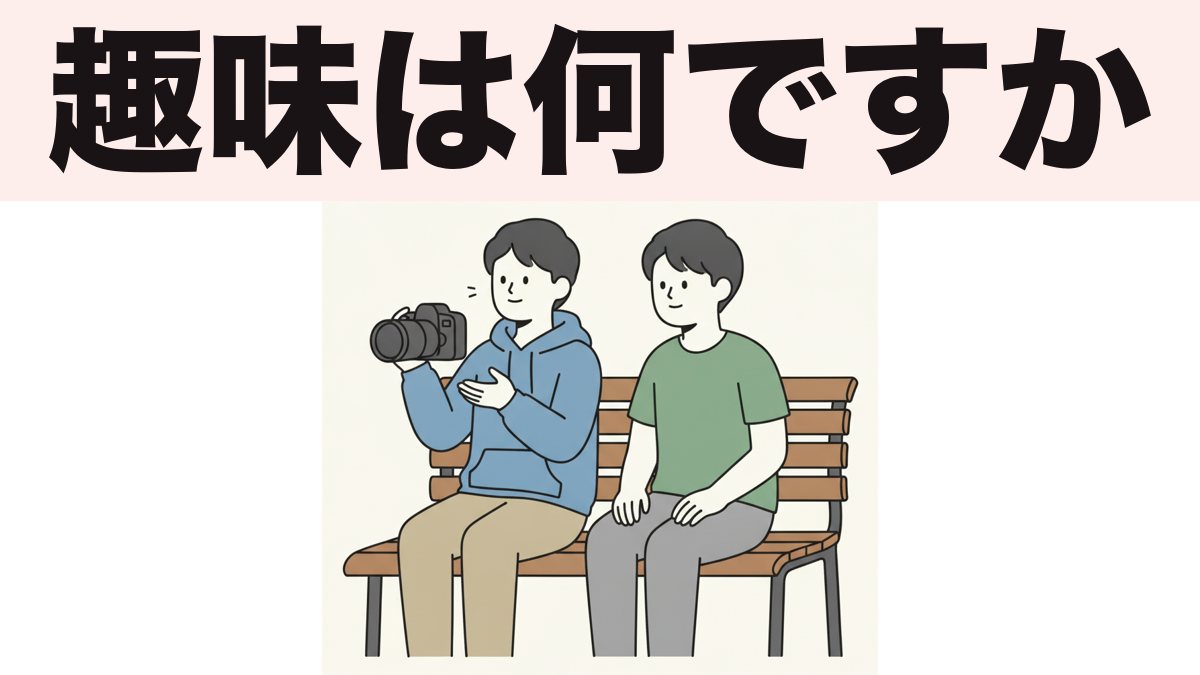
趣味は何ですか asks "what are your hobbies?" The difficulty is the answer: 趣味は読書です is grammatical but stiff, and 本を読むのが好きです is what a person actually says. Hobbies in Japanese are usually described with a verb, not a noun.
「趣味は何ですか」は、聞くのは簡単です。むずかしいのは答え方です。「趣味は読書です」は正しいですが、かたいです。「本を読むのが好きです」のほうが、人が言う形です。日本語では、趣味を名詞ではなく動詞で言います。
This question comes up in the first five minutes of almost every conversation with someone new, so it is worth having an answer that sounds like you rather than like a textbook.
The basics
Asking
趣味は何ですか。 — What are your hobbies? (polite, the standard question) 休みの日は何をしていますか。 — What do you do on your days off? (polite — the softer, more natural version)
The second question is the one people actually ask each other, because 趣味 is a slightly formal word that implies a serious pursuit. 休みの日は何をしていますか invites a real answer rather than a label.
Answering with a noun
趣味は料理です。 — My hobby is cooking. (polite — correct but a little flat) 趣味は読書です。 — My hobby is reading. (polite — same shape, same flatness)
A bare noun is grammatical and safe. It also ends the conversation, because there is nowhere for the other person to go with it.
Answering with a verb: the natural version
Two patterns do almost all the work.
本を読むのが好きです。 — I like reading books. (polite — the natural answer) 趣味は本を読むことです。 — My hobby is reading books. (polite — slightly more formal)
〜のが好きです is conversational. 〜ことです is the "my hobby is" frame and sounds a touch more deliberate. Both use a nominalizer to turn a verb into something that can be the subject or the predicate — see こと vs の for which one fits where.
The vocabulary
| Japanese | Reading | English |
|---|---|---|
| 趣味 | しゅみ | hobby |
| 読書 | どくしょ | reading |
| 映画鑑賞 | えいがかんしょう | watching films |
| 音楽鑑賞 | おんがくかんしょう | listening to music |
| 料理 | りょうり | cooking |
| 旅行 | りょこう | travel |
| 散歩 | さんぽ | going for walks |
| 写真 | しゃしん | photography |
| 釣り | つり | fishing |
| 登山 | とざん | mountain climbing |
| ゲーム | げーむ | games |
| 漫画 | まんが | manga |
| アニメ | あにめ | anime |
| 筋トレ | きんとれ | strength training |
| 楽器 | がっき | musical instrument |
映画鑑賞 and 音楽鑑賞 are the formal, written forms you see on CVs and profiles. In speech, 映画を見ること and 音楽を聴くこと are more natural.
Beyond the basics
得意 vs 好き: good at vs likes
These are different claims and Japanese keeps them apart.
料理が好きです。 — I like cooking. (polite — no claim about skill) 料理が得意です。 — I'm good at cooking. (polite — a claim about skill)
得意 (とくい) means you are good at something, and saying it about yourself is slightly bolder than English "I'm good at," so many speakers soften it: 料理はまあまあ得意です. The opposite is 苦手 (にがて), "bad at" or "not keen on," which doubles as a polite way to decline: 辛いものは苦手です ("I'm not good with spicy food") is softer than saying you dislike it.
ハマっている: what you are currently into
最近、キャンプにハマっています。 — I'm really into camping at the moment. (casual-polite)
ハマる means "to be hooked on," and ハマっている is the single most natural way to describe a current interest. It implies recency and enthusiasm in a way 趣味 does not, and it invites a follow-up question, which is exactly what you want in a first conversation.
Note the particle: ハマる takes に.
〜歴: how long you have been doing it
ギター歴は五年です。 — I've been playing guitar for five years. (polite)
〜歴 (れき) attaches to a noun and means "history of." ギター歴, 日本語歴, 料理歴 — it is a compact way to answer "how long have you been doing that?" and it appears constantly in profiles and introductions.
Keeping the conversation going
The most useful thing after answering is to hand the question back.
〜さんは? — And you? (polite — the shortest possible return) どんな映画が好きですか。 — What kind of films do you like? (polite — narrowing in)
どんな + noun is the follow-up machine. Once someone says they like films, どんな映画が好きですか opens the actual conversation. This is the two-questions pattern at work.
Anime as an answer
If your honest answer is anime, say so — it is a completely normal hobby to name in Japan, and it makes you easier to talk to, not harder.
アニメを見るのが好きです。 — I like watching anime. (polite) 最近は〜にハマっています。 — Lately I'm really into ~. (casual-polite, name the series)
Naming a specific series is more useful than the category, because it gives the other person something concrete to respond to. If the conversation turns into fan vocabulary, otaku slang has the words you will hear next.
Common mistakes
- Answering with a bare noun and stopping. 趣味は料理です is correct and closes the topic. Add a verb phrase or a detail.
- Using 得意 when you mean 好き. They are different claims. Liking something says nothing about skill.
- Forgetting the の in 〜のが好きです. 本を読む好きです is not a sentence. The verb has to be nominalized.
- Using 趣味 for something you do casually. 趣味 implies a real pursuit. For "I sometimes do X," just say so.
- Using を with ハマる. It takes に: ゲームにハマっています.
- Answering and not returning the question. 〜さんは? costs three syllables and doubles the conversation.
Ways to answer 趣味は何ですか
| Your answer | Pattern | Feel |
|---|---|---|
| 趣味は料理です | Bare noun | Correct, a bit flat |
| 料理をすることです | 〜ことです | Slightly formal |
| 料理をするのが好きです | 〜のが好きです | Natural, conversational |
| 料理が得意です | 〜が得意です | A claim about skill |
| 料理にハマっています | 〜にハマっている | Currently into it |
| 料理歴は十年です | 〜歴 | How long you've done it |
| 辛いものは苦手です | 〜が苦手です | Soft way to decline |
Practice
Questions 3 and 4 are the pair: liking something and being good at it are different claims.
1. Ask what someone's hobbies are, politely.
Show answer
趣味は何ですか。 — The standard question. 休みの日は何をしていますか is softer and gets better answers.
2. Answer "I like reading books" in the natural, conversational way.
Show answer
本を読むのが好きです。 — の nominalizes the verb. Without it the sentence does not work.
3. Say "I like cooking," politely.
Show answer
料理が好きです。 — 好き makes no claim about how good you are.
4. Say "I'm good at cooking," politely.
Show answer
料理が得意です。 — 得意 is a claim about skill. Many speakers soften it with まあまあ.
5. Decline spicy food politely, without saying you dislike it.
Show answer
辛いものは苦手です。 — 苦手 is the standard soft refusal. Much gentler than 嫌いです.
6. Say "I'm really into camping at the moment."
Show answer
最近、キャンプにハマっています。 — に, not を. ハマる invites a follow-up question, which is the point.
7. Say "I've been playing guitar for five years."
Show answer
ギター歴は五年です。 — 〜歴 attaches to the noun and compresses the whole sentence.
8. Hand the question back in the shortest possible way.
Show answer
〜さんは? — Three syllables, and it doubles the length of the conversation.
9. Fix this: 本を読む好きです。
Show answer
本を読むのが好きです。 — The verb has to be nominalized with の before が好き can attach.
10. Fix this: ゲームをハマっています。
Show answer
ゲームにハマっています。 — ハマる takes に, like 慣れる and 乗る.
FAQ
Is 趣味 a formal word? Slightly. It implies a real pursuit rather than something you do occasionally. 休みの日は何をしていますか avoids that implication and usually gets a more honest answer.
Is it strange to say anime is my hobby in Japan? Not at all. It is an entirely ordinary answer, and naming a specific series rather than the category gives the other person something to respond to.
What is the difference between 好き and 大好き? 大好き is stronger — "I love it." Both take が: 料理が大好きです. There is no grammatical difference, only degree.
How do I say "I don't really have any hobbies"? 特にありません ("nothing in particular") is honest and perfectly acceptable, though adding what you do on days off keeps the conversation alive: 特にないんですが、よく散歩します.
Is 苦手 the same as 嫌い? No, and the difference matters socially. 嫌い is "I dislike it," which is blunt. 苦手 is "I'm not good with it," which lets you decline without judging the thing.
Why 映画鑑賞 instead of 映画を見ること? 映画鑑賞 is the compact, written form used on CVs, profiles and forms. In conversation the verb version sounds more natural and less like filling in a box.
Vocabulary from this article
Tap the block to select all of it, then copy. In Anki: File → Import, note type Basic, separator Tab — the first column becomes the front, the second the back.
趣味	しゅみ — hobby
読書	どくしょ — reading
映画鑑賞	えいがかんしょう — watching films
音楽鑑賞	おんがくかんしょう — listening to music
料理	りょうり — cooking
旅行	りょこう — travel
散歩	さんぽ — a walk
写真	しゃしん — photograph
釣り	つり — fishing
登山	とざん — mountain climbing
楽器	がっき — musical instrument
筋トレ	きんとれ — strength training
得意	とくい — good at
苦手	にがて — bad at, not keen on
ハマる	はまる — to be hooked on
歴	れき — history of (doing something)
休み	やすみ — day off
辛い	からい — spicy
I'm Yuuki, a Japanese teacher based in Tokyo. I've taught on italki as a Top 1% teacher and watched over 1,500 anime. 趣味は何ですか is the question that decides how a first conversation goes, and the difference between a flat answer and a good one is almost always a verb.
Sources: the author's own lessons and standard reference grammars.
初めて会った人と、最初の5分でだいたい出てくる質問です。だから、自分らしい答えを用意しておくと役に立ちます。
基本
聞き方
趣味は何ですか。 — What are your hobbies? (polite, the standard question) 休みの日は何をしていますか。 — What do you do on your days off? (polite — the softer, more natural version)
実は、下のほうがよく使われます。「趣味」は少しかたいことばで、「ちゃんとやっていること」という感じがあるからです。
名詞で答える
趣味は料理です。 — My hobby is cooking. (polite — correct but a little flat) 趣味は読書です。 — My hobby is reading. (polite — same shape, same flatness)
正しいですし、安全です。でも、話がそこで終わります。相手が続けにくいからです。
動詞で答える(自然な形)
2つの形で、ほとんど足ります。
本を読むのが好きです。 — I like reading books. (polite — the natural answer) 趣味は本を読むことです。 — My hobby is reading books. (polite — slightly more formal)
「〜のが好きです」は話しことば、「〜ことです」は少しきちんとした形です。どちらも、動詞を名詞にしてから使います。
ことば
| 日本語 | 読み方 | 英語 |
|---|---|---|
| 趣味 | しゅみ | hobby |
| 読書 | どくしょ | reading |
| 映画鑑賞 | えいがかんしょう | watching films |
| 音楽鑑賞 | おんがくかんしょう | listening to music |
| 料理 | りょうり | cooking |
| 旅行 | りょこう | travel |
| 散歩 | さんぽ | a walk |
| 写真 | しゃしん | photography |
| 釣り | つり | fishing |
| 登山 | とざん | mountain climbing |
| ゲーム | げーむ | games |
| 漫画 | まんが | manga |
| アニメ | あにめ | anime |
| 筋トレ | きんとれ | strength training |
| 楽器 | がっき | instrument |
「映画鑑賞」「音楽鑑賞」は、書く時の形です。履歴書やプロフィールに使います。話す時は「映画を見ること」「音楽を聴くこと」が自然です。
もう少し先へ
「得意」と「好き」
ちがうことを言っています。日本語は分けます。
料理が好きです。 — I like cooking. (polite — no claim about skill) 料理が得意です。 — I'm good at cooking. (polite — a claim about skill)
「得意(とくい)」は「上手だ」という意味です。自分で言うと少し強いので、「まあまあ得意です」とやわらげる人が多いです。
反対は「苦手(にがて)」です。断る時にも使えます。「辛いものは苦手です」は「嫌いです」よりずっとやわらかいです。
「ハマっている」
最近、キャンプにハマっています。 — I'm really into camping at the moment. (casual-polite)
「ハマる」は「夢中になる」です。今の興味を言うのに、いちばん自然な形です。相手も聞き返しやすくなります。
助詞は「に」です。
「〜歴」
ギター歴は五年です。 — I've been playing guitar for five years. (polite)
「〜歴(れき)」は「その長さ」です。「日本語歴」「料理歴」もあります。短く言えるので便利です。
話を続ける
答えたあと、相手に返すのがいちばん大事です。
〜さんは? — And you? (polite — the shortest possible return) どんな映画が好きですか。 — What kind of films do you like? (polite — narrowing in)
「どんな+名詞」は、話を広げる道具です。「映画が好き」と言われたら、「どんな映画が好きですか」で本当の会話が始まります。
アニメと答えていいです
本当にアニメが好きなら、そう言ってください。日本ではふつうの答えです。話しやすくなります。
アニメを見るのが好きです。 — I like watching anime. (polite) 最近は〜にハマっています。 — Lately I'm really into ~. (casual-polite, name the series)
作品の名前を言うと、相手が返事をしやすくなります。
よくある間違い
- 名詞1つで終わる。 動詞か、もう少しの説明を足します。
- 「好き」と「得意」をまぜる。 ちがうことを言っています。
- 「〜のが好き」の「の」を落とす。 「本を読む好きです」は文になりません。
- 軽くやることに「趣味」を使う。 「ときどきします」でいいです。
- 「ハマる」に「を」を使う。 「に」です。
- 相手に返さない。 「〜さんは?」だけで、会話が2倍になります。
「趣味は何ですか」への答え方
| 答え | 形 | 感じ |
|---|---|---|
| 趣味は料理です | 名詞だけ | 正しいが、少しかたい |
| 料理をすることです | 〜ことです | 少しきちんと |
| 料理をするのが好きです | 〜のが好きです | 自然 |
| 料理が得意です | 〜が得意です | 上手だ、という話 |
| 料理にハマっています | 〜にハマっている | 今、夢中 |
| 料理歴は十年です | 〜歴 | 長さの話 |
| 辛いものは苦手です | 〜が苦手です | やわらかい断り方 |
練習
3番と4番が組です。「好き」と「得意」はちがう話です。
1. 「趣味は何ですか」と、ていねいに聞いてください。
答えを見る
趣味は何ですか。 — 「休みの日は何をしていますか」のほうがやわらかいです。
2. 「本を読むのが好きです」と答えてください。
答えを見る
本を読むのが好きです。 — 「の」で動詞を名詞にします。
3. 「料理が好きです」と言ってください。
答えを見る
料理が好きです。 — 上手かどうかは言っていません。
4. 「料理が得意です」と言ってください。
答えを見る
料理が得意です。 — 上手だ、という話です。「まあまあ」をつける人が多いです。
5. 辛いものを、やわらかく断ってください。
答えを見る
辛いものは苦手です。 — 「嫌いです」よりずっとやわらかいです。
6. 「最近キャンプにハマっています」と言ってください。
答えを見る
最近、キャンプにハマっています。 — 「に」です。相手が聞き返しやすくなります。
7. 「ギターを五年やっています」を短く言ってください。
答えを見る
ギター歴は五年です。 — 「〜歴」で1文が短くなります。
8. いちばん短く、相手に質問を返してください。
答えを見る
〜さんは? — これだけで会話が続きます。
9. 直してください: 本を読む好きです。
答えを見る
本を読むのが好きです。 — 「の」が必要です。
10. 直してください: ゲームをハマっています。
答えを見る
ゲームにハマっています。 — 「慣れる」「乗る」と同じ「に」です。
よくある質問
「趣味」はかたいことばですか。 少しかたいです。「ちゃんとやっていること」という感じがあります。「休みの日は何をしていますか」のほうが答えやすいです。
日本で「アニメが趣味」と言っても大丈夫ですか。 大丈夫です。ふつうの答えです。作品の名前を言うと、もっと話しやすくなります。
「好き」と「大好き」はちがいますか。 強さだけのちがいです。どちらも「が」を使います。
「趣味がありません」は何と言いますか。 「特にありません」で大丈夫です。そのあとに「よく散歩します」などを足すと、会話が続きます。
「苦手」と「嫌い」はちがいますか。 ちがいます。「嫌い」ははっきりしすぎます。「苦手」は、相手やものを悪く言わずに断れます。
どうして「映画鑑賞」ではなく「映画を見ること」ですか。 「映画鑑賞」は書く時の形です。話す時は動詞のほうが自然です。
この記事に出た単語
このブロックを長く押して全部選び、コピーしてください。Ankiでは ファイル → 読み込み、ノートタイプは 基本、区切りは タブ にします。左が表、右が裏になります。
趣味	しゅみ — hobby
読書	どくしょ — reading
映画鑑賞	えいがかんしょう — watching films
音楽鑑賞	おんがくかんしょう — listening to music
料理	りょうり — cooking
旅行	りょこう — travel
散歩	さんぽ — a walk
写真	しゃしん — photograph
釣り	つり — fishing
登山	とざん — mountain climbing
楽器	がっき — musical instrument
筋トレ	きんとれ — strength training
得意	とくい — good at
苦手	にがて — bad at, not keen on
ハマる	はまる — to be hooked on
歴	れき — history of (doing something)
休み	やすみ — day off
辛い	からい — spicy
日本語教師のユウキです。東京にいます。 italkiで Top 1% の教師をしています。アニメは1,500本以上見ました。「趣味は何ですか」で、初めての会話がどうなるかが決まります。おもしろい答えとそうでない答えのちがいは、たいてい「動詞があるかどうか」です。
More drills like the ones above, plus a timed JLPT-style mock test: Practice · N5上のような練習問題と、時間つきのJLPT形式のもぎ試験: 練習ページ · N5
Want to try this in a real conversation?
本当の会話で、ためしてみませんか?
30-minute trial lesson, $13. Times shown in your own timezone.
30分の体験レッスン、$13。時間はあなたのタイムゾーンで表示されます。
Book a trial lesson · $13