人魚 and 人形: how one extra beat changes the word completely人魚と人形: 一拍のちがいで、言葉がまったく変わる
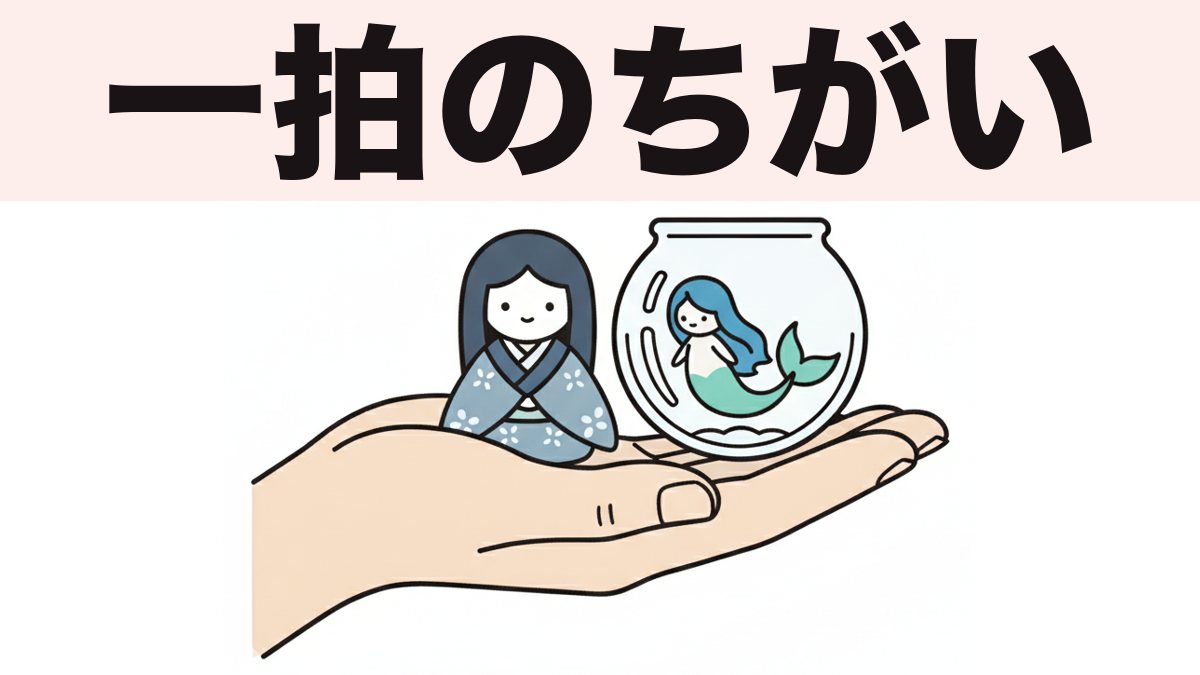
人魚 (にんぎょ) is a mermaid and 人形 (にんぎょう) is a doll. The only thing separating them is one extra beat of vowel at the end — and in Japanese that beat is not decoration, it is a whole syllable's worth of meaning.
「人魚(にんぎょ)」は海の生きもの、「人形(にんぎょう)」はおもちゃです。ちがいは、さいごの一拍だけです。日本語では、その一拍がかざりではありません。意味そのものです。
English speakers have a hard time with this because English stretches vowels for emphasis rather than for meaning. Saying "dooooll" does not make it a different word. In Japanese it does. This is the single most common reason a learner's Japanese is understood only after a pause, and it is also the reason some perfectly correct sentences land as jokes.
The basics
What is a long vowel?
A vowel held for two beats instead of one. Japanese is counted in mora — equal-length beats — and a long vowel takes two of them.
人魚を見た。 — I saw a mermaid. (にん・ぎょ — 3 beats) 人形を見た。 — I saw a doll. (にん・ぎょ・う — 4 beats)
The word is one beat longer, and that is the entire difference. There is no change in stress, no change in the consonants, and no context-free way to guess which one was meant.
How long vowels are written
In hiragana, by adding the matching vowel: おかあさん, おにいさん, くうき, おねえさん, and for the お row, usually う — がっこう, ありがとう.
お母さんは学校の先生です。 — My mother is a school teacher. (polite — three long vowels in one sentence)
In katakana it is a single bar instead: コーヒー, ビール, ケーキ. The bar is doing the same job as the extra kana in hiragana, which is why コヒー and コーヒ are both wrong in different directions.
The pairs that actually catch people
| Short | Meaning | Long | Meaning |
|---|---|---|---|
| 人魚 にんぎょ | mermaid | 人形 にんぎょう | doll |
| おばさん | aunt, middle-aged woman | おばあさん | grandmother, elderly woman |
| おじさん | uncle, middle-aged man | おじいさん | grandfather, elderly man |
| ビル | building | ビール | beer |
| ここ | here | 高校 こうこう | high school |
| 主人 しゅじん | husband | 囚人 しゅうじん | prisoner |
| 雪 ゆき | snow | 勇気 ゆうき | courage |
The おばさん pair is the one with social consequences. Calling someone's grandmother おばさん is merely odd; calling a woman in her forties おばあさん is not a mistake she will let pass quietly.
Beyond the basics
Why 人魚 keeps showing up
Mermaid stories are everywhere in Japanese fiction, and the specific Japanese version — the 人魚 whose flesh grants immortality — is old enough that it drives plots in manga and anime that have nothing to do with the European mermaid at all.
人魚の肉を食べると死ななくなる。 — If you eat mermaid flesh, you stop being able to die. (casual, describing a legend)
八百比丘尼 (やおびくに), the woman who eats it and lives eight hundred years, is a recognisable reference point in Japanese fiction. Noticing that 人魚 is a specific creature rather than a translation of "mermaid" is exactly the kind of gap that 〜にあたる exists to describe.
人形 is more than a toy
人形 covers dolls of every kind: children's toys, 雛人形 for the Doll Festival, puppets in 人形劇, and the ball-jointed dolls that are a serious adult hobby. It also works figuratively for a person with no will of their own, which is why 人形 appears as an insult in fiction.
あの人は社長の人形だ。 — That man is the president's puppet. (casual, critical)
The beat is about timing, not stress
This is the part that takes longest to fix, because the English instinct is to make a long vowel louder rather than longer.
Try it with a metronome or by tapping: に-ん-ぎょ-う is four even taps. に-ん-ぎょ is three. The ん is its own beat too, which is the other thing English speakers routinely swallow. Once both of those land as separate taps, the pairs above stop being a problem to produce — hearing them follows a little later.
A related trap is the small っ, which is also a full beat of silence: きて (come) versus きって (stamp). Same principle, different symptom.
Why listeners often understand you anyway
Context repairs most of it, which is both good news and the reason the habit survives so long. If you are holding a beer, ビル gets heard as ビール. The problem is the sentences where both readings work — 主人が来ました and 囚人が来ました are both grammatical, and only the beat tells them apart.
That is why fixing this is worth real practice time rather than waiting for it to fix itself. It is also why shadowing works better than reading here: the length is a thing you do with your mouth, not a thing you know.
Common mistakes
- Making the long vowel louder instead of longer. Volume is not the feature. Duration is.
- Dropping the beat in familiar words. ありがとう and がっこう both end in a long vowel that learners shorten once they stop thinking about it.
- Writing コーヒ or コヒー. The katakana bar is one beat and goes in exactly one place: コーヒー has two of them.
- Forgetting ん is its own beat. にんぎょう is four beats, not three, because ん counts.
- Treating っ as punctuation. The small っ is a beat of silence, and きて and きって are different words.
The four things that take a beat
| Feature | Written as | Example | Beats |
|---|---|---|---|
| Long vowel (hiragana) | Extra vowel kana | こうこう | 4 |
| Long vowel (katakana) | ー | ビール | 3 |
| ん | ん | にんぎょう | 4 |
| Small っ | っ | きって | 3 |
FAQ
Does 人魚 mean the same as "mermaid"? Not exactly. The Japanese 人魚 comes with its own folklore — most famously that eating its flesh grants very long life — so it carries associations the English word does not.
Is there a male version of 人魚? 人魚 itself is not gendered, though in modern usage it usually pictures a woman. Older tales describe 人魚 that are simply fish-like people.
How do I practise hearing the difference? Tap the beats while you listen. Counting mora physically is far more reliable than trying to hear "longness" as a quality.
Do Japanese speakers ever mishear these? Rarely, because they hear beats the way English speakers hear consonants. What does happen is that they hear your short vowel as the short word and become briefly confused — the repair is instant but visible.
Is the katakana bar ever used in hiragana? Occasionally for effect — らーめん, in shop signs and casual writing — but standard hiragana uses the extra vowel kana instead.
What is 雛人形? The set of dolls displayed for 雛祭り, the Doll Festival on March 3rd. It is the most common context in which a learner will meet the word 人形 outside a toy shop.
Practice
Build each answer before opening it. Questions 1 and 2 are a pair — one beat apart.
1. Say "I saw a mermaid."
Show answer
人魚を見た — にん・ぎょ, three beats. This is the pair to question 2.
2. Say "I saw a doll."
Show answer
人形を見た — にん・ぎょ・う, four beats. This is the pair to question 1.
3. How many beats are in にんぎょう?
Show answer
Four — に, ん, ぎょ, う. The ん is a full beat of its own.
4. Which is the building and which is the beer: ビル / ビール?
Show answer
ビル = building, ビール = beer — the bar adds a beat, and the beat is the whole difference.
5. Something is wrong here: コヒーを飲みます。
Show answer
コーヒーを飲みます — コーヒー has two long marks, one after コ and one after ヒ.
6. Which word means "grandmother": おばさん or おばあさん?
Show answer
おばあさん — おばさん is an aunt or a middle-aged woman, and mixing these up in the wrong direction is not taken lightly.
7. Say "my husband has arrived" without saying "the prisoner has arrived."
Show answer
主人が来ました(しゅじん) — three beats. 囚人 (しゅうじん) is four, and both sentences are grammatical.
8. What is the difference between きて and きって?
Show answer
きて = come, きって = stamp — the small っ is a full beat of silence, not punctuation.
9. Translate: あの人は社長の人形だ。
Show answer
That man is the president's puppet — 人形 also works figuratively for someone with no will of their own.
10. How many beats are in がっこう?
Show answer
Four — が, っ, こ, う. Both the small っ and the final う take a beat.
Vocabulary from this article
Tap the block to select all of it, then copy. In Anki: File → Import, note type Basic, separator Tab — the first column becomes the front, the second the back.
人魚	にんぎょ — mermaid
人形	にんぎょう — doll, puppet
主人	しゅじん — husband, master
囚人	しゅうじん — prisoner
高校	こうこう — high school
学校	がっこう — school
勇気	ゆうき — courage
雪	ゆき — snow
切手	きって — postage stamp
肉	にく — meat, flesh
社長	しゃちょう — company president
空気	くうき — air
祖母	そぼ — my grandmother
飲む	のむ — to drink
見る	みる — to see
死ぬ	しぬ — to die
I'm Yuuki, a Japanese teacher based in Tokyo. I've taught on italki as a Top 1% teacher and watched over 1,500 anime. Vowel length is the thing students fix last and should fix first — it is the difference between being understood immediately and being understood after a beat of confusion, every single sentence.
Sources: the author's own lessons and standard reference grammars.
英語話者にはむずかしいところです。英語では、のばすのは「強めるため」で、意味はかわりません。日本語はかわります。これが、正しい文なのに一度聞き返される、いちばん多い理由です。
基本
長い母音とは
一拍ではなく、二拍分のばす母音です。日本語は「拍(はく)」で数えます。長い母音は二拍です。
人魚を見た。 — I saw a mermaid. (にん・ぎょ — 3 beats) 人形を見た。 — I saw a doll. (にん・ぎょ・う — 4 beats)
一拍だけ長いです。それがちがいの全部です。強さはかわりません。
書き方
ひらがなでは、同じ母音を足します。「おかあさん」「おにいさん」「くうき」「おねえさん」。「お」の行はたいてい「う」です。「がっこう」「ありがとう」。
お母さんは学校の先生です。 — My mother is a school teacher. (polite — three long vowels in one sentence)
カタカナでは「ー」を使います。「コーヒー」「ビール」「ケーキ」。同じはたらきです。
まちがえやすいペア
| みじかい | 意味 | ながい | 意味 |
|---|---|---|---|
| 人魚 にんぎょ | mermaid | 人形 にんぎょう | doll |
| おばさん | aunt, middle-aged woman | おばあさん | grandmother |
| おじさん | uncle, middle-aged man | おじいさん | grandfather |
| ビル | building | ビール | beer |
| ここ | here | 高校 こうこう | high school |
| 主人 しゅじん | husband | 囚人 しゅうじん | prisoner |
| 雪 ゆき | snow | 勇気 ゆうき | courage |
「おばさん」のペアは気をつけてください。四十代の人に「おばあさん」と言うと、だまって聞いてはもらえません。
もう少しくわしく
「人魚」がよく出てくる理由
日本のお話には人魚がよく出ます。日本の人魚は、肉を食べると長く生きるという話が古くからあります。西洋の mermaid とは、少しちがう生きものです。
人魚の肉を食べると死ななくなる。 — If you eat mermaid flesh, you stop being able to die. (casual, describing a legend)
「八百比丘尼(やおびくに)」は、それを食べて八百年生きた人の話です。日本のフィクションでよく知られています。→ 〜にあたる
「人形」はおもちゃだけではない
「人形」は、子どものおもちゃ、雛人形、人形劇の人形、大人のしゅみの人形、ぜんぶです。「自分の考えがない人」という意味にも使います。
あの人は社長の人形だ。 — That man is the president's puppet. (casual, critical)
長さであって、強さではない
ここがいちばん時間のかかるところです。英語の感覚では、長い母音を「大きく」言ってしまいます。
手でたたいてみてください。「に・ん・ぎょ・う」は四回です。「に・ん・ぎょ」は三回です。「ん」も一拍です。英語話者は、ここをとばしがちです。
小さい「っ」も一拍です。「きて」と「きって」はちがう言葉です。
それでも通じてしまう理由
まわりの話で分かってしまうからです。ビールを持っていれば「ビル」も「ビール」に聞こえます。でも、どちらでも文になる場面があります。「主人が来ました」と「囚人が来ました」です。ここは拍でしか分かりません。
だから、自然に直るのを待たない方がいいです。読むよりも、声に出してまねる練習の方が効きます。長さは「知っていること」ではなく「口でやること」だからです。
よくあるまちがい
- 長い母音を「大きく」言う。 大きさではなく、長さです。
- なれた言葉で拍をおとす。「ありがとう」「がっこう」のさいごをみじかくしてしまいます。
- 「コヒー」「コーヒ」と書く。「コーヒー」は「ー」が二つです。
- 「ん」を拍だと思わない。「にんぎょう」は四拍です。
- 小さい「っ」を記号だと思う。「きて」と「きって」はちがう言葉です。
一拍になる四つ
| もの | 書き方 | 例 | 拍 |
|---|---|---|---|
| 長い母音(ひらがな) | 母音を足す | こうこう | 4 |
| 長い母音(カタカナ) | ー | ビール | 3 |
| ん | ん | にんぎょう | 4 |
| 小さい っ | っ | きって | 3 |
よくある質問
「人魚」は英語の mermaid と同じ? ぴったり同じではありません。日本の人魚には「肉を食べると長生きする」という話が付いています。
男の人魚もいる? 「人魚」に男女の区別はありません。今は女の人のすがたが多いですが、古い話には魚のような人が出ます。
聞き分ける練習は? 聞きながら手でたたいてください。「長さ」を耳で感じるより、拍を数える方がかくじつです。
日本語話者も聞きまちがえる? あまりありません。かわりに、みじかい方の言葉として聞いて、少しこんらんします。
ひらがなに「ー」は使う? かんばんなどで使うことはあります(「らーめん」)。ふつうは母音を足します。
「雛人形」とは? 三月三日の雛祭りにかざる人形のセットです。「人形」という言葉に出会う場面として、いちばん多いものの一つです。
練習
答えを見る前に、自分で作ってください。1番と2番はペアです。
1. 「人魚を見た」と言う。
答えを見る
人魚を見た — にん・ぎょ、三拍です。2番とペアです。
2. 「人形を見た」と言う。
答えを見る
人形を見た — にん・ぎょ・う、四拍です。1番とペアです。
3. 「にんぎょう」は何拍?
答えを見る
四拍 — に・ん・ぎょ・う。「ん」も一拍です。
4. 「ビル」と「ビール」、どちらが建物?
答えを見る
ビルビル建物、ビールビールのみもの — 「ー」が一拍を足します。
5. まちがいをなおす: コヒーを飲みます。
答えを見る
コーヒーを飲みます — 「ー」は二つです。
6. 「おばさん」と「おばあさん」、どちらが祖母?
答えを見る
おばあさん — 「おばさん」は親のきょうだい、または中年の女の人です。
7. 「主人が来ました」を正しく言う。
答えを見る
しゅじん(三拍) — 「しゅうじん(四拍)」は囚人です。どちらも文になります。
8. 「きて」と「きって」のちがいは?
答えを見る
きてきて来て、きってきって切手 — 小さい「っ」は音のない一拍です。
9. やくす: あの人は社長の人形だ。
答えを見る
あの人は社長の言いなりだ — 「人形」は「自分の考えがない人」という意味にも使います。
10. 「がっこう」は何拍?
答えを見る
四拍 — が・っ・こ・う。小さい「っ」もさいごの「う」も一拍です。
この記事に出た単語
上のブロックをタップしてぜんぶ選んで、コピーしてください。Ankiでは ファイル → インポート、ノートタイプは 基本、区切りは タブ です。左が表、右がうらになります。
人魚	にんぎょ — mermaid
人形	にんぎょう — doll, puppet
主人	しゅじん — husband, master
囚人	しゅうじん — prisoner
高校	こうこう — high school
学校	がっこう — school
勇気	ゆうき — courage
雪	ゆき — snow
切手	きって — postage stamp
肉	にく — meat, flesh
社長	しゃちょう — company president
空気	くうき — air
祖母	そぼ — my grandmother
飲む	のむ — to drink
見る	みる — to see
死ぬ	しぬ — to die
More drills like the ones above, plus a timed JLPT-style mock test: Practice · N4上のような練習問題と、時間つきのJLPT形式のもぎ試験: 練習ページ · N4
Want to try this in a real conversation?
本当の会話で、ためしてみませんか?
30-minute trial lesson, $13. Times shown in your own timezone.
30分の体験レッスン、$13。時間はあなたのタイムゾーンで表示されます。
Book a trial lesson · $13