お邪魔します: what to say when you walk into a Japanese homeお邪魔します: 人の家に上がるときの言葉
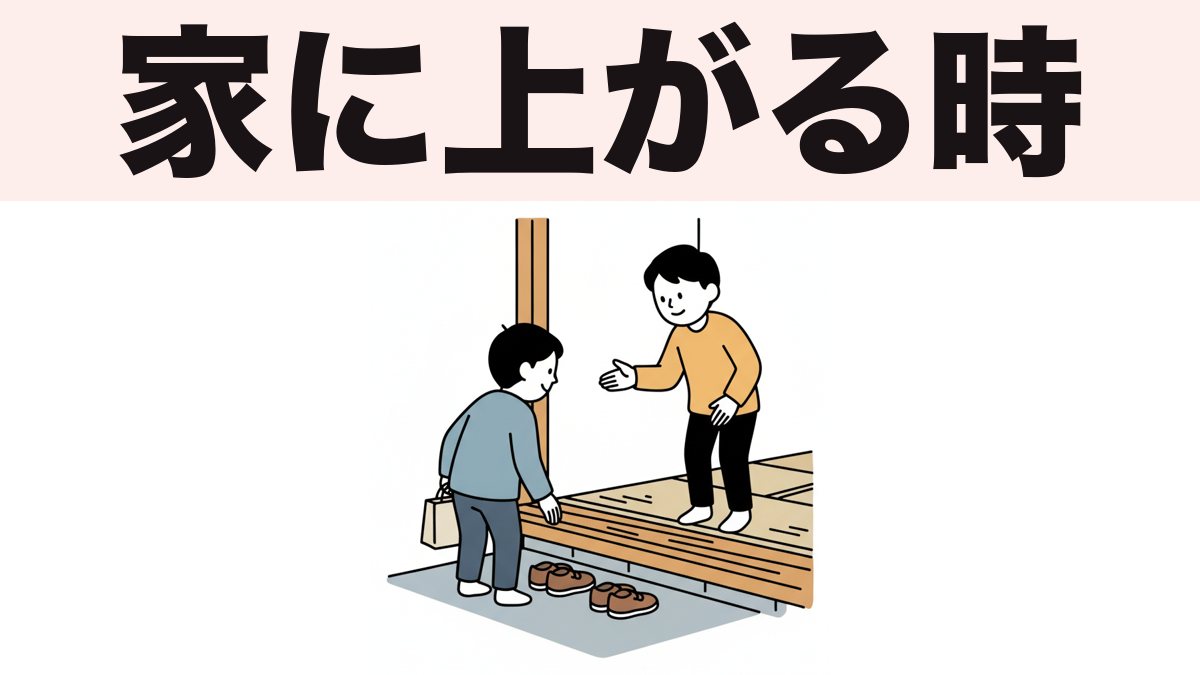
お邪魔します means "I'm going to get in your way" — and it is the standard, entirely cheerful thing to say as you step into someone's home.
「お邪魔します」は、意味を直訳すると「じゃまをします」です。でも、人の家に上がるときの、ふつうで明るいあいさつです。
A visit to a Japanese home runs on a short script. Every stage has a fixed phrase, the host has a fixed reply, and knowing six of them turns a nervous first visit into an easy one. The words are also genuinely strange if you translate them literally, which is why they are worth learning as moves rather than as sentences.
The basics
At the door
You say お邪魔します as you step up into the house — not when you knock, and not while you are still on the doorstep.
お邪魔します。 — (entering; literally "I will be a nuisance") どうぞ、お上がりください。 — Please come up. (polite; the host's line)
お上がりください uses 上がる, "to go up," because Japanese homes have a raised floor past the entryway. You physically step up out of the 玄関 (げんかん), and that step is the boundary between outside and inside.
邪魔 (じゃま) means a hindrance or an obstruction, and 邪魔する is a real verb you will use elsewhere: 邪魔しないで ("don't get in my way") is an everyday sentence, said to a cat as often as to a person.
Shoes
You take them off in the 玄関, standing on the lower level, and you turn them to face the door as you step up. Turning them is a small, noticed courtesy — it means you will not have to shuffle around backwards on the way out.
スリッパをどうぞ。 — Please use these slippers. (polite; the host offering)
If slippers appear, wear them, and take them off again before stepping onto tatami. Nothing goes on tatami but socks or bare feet. The whole of this — including the bathroom slippers, which are the most famous trap — is in where you take your shoes off in Japan.
On the way out
Same verb, past tense.
お邪魔しました。 — (leaving; "I was a nuisance") 今日はありがとうございました。 — Thank you for today. (polite; usually said alongside it)
The pair お邪魔します / お邪魔しました works exactly like いただきます / ごちそうさまでした: present on the way in, past on the way out. That symmetry is a feature of several Japanese set phrases and worth noticing, because it makes them much easier to remember — the eating pair is covered in いただきます and ごちそうさま.
Beyond the basics
The full sequence, with the host's replies
Japanese social phrases mostly come in pairs. Learning the reply makes the exchange predictable.
ごめんください。 — Excuse me, is anyone home? (polite; at the door, somewhat traditional) いらっしゃい。 — Welcome. (the host, casual-warm) お邪魔します。 — (you, stepping up) どうぞ。 — Go ahead. (the host, for everything: sitting, eating, entering)
どうぞ is the single most useful word the host has, and it covers sitting down, starting to eat, going through a door and picking something up. When in doubt as a guest, wait for どうぞ.
つまらないものですが and the gift
If you bring something — and you generally should, even if it is small — the traditional line as you hand it over is つまらないものですが ("it's a boring thing, but…"), a deliberate piece of self-deprecation.
つまらないものですが。 — It's nothing special, but please. (polite, traditional; handing over a gift) 心ばかりですが。 — Just a token. (polite; the slightly warmer modern alternative)
Younger hosts may find つまらないものですが stiff, and these days おいしいと聞いたので ("I heard these were good") or お口に合うといいのですが ("I hope it suits your taste") are common and friendlier. Any of them is better than handing something over with no sentence at all.
Hand it over with both hands, after you have sat down rather than in the entryway.
Where to sit
Wait to be shown. Japanese rooms have a 上座 (かみざ, the seat of honour, usually furthest from the door) and a 下座 (しもざ, nearest the door), and as a guest you will be steered to the former while politely resisting once.
こちらへどうぞ。 — This way, please. (the host, indicating your seat) 失礼します。 — Excuse me. (you, as you sit — the all-purpose "I'm doing something in your space")
失礼します is the other workhorse phrase of a visit. You say it entering a room, sitting down, taking something, and leaving. Its past form 失礼しました apologises for something already done, and お先に失礼します is how you leave anywhere before other people.
When you are offered food or drink
The expected move is to accept. A first-visit refusal reads as distance rather than politeness, and hosts will usually press once regardless.
どうぞ、召し上がってください。 — Please help yourself. (honorific; the host) いただきます。 — (you, before eating or drinking anything)
You say いただきます even for a cup of tea. It is not reserved for meals.
How long to stay
Shorter than you think, unless you have been invited for a meal. Two hours is generous for a casual visit, and the guest is the one who initiates leaving — a host will rarely suggest it.
そろそろ失礼します。 — I should be going soon. (polite; the standard exit line)
そろそろ ("about time now") does the softening. Stand up after you say it, not before.
Common mistakes
- Saying お邪魔します while still outside. It belongs to the moment you step up into the house, not to the doorbell.
- Using it for a shop or an office. Entering a shop you say nothing; entering an office or a meeting room you say 失礼します.
- Leaving shoes pointing inward. Turn them to face the door as you step up. It takes a second and is always noticed.
- Wearing slippers onto tatami. Off at the edge, every time.
- Refusing tea to be polite. Accepting is the polite move. Refusing repeatedly creates awkwardness rather than removing it.
- Waiting for the host to end the visit. That is the guest's job.
The sequence, in order
| Moment | You say | Host says |
|---|---|---|
| At the door | ごめんください | いらっしゃい |
| Stepping up | お邪魔します | どうぞ、お上がりください |
| Shoes | (turn them to face out) | スリッパをどうぞ |
| Sitting down | 失礼します | こちらへどうぞ |
| Handing over a gift | つまらないものですが/心ばかりですが | ありがとうございます |
| Tea or food arrives | いただきます | どうぞ、召し上がってください |
| Getting ready to go | そろそろ失礼します | もう少しいかがですか |
| At the door, leaving | お邪魔しました/今日はありがとうございました | またどうぞ |
FAQ
Do I really need a gift? For a first visit, yes — something small and edible is ideal, and something from your own country is better than something expensive. For a friend you see constantly, no.
What if I am not sure whether to take my shoes off? Take them off. In a private home it is always yes, and there is no situation where removing them causes a problem.
Is お邪魔します used anywhere other than homes? Occasionally when entering someone's office or a small workspace where you are clearly interrupting. The standard phrase for an office, though, is 失礼します.
What do I say if I arrive late? 遅れてすみません ("sorry I'm late") at the door, before お邪魔します. Keep it short — a long explanation makes it bigger than it is.
Should I offer to help in the kitchen? You can offer once — 何か手伝いましょうか ("shall I help with anything?") — and accept the refusal gracefully, because it will usually be a refusal.
Is ごめんください still used? Less than it was, and it now sounds slightly traditional. At a friend's flat with an intercom, their name plus です is what most people say. In an older house with a sliding door, ごめんください is still exactly right.
Practice
Build each answer before opening it. Questions 1 and 2 are a pair — same verb, different tense.
1. You are stepping up into a Japanese home. What do you say?
Show answer
お邪魔します — literally "I will be a nuisance," said at the moment you step up, not at the door. This is the pair to question 2.
2. You are leaving that home. What do you say?
Show answer
お邪魔しました — the same verb in the past. This is the pair to question 1.
3. What does the host say to invite you in?
Show answer
どうぞ、お上がりください — 上がる, "to go up," because you step up from the 玄関 into the house.
4. Which way should your shoes face after you take them off?
Show answer
Toward the door — turn them as you step up. Small, quick, and always noticed.
5. Hand over a gift with the traditional phrase.
Show answer
つまらないものですが — "it's a boring thing, but…" 心ばかりですが is the warmer modern alternative.
6. What do you say as you sit down in someone's room?
Show answer
失礼します — the all-purpose "I'm about to do something in your space." It also covers entering and leaving.
7. Tea arrives. What do you say before drinking it?
Show answer
いただきます — not only for meals. A cup of tea gets one too.
8. Say that you should be going.
Show answer
そろそろ失礼します — そろそろ softens it, and the guest is the one who starts this.
9. Something is wrong here: saying お邪魔します while still standing outside the front door.
Show answer
It belongs to the step up into the house — at the door you would say ごめんください, or your name plus です on an intercom.
10. You are entering a colleague's office rather than a home. Which phrase?
Show answer
失礼します — お邪魔します is for homes and for clearly interrupting someone's own space.
Vocabulary from this article
Tap the block to select all of it, then copy. In Anki: File → Import, note type Basic, separator Tab — the first column becomes the front, the second the back.
お邪魔します	おじゃまします — said on entering someone's home
邪魔	じゃま — hindrance, nuisance
玄関	げんかん — entryway
上がる	あがる — to go up, to step up into a house
失礼	しつれい — rudeness; "excuse me"
遠慮	えんりょ — holding back, reserve
上座	かみざ — the seat of honour
下座	しもざ — the lower seat, nearest the door
畳	たたみ — tatami mat
靴	くつ — shoes
手伝う	てつだう — to help
心ばかり	こころばかり — a small token (of feeling)
遅れる	おくれる — to be late
座る	すわる — to sit
帰る	かえる — to go home
そろそろ	そろそろ — about time now
I'm Yuuki, a Japanese teacher based in Tokyo. I've taught on italki as a Top 1% teacher and watched over 1,500 anime. The first visit to a Japanese home is the moment my students most want a script, and this is it — six phrases, in order, and the host supplies every other line.
Sources: the author's own lessons and standard reference grammars.
日本の家をたずねるときの言葉は、だいたい決まっています。場面ごとに言う文があって、家の人の返事も決まっています。6つおぼえれば、はじめての訪問でもこわくありません。
基本
入るとき
「お邪魔します」は、げんかんから上がるときに言います。ドアをノックするときではありません。
お邪魔します。 — (entering; literally "I will be a nuisance") どうぞ、お上がりください。 — Please come up. (polite; the host's line)
「お上がりください」の「上がる」は、げんかんから一段上がるからです。この段が、外と中の境目です。
「邪魔(じゃま)」はじゃまもののことです。「邪魔しないで」もよく使う文です。ねこにも言います。
くつ
げんかんの下の段でぬいで、上がるときにくつの向きをドアのほうへ直します。小さいことですが、よく見られています。
スリッパをどうぞ。 — Please use these slippers. (polite; the host offering)
スリッパが出たらはきます。ただし、たたみの前でぬぎます。たたみの上には、くつ下かはだしで上がります。
帰るとき
同じ動詞の、過去の形です。
お邪魔しました。 — (leaving; "I was a nuisance") 今日はありがとうございました。 — Thank you for today. (polite; usually said alongside it)
「お邪魔します/お邪魔しました」は、「いただきます/ごちそうさまでした」と同じ形です。入るときは今の形、出るときは過去の形です。
もう少し先へ
全体の流れと、家の人の返事
ごめんください。 — Excuse me, is anyone home? (polite; at the door, somewhat traditional) いらっしゃい。 — Welcome. (the host, casual-warm) お邪魔します。 — (you, stepping up) どうぞ。 — Go ahead. (the host, for everything: sitting, eating, entering)
「どうぞ」は、家の人がいちばん使う言葉です。すわる、食べる、入る、取る、ぜんぶに使えます。まよったら「どうぞ」を待ってください。
おみやげと「つまらないものですが」
小さくてもいいので、何か持っていくといいです。わたすときの古い言い方は「つまらないものですが」です。
つまらないものですが。 — It's nothing special, but please. (polite, traditional; handing over a gift) 心ばかりですが。 — Just a token. (polite; the slightly warmer modern alternative)
今は「おいしいと聞いたので」「お口に合うといいのですが」のほうが、やわらかく聞こえます。何も言わずにわたすよりは、どれでもいいです。
わたすのは、げんかんではなく、すわってからです。両手でわたします。
すわる場所
案内されるまで待ちます。日本の部屋には「上座(かみざ)」と「下座(しもざ)」があります。お客さんは上座にすすめられます。
こちらへどうぞ。 — This way, please. (the host, indicating your seat) 失礼します。 — Excuse me. (you, as you sit — the all-purpose "I'm doing something in your space")
「失礼します」は、訪問でいちばん使う言葉です。部屋に入るとき、すわるとき、物を取るとき、帰るとき。
飲み物や食べ物が出たら
受け取るのがふつうです。ことわると、かえって遠く感じられます。
どうぞ、召し上がってください。 — Please help yourself. (honorific; the host) いただきます。 — (you, before eating or drinking anything)
お茶一ぱいでも「いただきます」と言います。
どのくらいいますか
食事にさそわれたのでなければ、思っているより短くていいです。2時間でも長いほうです。帰ると言い出すのはお客さんの役です。
そろそろ失礼します。 — I should be going soon. (polite; the standard exit line)
「そろそろ」がやわらかくします。言ってから立ちます。
よくあるまちがい
- 外で「お邪魔します」と言う。 上がるときの言葉です。
- 店や会社で使う。 店では何も言いません。会社では「失礼します」です。
- くつを中向きのままにする。 上がるときにドアのほうへ直します。
- スリッパでたたみに上がる。 たたみの前でぬぎます。
- えんりょしてお茶をことわる。 受け取るほうがていねいです。
- 家の人が帰る合図を出すのを待つ。 それはお客さんの役です。
順番
| 場面 | 自分 | 家の人 |
|---|---|---|
| ドアの前 | ごめんください | いらっしゃい |
| 上がるとき | お邪魔します | どうぞ、お上がりください |
| くつ | (向きをドアへ直す) | スリッパをどうぞ |
| すわるとき | 失礼します | こちらへどうぞ |
| おみやげ | つまらないものですが/心ばかりですが | ありがとうございます |
| お茶が出たら | いただきます | どうぞ、召し上がってください |
| 帰る前 | そろそろ失礼します | もう少しいかがですか |
| 帰るとき | お邪魔しました/今日はありがとうございました | またどうぞ |
FAQ
おみやげはいりますか。 はじめての訪問なら、あったほうがいいです。小さい食べ物で十分です。高い物より、自分の国の物のほうがよろこばれます。
くつをぬぐかどうか分からないときは? ぬいでください。家の中では、いつもぬぎます。
家以外でも「お邪魔します」を使いますか。 人の仕事場に入るときに使うこともあります。会社ではふつう「失礼します」です。
おくれたときは何と言いますか。 「遅れてすみません」と言ってから「お邪魔します」。長い説明はしません。
台所を手伝うと言うべきですか。 一度「何か手伝いましょうか」と言えば十分です。たいていことわられます。
「ごめんください」は今も使いますか。 前より少なくなりました。インターホンのあるマンションでは、名前+「です」がふつうです。
練習
答えを見る前に、自分で作ってください。1と2は組です。
1. 家に上がるときに何と言いますか。
答えを見る
お邪魔します — ドアの前ではなく、上がるときの言葉です。2と組です。
2. 帰るときに何と言いますか。
答えを見る
お邪魔しました — 同じ動詞の過去の形です。1と組です。
3. 家の人は、入るようにすすめるとき何と言いますか。
答えを見る
どうぞ、お上がりください — げんかんから一段上がるので「上がる」です。
4. ぬいだくつは、どちらを向けますか。
答えを見る
ドアのほう — 上がるときに直します。短い時間でできて、よく見られています。
5. おみやげをわたすときの、古い言い方は?
答えを見る
つまらないものですが — 今は「心ばかりですが」のほうがやわらかいです。
6. 部屋ですわるときは何と言いますか。
答えを見る
失礼します — 入るとき、取るとき、帰るときにも使います。
7. お茶が出ました。飲む前に何と言いますか。
答えを見る
いただきます — 食事だけの言葉ではありません。
8. 「そろそろ帰ります」とやわらかく言ってください。
答えを見る
そろそろ失礼します — 「そろそろ」でやわらかくなります。言い出すのはお客さんです。
9. ドアの外で「お邪魔します」と言いました。どこがちがいますか。
答えを見る
上がるときの言葉です — ドアの前なら「ごめんください」、インターホンなら名前+「です」。
10. 家ではなく、同りょうの仕事場に入ります。どちらの言葉ですか。
答えを見る
失礼します — 「お邪魔します」は家や、その人の場所に入るときです。
この記事に出た単語
ブロックをタップして全部を選んでから、コピーしてください。Anki では ファイル → 読み込み、ノートタイプは 基本、区切りは タブ です。左が表、右が裏になります。
お邪魔します	おじゃまします — said on entering someone's home
邪魔	じゃま — hindrance, nuisance
玄関	げんかん — entryway
上がる	あがる — to go up, to step up into a house
失礼	しつれい — rudeness; "excuse me"
遠慮	えんりょ — holding back, reserve
上座	かみざ — the seat of honour
下座	しもざ — the lower seat, nearest the door
畳	たたみ — tatami mat
靴	くつ — shoes
手伝う	てつだう — to help
心ばかり	こころばかり — a small token (of feeling)
遅れる	おくれる — to be late
座る	すわる — to sit
帰る	かえる — to go home
そろそろ	そろそろ — about time now
私はユウキです。東京で日本語を教えています。 italki の Top 1% の先生で、アニメは1,500本以上見ました。はじめて日本の家に行く日は、生徒がいちばん「台本がほしい」と言う日です。これがその台本です。6つの文を順番に言えば、あとの言葉は家の人が出してくれます。
More drills like the ones above, plus a timed JLPT-style mock test: Practice · N4上のような練習問題と、時間つきのJLPT形式のもぎ試験: 練習ページ · N4
Want to try this in a real conversation?
本当の会話で、ためしてみませんか?
30-minute trial lesson, $13. Times shown in your own timezone.
30分の体験レッスン、$13。時間はあなたのタイムゾーンで表示されます。
Book a trial lesson · $13