〜すぎる: "too much," and the い you have to drop〜すぎる: 「い」を落とす形
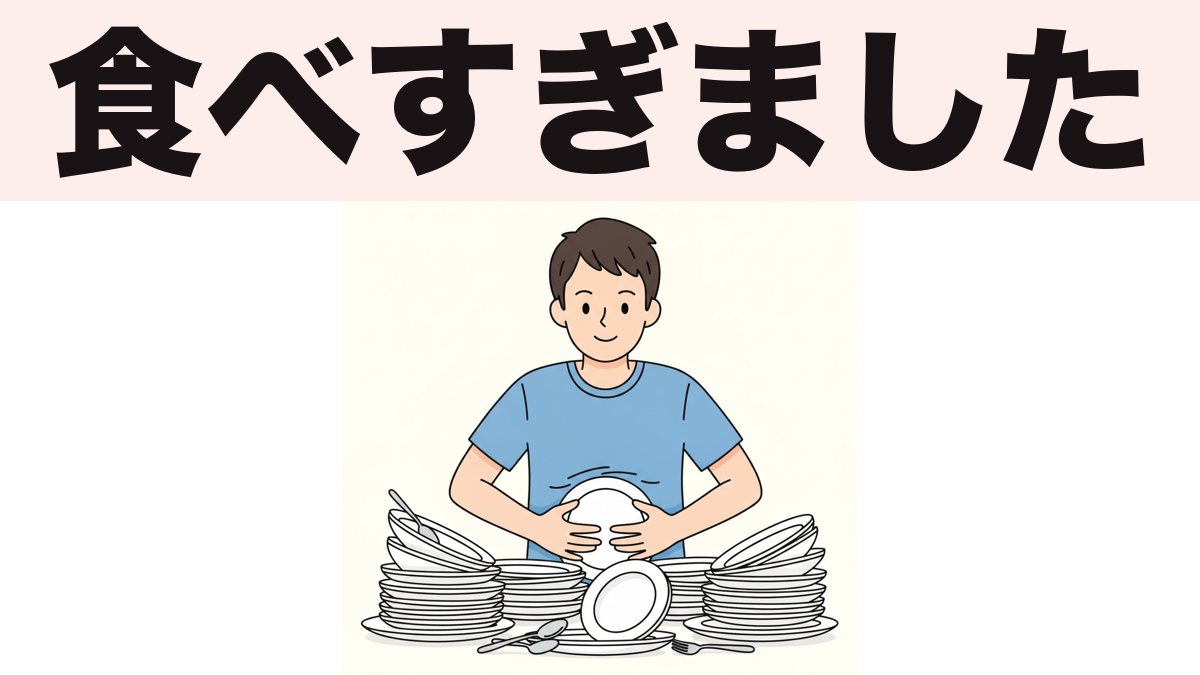
すぎる means "too much" and attaches to a bare stem: 食べ**すぎる**, 高**すぎる**, 静か**すぎる**. い-adjectives lose their い first, which is the error everyone makes once. The result is an ordinary Group 2 verb, so it conjugates normally — and in casual speech it drifts away from "too" into pure emphasis.
「すぎる」(過ぎる)は「too much」で、はだかの形につきます。「食べ**すぎる**」「高**すぎる**」「静か**すぎる**」。い形容詞は先に「い」を落とします。ここはみんな一度は間ちがえます。できたものはふつうのグループ2の動詞なので、そのまま活用します。そして会話では、「too」の意味がうすくなって、ただの強調になります。
The basics
How to attach it
| Word type | Rule | Example |
|---|---|---|
| Verb | ます-stem | 食べます → 食べすぎる |
| い-adjective | drop い | 高い → 高すぎる |
| な-adjective | bare | 静か → 静かすぎる |
| いい | irregular | いい → よすぎる |
| ない | irregular | ない → なさすぎる |
昨日は食べすぎました。 — I ate too much yesterday. (polite past) このコートは高すぎます。 — This coat is too expensive. (polite — 高い loses its い)
The two irregulars follow the same logic as everywhere else: いい becomes よ-, and ない takes さ before すぎる. 都合がよすぎる ("too convenient / too good to be true") and 元気がなさすぎる ("far too listless") are both natural.
It is a Group 2 verb
Once formed, すぎる conjugates like 食べる — see the verb groups:
飲みすぎないでください。 — Please don't drink too much. (polite request — negative) 働きすぎて、体を壊しました。 — I worked too much and damaged my health. (polite past — te-form)
So you get すぎた, すぎない, すぎて, すぎたら, all for free.
The noun form: 〜すぎ
Drop る and you have a noun:
それは考えすぎですよ。 — You're overthinking it. (polite — reassuring)
食べすぎ, 飲みすぎ, 働きすぎ, 考えすぎ are all everyday nouns. 考えすぎ is the one you will hear most, usually as gentle reassurance.
Beyond the basics
It carries a judgement
すぎる is not neutral measurement. It says the amount is a problem:
甘すぎます。 — It's too sweet. (polite — a complaint about the food)
If you just mean "very," use とても or すごく. 甘すぎる to a cook is criticism; とても甘いです is a description.
This is the same axis as 〜てしまう, which also turns a plain action into a regretted one. Japanese has a lot of grammar whose job is attaching an attitude.
Casual speech uses it as pure emphasis
In spoken Japanese, especially online and among young speakers, すぎる has drifted:
これ、かわいすぎる。 — This is so cute. (casual — no complaint at all) 面白すぎた。 — That was unbelievably funny. (casual past)
Nobody thinks the thing is excessively cute. The "too" has bleached out into an intensifier, exactly the way English "literally" did. You will meet this constantly in anime and social media, and almost never in formal writing.
すぎる vs あまり〜ない
For "not too much," Japanese usually does not negate すぎる. It uses あまり with a negative instead:
あまり高くないです。 — It isn't too expensive. (polite)
高すぎないです is grammatical but sounds like you are answering a specific accusation of excess.
The counterpart: 〜足りない
For "not enough," the pattern is a compound verb with 足りない:
練習が足りません。 — There isn't enough practice. (polite)
寝不足 ("lack of sleep") and 練習不足 are the noun versions, using 不足 rather than 足りない.
Watch it with adjectives about people
高すぎる about a price is fine. 高すぎる about a person's height, said to their face, is a comment about their body. The judgement built into すぎる does not switch off for politeness, so with people prefer とても or 背が高いですね.
Common mistakes
- 高いすぎる. Drop the い: 高すぎる.
- いいすぎる for "too good." It is よすぎる. (言いすぎる exists and means "to say too much" — a different word.)
- ないすぎる. It is なさすぎる.
- Using すぎる when you mean "very." すぎる is a complaint. Use とても or すごく for a plain intensifier — unless you are being deliberately casual.
- 食べすぎるでした. すぎる is a verb: 食べすぎました.
- Negating it for "not too much." Use あまり〜ない.
Practice
Answers are hidden — build yours first, then open. Questions 6 and 7 are a pair: the same word, and the register decides whether it is a complaint.
1. Make すぎる from 食べる.
Show answer
食べすぎる — the ます-stem, 食べ, plus すぎる.
2. Something is wrong here: このコートは高いすぎます。
Show answer
高すぎます — い-adjectives drop their い before すぎる.
3. Make すぎる from いい and from ない.
Show answer
よすぎる / なさすぎる — the same two irregulars as everywhere else: いい becomes よ-, and ない takes さ.
4. Say "please don't drink too much."
Show answer
飲みすぎないでください — すぎる is a Group 2 verb, so all the ordinary endings attach.
5. Reassure someone who is worrying too much.
Show answer
それは考えすぎですよ — dropping る gives you a noun, and 考えすぎ is the most common one.
6. Tell a cook their dish is too sweet.
Show answer
甘すぎます — a complaint. すぎる says the amount is a problem.
7. Tell a friend online that something is incredibly cute.
Show answer
かわいすぎる — in casual speech the "too" has bleached out into pure emphasis. This is the pair to question 6: same grammar, opposite intent.
8. Say "it isn't too expensive."
Show answer
あまり高くないです — Japanese uses あまり + negative rather than negating すぎる.
9. Something is wrong here: 昨日は食べすぎるでした。
Show answer
食べすぎました — すぎる is a verb, not an adjective.
10. Why should you avoid 高すぎますね about someone's height, to their face?
Show answer
The judgement in すぎる does not switch off — it says the amount is a problem. Say 背が高いですね instead.
FAQ
Is すぎる written in kanji? 過ぎる exists and is used for the standalone verb ("to pass, to exceed"): 時間が過ぎる. The suffix is usually kana.
Can it attach to nouns? Not directly, but colloquially it does with a few: 元気すぎる, 天才すぎる. Treat these as な-adjective-like uses.
What is 言い過ぎ? "Saying too much / an overstatement." 言い過ぎました is a useful apology after being blunt.
Does すぎる work with the potential form? Rarely, and it sounds odd. Attach it to the plain verb instead.
How is it different from あまりに? あまりに is an adverb meaning "excessively" and modifies the whole clause: あまりに高い. すぎる is built into the word.
Can I stack it with てしまう? Yes: 食べすぎてしまいました ("I ended up eating too much"). Two layers of regret, which is very natural in an apology.
Vocabulary from this article
Tap the block to select all of it, then copy. In Anki: File → Import, note type Basic, separator Tab — the first column becomes the front, the second the back.
過ぎる	すぎる — to exceed, to pass
食べる	たべる — to eat
飲む	のむ — to drink
高い	たかい — expensive, high
静か	しずか — quiet
昨日	きのう — yesterday
働く	はたらく — to work
体	からだ — body
壊す	こわす — to break, to damage
考える	かんがえる — to think
甘い	あまい — sweet
面白い	おもしろい — funny, interesting
練習	れんしゅう — practice
足りる	たりる — to be enough
背	せ — height, back
元気	げんき — energetic, well
都合	つごう — convenience, circumstances
時間	じかん — time
天才	てんさい — genius
言う	いう — to say
I'm Yuuki, a Japanese teacher based in Tokyo. I've taught on italki as a Top 1% teacher and watched over 1,500 anime. 高いすぎる comes out of almost everyone once, and then never again. The more interesting half is the casual drift — かわいすぎる is a good early example of watching a grammar point lose its literal meaning in real time.
Sources: the author's own lessons and standard reference grammars.
基本
つけ方
| しゅるい | ルール | れい |
|---|---|---|
| 動詞 | ます形 | 食べます → 食べすぎる |
| い形容詞 | い を落とす | 高い → 高すぎる |
| な形容詞 | そのまま | 静か → 静かすぎる |
| いい | ふきそく | いい → よすぎる |
| ない | ふきそく | ない → なさすぎる |
昨日は食べすぎました。 — I ate too much yesterday. このコートは高すぎます。 — This coat is too expensive.
ふきそくの2つは、ほかの場面と同じです。「いい」は「よ」に、「ない」は「さ」が入ります。
グループ2の動詞になります
飲みすぎないでください。 — Please don't drink too much. 働きすぎて、体を壊しました。 — I worked too much and damaged my health.
「すぎた」「すぎない」「すぎて」「すぎたら」がぜんぶ使えます。
名詞の形「〜すぎ」
それは考えすぎですよ。 — You're overthinking it.
「食べすぎ」「飲みすぎ」「働きすぎ」「考えすぎ」。「考えすぎ」がいちばんよく聞きます。だいたい、やさしく安心させる時です。
もう少しくわしく
はんだんが入っています
「すぎる」はただの量の話ではありません。「多すぎて問題だ」と言っています。
甘すぎます。 — It's too sweet.
「とても」の意味なら「とても」「すごく」を使ってください。料理を作った人に「甘すぎます」はひはんです。「とても甘いです」はせつめいです。
会話ではただの強調
これ、かわいすぎる。 — This is so cute. 面白すぎた。 — That was unbelievably funny.
だれも「かわいさが多すぎる」とは思っていません。「too」の意味がうすくなって、強調になっています。アニメとSNSでとてもよく出ます。かたい文しょうにはほぼ出ません。
「あまり〜ない」
「〜すぎない」はあまり使いません。「あまり〜ない」を使います。
あまり高くないです。 — It isn't too expensive.
反対は「足りない」
練習が足りません。 — There isn't enough practice.
「寝不足」「練習不足」は名詞の形です。
人に使う時は気をつけて
ねだんに「高すぎる」はふつうです。人の身長に、本人の前で「高すぎる」と言うと、体のことを言っていることになります。「背が高いですね」にしてください。
よくある間違い
- 高いすぎる。 「い」を落として「高すぎる」です。
- いいすぎる。 「よすぎる」です。(「言いすぎる」はべつのことばです。)
- ないすぎる。 「なさすぎる」です。
- 「とても」のつもりで使う。 「すぎる」はひはんです。
- 食べすぎるでした。 動詞なので「食べすぎました」です。
- 「すぎない」で「そんなに〜ない」を言う。 「あまり〜ない」です。
練習
答えはかくれています。まず自分で作ってから開いてください。6番と7番が対です。同じことばで、場めんがひはんかどうかを決めます。
1. 「食べる」から「すぎる」の形を作ってください。
答えを見る
食べすぎる — ます形「食べ」+「すぎる」です。
2. 直してください: このコートは高いすぎます。
答えを見る
高すぎます — い形容詞は「い」を落とします。
3. 「いい」と「ない」から「すぎる」の形を作ってください。
答えを見る
よすぎる / なさすぎる — ほかの場面と同じふきそくです。
4. 「飲みすぎないでください」— どうしてこの形が作れますか。
答えを見る
「すぎる」がグループ2の動詞だから — ふつうの終わり方がぜんぶつきます。
5. 心配しすぎている人に、やさしく言ってください。
答えを見る
それは考えすぎですよ — 「る」を落とすと名詞になります。
6. 料理が甘すぎると伝えてください。
答えを見る
甘すぎます — これはひはんです。「すぎる」は「多くて問題だ」と言っています。
7. 友だちに「すごくかわいい」と言ってください(SNS)。
答えを見る
かわいすぎる — 会話では「too」がうすくなって強調になります。6番と対で、文法は同じです。
8. 「そんなに高くないです」を言ってください。
答えを見る
あまり高くないです — 「すぎない」ではなく「あまり〜ない」です。
9. 直してください: 昨日は食べすぎるでした。
答えを見る
食べすぎました — 「すぎる」は動詞です。
10. 人の身長に「高すぎますね」と言わない方がいいのはなぜですか。
答えを見る
「すぎる」のはんだんは消えないから — 「背が高いですね」にします。
この記事に出た単語
ブロックをタップすると全部選べます。そのままコピーしてください。Anki では ファイル → 読み込み、ノートタイプ 基本、区切り タブ。1列目が表、2列目が裏になります。
過ぎる	すぎる — to exceed, to pass
食べる	たべる — to eat
飲む	のむ — to drink
高い	たかい — expensive, high
静か	しずか — quiet
昨日	きのう — yesterday
働く	はたらく — to work
体	からだ — body
壊す	こわす — to break, to damage
考える	かんがえる — to think
甘い	あまい — sweet
面白い	おもしろい — funny, interesting
練習	れんしゅう — practice
足りる	たりる — to be enough
背	せ — height, back
心配	しんぱい — worry
料理	りょうり — cooking, a dish
言う	いう — to say
名詞	めいし — noun
私はユウキです。東京で日本語を教えています。 italki の Top 1% の先生で、アニメは1,500本以上見ました。「高いすぎる」はほとんどの人が一度言って、そのあとは言いません。おもしろいのはもう半分の方です。「かわいすぎる」は、文法がもとの意味をうしなっていくところを、今この時に見られるいいれいです。
More drills like the ones above, plus a timed JLPT-style mock test: Practice · N4上のような練習問題と、時間つきのJLPT形式のもぎ試験: 練習ページ · N4
Want to try this in a real conversation?
本当の会話で、ためしてみませんか?
30-minute trial lesson, $13. Times shown in your own timezone.
30分の体験レッスン、$13。時間はあなたのタイムゾーンで表示されます。
Book a trial lesson · $13