つもり: how to say what you intend to do — and the つもり that means you were wrongつもり: 「〜するつもり」と、「〜したつもり」の落とし穴
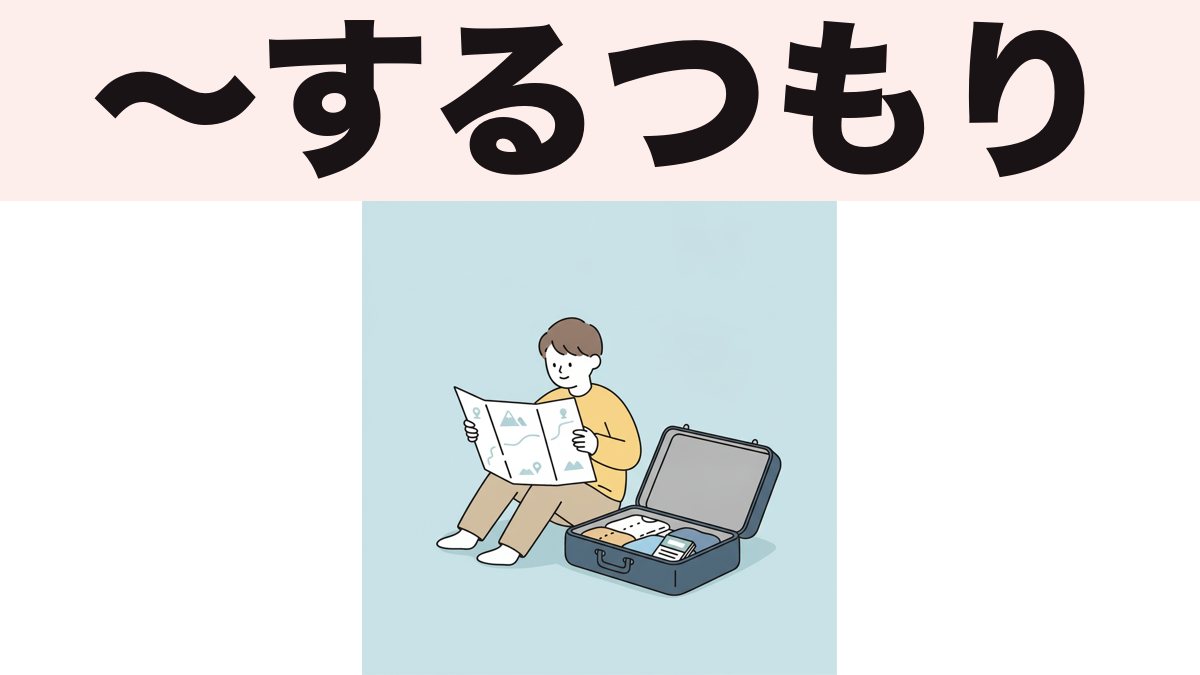
つもり states an intention you have already settled on. It is not a wish, not a schedule and not a decision you just made — those are different words. And a past-tense つもり flips the whole thing: 分かったつもり means you only *thought* you understood.
「つもり」は、もう心の中で決めたことを言います。ねがいでも、予定表でも、今決めたことでもありません。それぞれ別のことばがあります。そして過去形につけると意味がひっくり返ります。「分かったつもり」は「分かっていなかった」という意味です。
The conjugation is trivial: plain form plus つもり. What makes this worth an article is everything around it — the three ways Japanese talks about future plans and the fact that one of them means the opposite of what it looks like.
The basics
How to build it
Attach つもり to the plain form. Nothing changes shape.
| Type | Form | With つもり |
|---|---|---|
| Verb | 行く | 行くつもりです |
| Verb, negative | 行かない | 行かないつもりです |
| Verb, past | 行った | 行ったつもりです (different meaning — see below) |
来年、日本に行くつもりです。 — I'm planning to go to Japan next year. 今日は早く帰るつもりです。 — I intend to go home early today. 明日は何もしないつもりだ。 — I don't intend to do anything tomorrow. (casual)
つもり is a noun, so it takes です and な before another noun — 行くつもりの人 ("someone who intends to go"). That is why 行くつもりがあります sounds odd: you do not "have" an intention in Japanese, you are one.
The three ways to talk about a plan
This is the part worth getting right, because they are not interchangeable.
| Form | What it means | Example |
|---|---|---|
| 〜(よ)うと思う | I've just decided / I'm thinking of | 行こうと思います |
| 〜つもりです | I've already decided, it's settled | 行くつもりです |
| 〜予定です | It's scheduled, with a date | 行く予定です |
来年日本に行こうと思います。 — I'm thinking of going to Japan next year. (soft, possibly new) 来年日本に行くつもりです。 — I intend to go next year. (settled in my head) 来年の三月に行く予定です。 — I'm scheduled to go next March. (it's in the calendar)
The volitional plus と思う comes from the same form as ましょう and is the softest of the three — which makes it the safest answer when someone asks about your plans and you do not want to commit.
予定 is for things with dates, and crucially it works for events that are not your decision: 会議は3時からの予定です ("the meeting is scheduled from three"). つもり cannot do that, because a meeting has no intentions.
The two negatives are different strengths
This trips up nearly everyone.
行かないつもりです。 — I intend not to go. (I've decided against it) 行くつもりはありません。 — I have no intention of going. (firm, and can sound cold)
The first negates the action; the second negates the intention itself, and it is noticeably stronger. つもりはない is close to a refusal — 謝るつもりはない ("I have no intention of apologising") is a line, not a plan.
Beyond the basics
〜たつもり: you only thought you had
Put つもり after a past-tense verb and the meaning inverts completely. It stops being about the future and becomes about a mistaken belief.
分かったつもりでした。 — I thought I understood. (I didn't) 書いたつもりだったけど、書いてなかった。 — I was sure I'd written it, but I hadn't. 若いつもりだ。 — He thinks he's still young. (and he isn't)
This is one of the most useful self-deprecating patterns in the language, and 分かったつもり is a phrase teachers use constantly — it names the exact state of having heard an explanation and absorbed none of it.
There is also a deliberate version: doing something as if.
旅行したつもりで貯金する。 — Save the money as though you'd taken the trip. 死んだつもりでやってみろ。 — Try it as if you had nothing to lose.
Can you use it about other people?
Yes, but carefully. Stating someone else's intention as fact is a claim about the inside of their head.
○ 彼は来年留学するつもりです。 — He intends to study abroad next year. (you know this) △ 部長は行くつもりです。 (asserting your manager's intentions — risky)
With people above you, hedge: 行くつもりのようです ("it seems he intends to go") or 行くとおっしゃっていました ("he said he would go"). The same instinct that drives 〜んです applies — Japanese prefers to present information as received rather than asserted.
Why 行くつもりがあります is odd
Because Japanese treats つもり as what you are, not what you have. 行くつもりです is the natural form. The がある version only really appears in the negative, where it is idiomatic: 行くつもりはありません.
This is worth noticing as a pattern rather than a rule to memorise — 気がある, 予定がある and つもりがある behave differently from each other for historical reasons, and the safest path is to learn the positive as です and the negative as はありません.
How does it sound in anime?
The negative and the past version both carry a lot of weight:
謝るつもりはない。 — I have no intention of apologising. 殺すつもりはなかった。 — I didn't mean to kill him. 分かったつもりか。 — You think you understand?
殺すつもりはなかった is worth flagging because it shows the grammar doing legal work: it is the difference between intent and accident, said in four words. And 分かったつもりか as an accusation is the same 〜たつもり you would use about yourself, turned outward.
Common mistakes
- 行くつもりがあります. Use 行くつもりです for the positive, and save はありません for the negative.
- Using つもり for a scheduled event. 会議は3時からのつもりです is wrong — meetings do not intend things. Use 予定.
- Confusing the two negatives. 行かないつもり is a plan; 行くつもりはない is closer to a refusal.
- Reading 〜たつもり as a past plan. 行ったつもり is not "I intended to go"; it means you believed you had gone, or you are pretending you did.
- Asserting a superior's intentions. Hedge with ようです or report their words.
- Using つもり when you just decided. If the thought is new, 〜(よ)うと思います is the natural form. つもり claims it was already settled.
Practice
Answers are hidden — build yours first, then open. Questions 4 and 5 are a pair: two negatives, two very different strengths.
1. Say "I'm planning to go to Japan next year."
Show answer
来年、日本に行くつもりです — plain form plus つもり. Nothing conjugates; つもり is a noun taking です.
2. Someone asks about your weekend and you have only just had the idea. Which form?
Show answer
〜(よ)うと思います — the volitional plus と思う is for a decision you are making now. つもり claims it was already settled.
3. Something is wrong here: 会議は3時からのつもりです。
Show answer
会議は3時からの予定です — a meeting has no intentions. 予定 covers scheduled events, including ones that are not your decision.
4. What does 行かないつもりです mean?
Show answer
I intend not to go — you have decided against it. A plan, stated calmly.
5. What does 行くつもりはありません mean?
Show answer
I have no intention of going — this negates the intention itself and is much firmer. This is the pair to question 4: near-refusal rather than a plan.
6. What does 分かったつもりでした mean?
Show answer
"I thought I understood" — and I didn't — つもり after a past verb means a mistaken belief, not a past plan.
7. What does 旅行したつもりで貯金する mean?
Show answer
"Save the money as though you'd taken the trip" — the deliberate version of 〜たつもり: acting as if something had happened.
8. Something is wrong here: 行くつもりがあります。
Show answer
行くつもりです — Japanese treats つもり as what you are, not what you have. The がある shape survives only in the negative: 行くつもりはありません.
9. How do you state your manager's intention safely?
Show answer
行くつもりのようです, or 行くとおっしゃっていました — hedge, or report their words. Asserting a superior's intentions as fact is a claim about the inside of their head.
10. What is 殺すつもりはなかった doing grammatically?
Show answer
Denying intent, not the act — it says the killing happened without the intention. Four words separating intent from accident, which is why the line appears where it does.
FAQ
Is つもり polite? It is neutral — 行くつもりです is perfectly polite. What can be impolite is the content: つもりはありません is firm enough to land as a refusal, so choose it deliberately.
What is the casual form? つもりだ, or just つもり with rising intonation as a question: 行くつもり? ("are you planning to go?"). Extremely common among friends.
Can つもり follow an adjective or a noun? Yes, in the 〜たつもり sense: 若いつもりだ ("he thinks he's young"), 専門家のつもりだ ("he thinks he's an expert"). Both are quietly cutting, and both are describing someone's self-image rather than a plan.
What is the difference between つもり and はず? つもり is your intention; はず is your expectation about how things are. 来るつもりです means "I intend to come." 来るはずです means "he should be coming" — a prediction based on what you know, not a plan.
Is 予定 always about a date? Usually, and that is the best way to remember it. If you can write it in a calendar, 予定. If it lives only in your head, つもり. If you thought of it thirty seconds ago, 〜(よ)うと思います.
Why does 〜たつもり mean the opposite? Because つもり is about what is in your mind rather than what is in the world. Put it on a future action and your mind is running ahead of reality — that is a plan. Put it on a past action and your mind is behind reality — that is a mistake.
Vocabulary from this article
Tap the block to select all of it, then copy. In Anki: File → Import, note type Basic, separator Tab — the first column becomes the front, the second the back.
つもり	つもり — intention
予定	よてい — plan, schedule
来年	らいねん — next year
帰る	かえる — to go home
明日	あした — tomorrow
思う	おもう — to think
会議	かいぎ — meeting
留学	りゅうがく — studying abroad
部長	ぶちょう — department manager
分かる	わかる — to understand
書く	かく — to write
若い	わかい — young
旅行	りょこう — travel
貯金	ちょきん — savings
謝る	あやまる — to apologise
殺す	ころす — to kill
専門家	せんもんか — expert
はず	はず — expectation, "should be"
早く	はやく — early, quickly
I'm Yuuki, a Japanese teacher based in Tokyo. I've taught on italki as a Top 1% teacher and watched over 1,500 anime. 分かったつもり is the phrase I reach for most in lessons — not as a criticism, but because naming that state out loud is usually what makes someone go back and actually check.
Sources: the author's own lessons and standard reference grammars.
作り方はかんたんです。ふつうの形+「つもり」。記事1本になる理由は、そのまわりにあります。これからの予定を言う3つの言い方と、1つだけ反対の意味になる形です。
基本
作り方
ふつうの形に「つもり」をつけます。形は変わりません。
| 種類 | 形 | +つもり |
|---|---|---|
| 動詞 | 行く | 行くつもりです |
| 動詞・否定 | 行かない | 行かないつもりです |
| 動詞・過去 | 行った | 行ったつもりです (意味がちがいます・下を見てください) |
来年、日本に行くつもりです。 — I'm planning to go to Japan next year. 今日は早く帰るつもりです。 — I intend to go home early today. 明日は何もしないつもりだ。 — I don't intend to do anything tomorrow.
「つもり」は名詞なので、「です」がつきます。名詞の前では「の」です(行くつもりの人)。だから「行くつもりがあります」は少し変です。日本語では「つもりを持つ」のではなく、「つもりである」と言います。
これからのことを言う3つの形
ここが大事です。入れかえられません。
| 形 | 意味 | 例 |
|---|---|---|
| 〜(よ)うと思う | 今決めた/考えている | 行こうと思います |
| 〜つもりです | もう決めている | 行くつもりです |
| 〜予定です | 日づけが決まっている | 行く予定です |
来年日本に行こうと思います。 — 今そう考えています。 。来年日本に行くつもりです。 — もう決めています。 。来年の三月に行く予定です。 — 予定表に入っています。
「〜(よ)うと思います」は「ましょう」と同じ意向形から来ていて、3つの中でいちばんやわらかいです。だから、予定を聞かれて、まだ言い切りたくない時に安全です。
「予定」は日づけのあることに使います。そして大事なのは、自分が決めたことでなくても使えることです。「会議は3時からの予定です」。「つもり」は使えません。会議に「つもり」はないからです。
否定が2つあり、強さがちがいます
ここでほとんどの人がつまずきます。
行かないつもりです。 — 行かないと決めています。 。行くつもりはありません。 — 行く気はありません。(強い・冷たく聞こえることも)
1つめは「行かない」を否定しています。2つめは「つもり」そのものを否定していて、ずっと強いです。「謝るつもりはない」は、予定ではなく、言い切りです。
もう少し先へ
〜たつもり: そう思っていただけ
過去形に「つもり」をつけると、意味が反対になります。これからの話ではなく、「そう思いこんでいた」という話になります。
分かったつもりでした。 — I thought I understood. (分かっていなかった) 書いたつもりだったけど、書いてなかった。 — I was sure I'd written it, but I hadn't. 若いつもりだ。 — He thinks he's still young. (もう若くない)
これは日本語でとても役に立つ形です。「分かったつもり」は先生がよく使います。「せつめいを聞いたけれど、何も入っていない状たい」をぴったり言えることばだからです。
わざとする形もあります。「〜したことにして」という意味です。
旅行したつもりで貯金する。 — 旅行したと思って、そのお金をためる。 。死んだつもりでやってみろ。 — 死ぬ気でやってみろ。
ほかの人について使えますか?
使えますが、気をつけてください。人の心の中を、事実として言うことになります。
○ 彼は来年留学するつもりです。 — 本人から聞いて知っている場合。 。△ 部長は行くつもりです。 — 目上の人の心を言い切るのは、あぶないです。
目上の人には、やわらかくします。「行くつもりのようです」「行くとおっしゃっていました」。日本語は、自分の判断より「聞いた話」として出す方を好みます。
なぜ「行くつもりがあります」が変なのか
日本語は「つもり」を「持つもの」ではなく「である状たい」として扱うからです。肯定は「行くつもりです」。「がある」の形は、否定でだけ自然です。「行くつもりはありません」。
ルールとして覚えるより、くせとして覚えてください。肯定は「です」、否定は「はありません」です。
アニメではどう聞こえますか?
否定と過去の形が、どちらも重いせりふになります。
謝るつもりはない。 — I have no intention of apologising. 殺すつもりはなかった。 — I didn't mean to kill him. 分かったつもりか。 — You think you understand?
「殺すつもりはなかった」は、文法が法りつの仕事をしています。「わざと」と「事こ」のちがいを、短い1文で分けています。
よくある間違い
- 行くつもりがあります。 肯定は「行くつもりです」、否定だけ「はありません」です。
- 予定に「つもり」を使うこと。 「会議は3時からのつもりです」は間ちがいです。「予定」です。
- 2つの否定を混ぜること。 「行かないつもり」は予定、「行くつもりはない」は言い切りです。
- 「〜たつもり」を過去の予定だと思うこと。 「行ったつもり」は「行ったと思っていた」です。
- 目上の人の「つもり」を言い切ること。 「ようです」か、本人のことばで伝えます。
- 今決めたことに「つもり」を使うこと。 新しい考えなら「〜(よ)うと思います」です。
練習
答えはかくれています。まず自分の答えを作ってから開いてください。4番と5番は対になっています。
1. 「来年、日本に行く予定(心の中で決めている)」と言ってください。
答えを見る
来年、日本に行くつもりです — ふつうの形+「つもり」です。「つもり」は名詞なので「です」がつきます。
2. 週末の予定を聞かれて、今思いついたところです。どの形ですか。
答えを見る
〜(よ)うと思います — 今決めていることに使います。「つもり」は「もう決まっていた」と言ってしまいます。
3. 直してください: 会議は3時からのつもりです。
答えを見る
会議は3時からの予定です — 会議に「つもり」はありません。日づけのあることは「予定」です。
4. 「行かないつもりです」はどんな意味ですか。
答えを見る
行かないと決めています — 静かに言う予定です。
5. 「行くつもりはありません」はどんな意味ですか。
答えを見る
行く気はありません — 「つもり」そのものを否定しているので、ずっと強いです。4番と対で、予定ではなく言い切りに近いです。
6. 「分かったつもりでした」はどんな意味ですか。
答えを見る
分かったと思っていました(分かっていませんでした) — 過去形+「つもり」は、思いこみです。過去の予定ではありません。
7. 「旅行したつもりで貯金する」はどんな意味ですか。
答えを見る
旅行したことにして、そのお金をためる — 「〜たつもり」をわざと使う形です。
8. 直してください: 行くつもりがあります。
答えを見る
行くつもりです — 日本語は「つもりを持つ」と言いません。「がある」の形は否定だけです。
9. 部長の「つもり」を、安全に言ってください。
答えを見る
行くつもりのようです/行くとおっしゃっていました — やわらかくするか、本人のことばで伝えます。目上の人の心の中を言い切らないためです。
10. 「殺すつもりはなかった」は、文法として何をしていますか。
答えを見る
行為ではなく、意思を否定しています — 起きたことは認めて、わざとではないと言っています。短い1文で「わざと」と「事こ」を分けています。
よくある質問
「つもり」はていねいですか。 中立です。「行くつもりです」はていねいです。強いのは中みの方で、「つもりはありません」はことわりに聞こえます。
くだけた形は何ですか。 「つもりだ」か、声を上げて「行くつもり?」です。友だちの間ではとてもよく使います。
形容詞や名詞にもつきますか。 「〜たつもり」の意味ではつきます。「若いつもりだ」「専門家のつもりだ」。どちらも、その人の自分のイメージの話で、予定ではありません。
「つもり」と「はず」はどうちがいますか。 「つもり」は自分の意思、「はず」は自分の予そうです。「来るつもりです」は「私が来ます」。「来るはずです」は「たぶん来ると思います」です。
「予定」はいつも日づけがありますか。 だいたいそうですし、そう覚えるのがいちばんです。カレンダーに書けるなら「予定」、頭の中だけなら「つもり」、30秒前に思いついたなら「〜(よ)うと思います」です。
なぜ「〜たつもり」は反対の意味になりますか。 「つもり」は、世界ではなく心の中の話だからです。これからの動作につけると、心が先に行っています((予定)。過去の動作につけると、心が後ろにいます((思いこみ)。
この記事に出た単語
ブロックをタップすると全部選べます。そのままコピーしてください。Anki では ファイル → 読み込み、ノートタイプ 基本、区切り タブ。1列目が表、2列目が裏になります。
つもり	つもり — intention
予定	よてい — plan, schedule
来年	らいねん — next year
帰る	かえる — to go home
明日	あした — tomorrow
思う	おもう — to think
会議	かいぎ — meeting
留学	りゅうがく — studying abroad
部長	ぶちょう — department manager
分かる	わかる — to understand
書く	かく — to write
若い	わかい — young
旅行	りょこう — travel
貯金	ちょきん — savings
謝る	あやまる — to apologise
殺す	ころす — to kill
専門家	せんもんか — expert
はず	はず — expectation, "should be"
早く	はやく — early, quickly
私はユウキです。東京で日本語を教えています。 italki の Top 1% の先生で、アニメは1,500本以上見ました。レッスンでいちばんよく使うのは「分かったつもり」です。せめているのではありません。その状たいに名前をつけると、たいていの人が、もう一度たしかめに戻るからです。
More drills like the ones above, plus a timed JLPT-style mock test: Practice · N4上のような練習問題と、時間つきのJLPT形式のもぎ試験: 練習ページ · N4
Want to try this in a real conversation?
本当の会話で、ためしてみませんか?
30-minute trial lesson, $13. Times shown in your own timezone.
30分の体験レッスン、$13。時間はあなたのタイムゾーンで表示されます。
Book a trial lesson · $13