〜方がいい: how to give advice in Japanese without sounding bossy〜方がいい: えらそうに聞こえないアドバイスの言い方
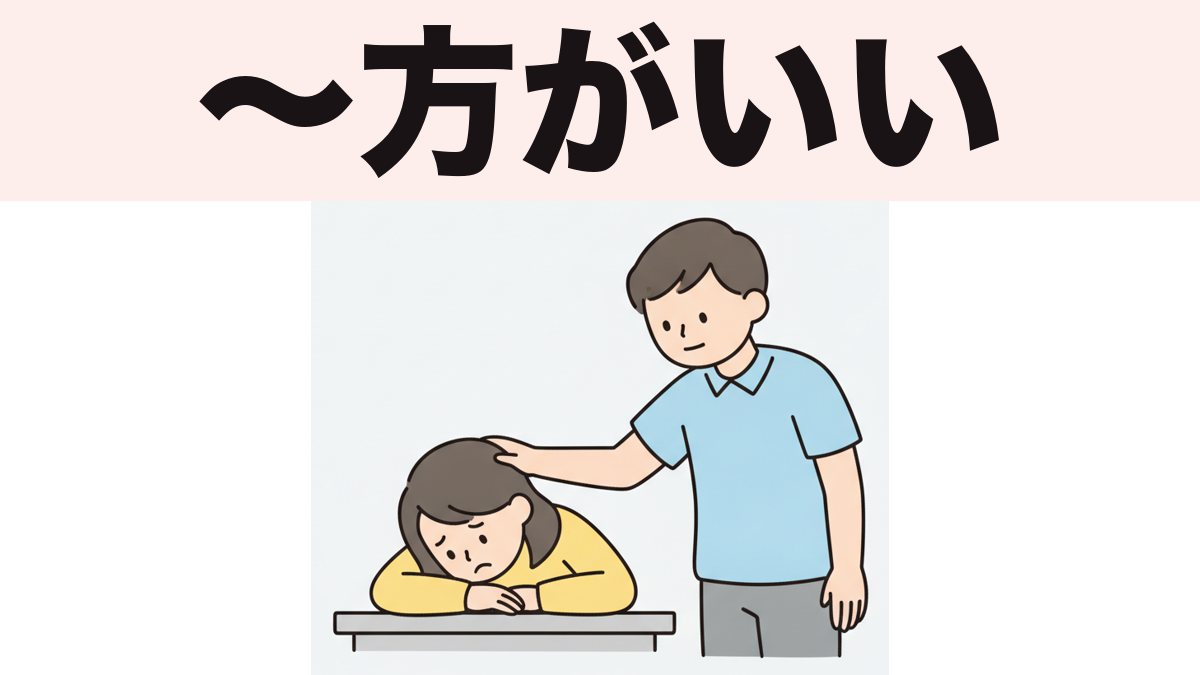
〜方がいい gives advice by comparing two options and saying one is better — which is why it sounds like a suggestion in one sentence and a warning in the next.
〜方がいい は、2つのえらび方をくらべて「こっちがいい」と言う形です。命令ではありません。だから、やさしい提案に聞こえるときと、強い注意に聞こえるときがあります。
Textbooks translate it as "should," and that translation causes half the trouble. English "should" is a single fixed strength. 〜方がいい is a comparison, and how forceful it lands depends on the tense you attach, the ending you add, and who you are talking to.
The basics
What does 〜方がいい literally mean?
方 (ほう) means "side" or "direction" — one of two alternatives. がいい means "is good." So 〜方がいい is literally "the [doing this] side is better."
That structure is the same one behind AよりBの方が, the standard comparison pattern. Advice in Japanese is not a command dressed politely; it is genuinely built as a comparison between two courses of action, with the other option left unsaid.
病院に行った方がいいですよ。 — You should go to the hospital. (polite — literally "going is the better side") 早く寝た方がいいです。 — You should go to bed early. (polite — standard advice)
How do you build it?
Use the past tense (た-form) of the verb, then 方がいい. This is the part that surprises everyone: the sentence is about the future, but the verb is in the past.
| Want to say | Form | Example |
|---|---|---|
| You should do X | た-form + 方がいい | 行った方がいい |
| You shouldn't do X | ない-form + 方がいい | 行かない方がいい |
| It'd be better if it were X (noun) | noun + の方がいい | 電車の方がいい |
| It'd be better if it were X (adjective) | adjective + 方がいい | 安い方がいい |
傘を持って行った方がいいです。 — You'd better take an umbrella. (polite — た-form despite being about later today) その話はしない方がいいですよ。 — You'd better not bring that up. (polite — the negative uses ない, not なかった)
Note the asymmetry, because it is the single most-corrected mistake on this grammar point: the positive uses the past (行った方がいい), and the negative uses the plain negative (行かない方がいい). 行かなかった方がいい is not the advice form — it is a comment about something already finished.
Why the past tense?
Because the comparison is between two imagined, already-completed scenarios: "the version of events where you went" versus "the version where you didn't." The た-form here is not marking past time, it is marking a completed hypothetical.
You can also say 行く方がいい with the dictionary form, and it is grammatical, but it reads more like a general statement of preference than advice to a specific person in front of you. For advice, use the た-form.
毎日少しずつ勉強する方がいいです。 — Studying a little every day is better. (polite — a general principle, not advice to you specifically) 今日は休んだ方がいいです。 — You should rest today. (polite — advice to this person, right now)
How strong does it sound?
Stronger than English "should." 〜方がいい carries a real "if you don't, there will be consequences" edge, especially with よ attached. It is closer to "you'd better."
早く病院に行った方がいいよ。 — You'd better get to a hospital. (casual with よ — genuinely urgent) 傘を持った方がいいかもしれません。 — It might be better to take an umbrella. (polite, softened with かもしれません — now it is a gentle suggestion)
The よ is doing a lot of work there. It marks the information as new and relevant to the listener, which is exactly what advice is — but it also makes the sentence lean in. Drop it and the same advice becomes more neutral.
Beyond the basics
How do you soften it?
Japanese has a ladder of hedges for this, and learners who only know the bare form end up sounding much pushier than they mean to.
| Ending | Feel | Example |
|---|---|---|
| 〜方がいいよ | Direct, urgent | 行った方がいいよ |
| 〜方がいいです | Neutral polite | 行った方がいいです |
| 〜方がいいと思います | Softened — "I think" | 行った方がいいと思います |
| 〜方がいいかもしれません | Very soft — "might be better" | 行った方がいいかもしれません |
| 〜方がいいんじゃないですか | Soft, indirect question | 行った方がいいんじゃないですか |
と思います is the workhorse. Attaching it converts advice into an opinion, which is much easier to decline — and in Japanese, making your suggestion easy to decline is the polite move.
もう少し待った方がいいと思います。 — I think it'd be better to wait a little longer. (polite — an opinion, so the other person can disagree freely)
What is the difference between 方がいい and べき?
〜べき is moral obligation — "ought to," in the ethical sense. 〜方がいい is practical advice. Mixing them up makes ordinary suggestions sound like judgements.
税金は払うべきです。 — You ought to pay your taxes. (polite — moral, almost a principle) 今日は早く寝た方がいいです。 — You should go to bed early today. (polite — practical, situational)
Use べき for principles and ethics. For anything about how to handle a specific situation, 方がいい is the natural choice. There is also 〜なければならない for hard obligation, which is a third distinct thing: not advice and not ethics, but a rule you cannot get around.
How is it different from 〜たら?
〜たらいいです ("it'd be good if you...") is noticeably gentler, because it frames the action as a condition rather than the better of two options.
先生に聞いたらいいですよ。 — You could just ask the teacher. (polite — helpful, low pressure) 先生に聞いた方がいいですよ。 — You'd better ask the teacher. (polite — implies not asking is a mistake)
If you are giving advice to someone senior to you, たらいい and んじゃないですか are the safer tools. 方がいい to your boss can read as instruction.
What about the negative — ない方がいい?
It is the standard way to tell someone not to do something without issuing a prohibition. Compare it with 〜てはいけません, which states a rule: ない方がいい says "in your interest, don't."
今は言わない方がいいです。 — You'd better not say anything right now. (polite — advice, not a rule) 無理しない方がいいよ。 — Don't overdo it. (casual — one of the most common things a Japanese friend will say to you)
無理しない方がいい is worth memorizing whole. It is the standard expression of concern for someone working too hard, and it will come up in nearly every real conversation about your job or your studies.
Does it work with nouns and adjectives?
Yes, and it becomes an ordinary preference rather than advice. With nouns you need の before 方.
バスより電車の方がいいです。 — The train is better than the bus. (polite — a preference) 部屋は明るい方がいいです。 — I'd rather the room be bright. (polite — い-adjectives attach directly)
な-adjectives take な: 静かな方がいい. This is the same 方 as the comparison pattern, so if you already know より〜の方が, you have already learned this half.
Common mistakes
- Using the dictionary form for advice. 行く方がいい is grammatical but reads as a general principle. For advice to a person in front of you, use 行った方がいい.
- Using the past negative. 行かなかった方がいい is not the negative of this pattern. It has to be 行かない方がいい — positive takes past, negative takes plain.
- Forgetting の with nouns. 電車方がいい is wrong; it is 電車の方がいい.
- Giving bare 方がいい advice to a superior. Add と思います, or switch to んじゃないですか. Unhedged advice upward sounds like an instruction.
- Assuming it is as mild as English "should." With よ attached it is closer to "you'd better," and a native listener will hear real urgency in it.
Practice
Each answer is hidden — build your version first, then open it. Questions 2 and 3 are a pair: the same verb, positive and negative, and the tense does not behave the way you would expect.
1. Say "you should go to the hospital" politely.
Show answer
病院に行った方がいいです — advice uses the た-form of the verb, even though the action is in the future.
2. Make it negative: "you'd better not go."
Show answer
行かない方がいいです — the negative uses the plain ない-form, not the past negative. 行かなかった方がいい would be about something already decided.
3. Why is 行かなかった方がいいです wrong as advice?
Show answer
Because the negative side of this pattern does not take the past — positive is た-form (行った方がいい), negative is plain ない (行かない方がいい). This is the asymmetry in question 2, stated the other way round.
4. Fill in the blank: バスより電車( )方がいいです。
Show answer
の — バスより電車の方がいいです。Nouns need の before 方. Verbs do not.
5. Soften 待った方がいいです into an opinion.
Show answer
待った方がいいと思います — adding と思います turns advice into your own opinion, which makes it easy for the other person to decline. The standard softener.
6. Which is stronger: 早く寝た方がいいよ or 早く寝た方がいいかもしれません?
Show answer
早く寝た方がいいよ — the よ pushes the advice toward the listener as urgent new information. かもしれません ("it might be better") is the gentlest version.
7. Your friend is working too much. Say "don't overdo it" casually.
Show answer
無理しない方がいいよ — ない-form plus 方がいい, plus casual よ. This is a set phrase worth memorizing whole.
8. What is the difference between 税金は払うべきです and 今日は休んだ方がいいです?
Show answer
Moral obligation versus practical advice — べき is what one ought to do as a principle. 方がいい is the better of two options in this particular situation.
9. Fill in the blank: 部屋は明るい( )がいいです。
Show answer
方 — 部屋は明るい方がいいです。い-adjectives attach directly to 方 with no の and no change.
10. Your boss is deciding something and you want to suggest waiting. Which is safest: もう少し待った方がいいです or もう少し待った方がいいんじゃないですか?
Show answer
もう少し待った方がいいんじゃないですか — framing it as a question leaves the decision with your boss. Bare 方がいいです upward can land as an instruction.
FAQ
Why does advice about the future use the past tense? The た-form here marks a completed hypothetical, not past time — "the scenario in which you went" compared with the one in which you didn't. Japanese uses the same trick in conditionals like 〜たら.
Can I say 方がいい about myself? Yes: 私も行った方がいいですね = "I should go too." It works fine as self-directed advice, and it is a natural way to think out loud.
Is ほうがいい ever written in kanji? Both appear. 方がいい with kanji is standard in writing; ほうがいい in kana is common in casual text and in textbooks aimed at beginners. Neither is wrong.
What is the difference between 方がいい and 方がいいです? Only politeness. 方がいい is the plain form, used with friends and family. Add です for the polite register, following the same polite-or-casual switch as everything else.
How do I respond when someone gives me 方がいい advice? そうですね ("you're right") or そうします ("I'll do that") both work, and そうですね, 考えてみます ("I'll think about it") is the standard soft non-commitment.
Vocabulary from this article
Tap the block to select all of it, then copy. In Anki: File → Import, note type Basic, separator Tab — the first column becomes the front, the second the back.
方	ほう — side, direction, alternative
行く	いく — to go
寝る	ねる — to sleep, to go to bed
休む	やすむ — to rest, to take a day off
待つ	まつ — to wait
聞く	きく — to ask, to listen
言う	いう — to say
持つ	もつ — to hold, to carry
払う	はらう — to pay
勉強する	べんきょうする — to study
無理する	むりする — to overdo it, to push oneself too hard
病院	びょういん — hospital
傘	かさ — umbrella
電車	でんしゃ — train
税金	ぜいきん — tax
部屋	へや — room
明るい	あかるい — bright
静か	しずか — quiet
安い	やすい — cheap
少しずつ	すこしずつ — little by little
もう少し	もうすこし — a little more
I'm Yuuki, a Japanese teacher based in Tokyo. I've taught on italki as a Top 1% teacher and watched over 1,500 anime, and the mistake in questions 2 and 3 above shows up in almost every lesson where this grammar appears — students learn "advice uses the past tense" and then apply it to the negative too.
Sources: the author's own lessons and standard reference grammars.
教科書は "should" と訳します。その訳が、半分の問題を作ります。英語の "should" は強さが1つです。〜方がいい はくらべる形なので、どのくらい強いかは、つける時制・つける終わり方・相手によって変わります。
基本の形
〜方がいい の意味は?
「方(ほう)」は「側」「方向」という意味です。2つのうちの1つです。「がいい」は「good」です。だから〜方がいい は「〜する側のほうがいい」という意味になります。
これは AよりBの方が と同じ形です。日本語のアドバイスは、ていねいに言った命令ではありません。本当に、2つのえらび方をくらべる形でできています。もう片方は言いません。
病院に行った方がいいですよ。 — You should go to the hospital. (ていねい。「行く側のほうがいい」) 早く寝た方がいいです。 — You should go to bed early. (ていねい)
どう作りますか?
動詞の過去形(た形)に「方がいい」をつけます。ここでみんなおどろきます。文は未来のことなのに、動詞は過去形です。
| 言いたいこと | 形 | 例 |
|---|---|---|
| 〜した方がいい | た形 + 方がいい | 行った方がいい |
| 〜しない方がいい | ない形 + 方がいい | 行かない方がいい |
| 名詞のとき | 名詞 + の方がいい | 電車の方がいい |
| 形容詞のとき | 形容詞 + 方がいい | 安い方がいい |
傘を持って行った方がいいです。 — You'd better take an umbrella. (ていねい。今日のことなのに た形) その話はしない方がいいですよ。 — You'd better not bring that up. (ていねい。否定は「ない」で、「なかった」ではない)
形が左右で同じでないことに注意してください。ここがいちばん直されるところです。肯定は過去(行った方がいい)、否定はふつうの否定(行かない方がいい)です。「行かなかった方がいい」はアドバイスの形ではありません。もう終わったことについての感想になります。
なぜ過去形なのですか?
くらべているのが、2つの「もう終わった想像」だからです。「行った場合」と「行かなかった場合」です。この「た」は過去の時間ではなく、終わった想像を表しています。
「行く方がいい」と辞書形で言うこともできて、文としては正しいです。でも、それは目の前の人へのアドバイスよりも、一般的な話に聞こえます。アドバイスには た形を使ってください。
毎日少しずつ勉強する方がいいです。 — Studying a little every day is better. (ていねい。一般的な話) 今日は休んだ方がいいです。 — You should rest today. (ていねい。目の前の人への今のアドバイス)
どのくらい強く聞こえますか?
英語の "should" より強いです。〜方がいい には「しないと困ることになる」という感じが本当に入っています。"you'd better" に近いです。
早く病院に行った方がいいよ。 — You'd better get to a hospital. (ふつうの話し方+よ。かなり急いでいる) 傘を持った方がいいかもしれません。 — It might be better to take an umbrella. (ていねい+かもしれません。やさしい提案になる)
「よ」が大きく働いています。「よ」は、相手にとって新しくて大事な話だ、という印です。それはアドバイスそのものですが、同時に文を前に押し出します。「よ」をとると、同じアドバイスがもっと静かになります。
もう少し先へ
やわらかくする言い方
日本語には、そのための段が用意されています。この形だけしか知らないと、思っているよりずっと強く聞こえてしまいます。
| 終わり方 | 感じ | 例 |
|---|---|---|
| 〜方がいいよ | 直接・急ぎ | 行った方がいいよ |
| 〜方がいいです | ふつうのていねい | 行った方がいいです |
| 〜方がいいと思います | やわらかい(私の考え) | 行った方がいいと思います |
| 〜方がいいかもしれません | とてもやわらかい | 行った方がいいかもしれません |
| 〜方がいいんじゃないですか | やわらかい・質問の形 | 行った方がいいんじゃないですか |
いちばんよく使うのは「と思います」です。つけると、アドバイスが自分の考えになります。断りやすくなります。日本語では、相手が断りやすくすることがていねいです。
もう少し待った方がいいと思います。 — I think it'd be better to wait a little longer. (ていねい。考えなので、相手は自由に反対できる)
「方がいい」と「べき」のちがい
「〜べき」は、道としてそうすべきだ、という意味です。「〜方がいい」は、実際の場面でのアドバイスです。混ぜると、ふつうの提案が人を責める言葉に聞こえます。
税金は払うべきです。 — You ought to pay your taxes. (ていねい。決まりに近い) 今日は早く寝た方がいいです。 — You should go to bed early today. (ていねい。今の場面の話)
決まりや道の話は「べき」。場面の話は「方がいい」。もう1つ〜なければならないがありますが、これは3つめの別のものです。アドバイスでも道でもなく、どうしても守る決まりです。
「〜たら」とのちがい
「〜たらいいです」は、もっとやわらかいです。2つのうちのいい方ではなく、「こうしたら」という条件の形だからです。
先生に聞いたらいいですよ。 — You could just ask the teacher. (ていねい。軽い) 先生に聞いた方がいいですよ。 — You'd better ask the teacher. (ていねい。聞かないのはまちがい、という感じ)
自分より上の人にアドバイスするときは、「たらいい」や「んじゃないですか」のほうが安全です。上司に「方がいい」と言うと、指示に聞こえることがあります。
否定の「ない方がいい」
「しないでください」と言わずに、しないほうがいいと伝える言い方です。〜てはいけませんは決まりを言いますが、「ない方がいい」は「あなたのために、やめたほうがいい」です。
今は言わない方がいいです。 — You'd better not say anything right now. (ていねい。決まりではなくアドバイス) 無理しない方がいいよ。 — Don't overdo it. (ふつうの話し方)
「無理しない方がいい」は、そのまま覚えてください。働きすぎている人に言う、いちばんふつうの言葉です。仕事や勉強の話をすると、必ず出てきます。
名詞や形容詞にも使えますか?
使えます。そのときはアドバイスではなく、ふつうの好みになります。名詞の前には「の」が必要です。
バスより電車の方がいいです。 — The train is better than the bus. (ていねい。好み) 部屋は明るい方がいいです。 — I'd rather the room be bright. (ていねい。い形容詞はそのままつく)
な形容詞は「な」がつきます。「静かな方がいい」。これは比較の「方」と同じなので、「より〜の方が」を知っていれば、半分はもう覚えています。
よくある間違い
- アドバイスに辞書形を使う。 「行く方がいい」は文としては正しいですが、一般的な話に聞こえます。目の前の人へのアドバイスは「行った方がいい」です。
- 過去の否定を使う。 「行かなかった方がいい」はこの形の否定ではありません。「行かない方がいい」です。肯定は過去、否定はふつうの否定です。
- 名詞の「の」を忘れる。 「電車方がいい」はまちがいです。「電車の方がいい」です。
- 上の人に、そのままの形で言う。 「と思います」をつけるか、「んじゃないですか」に変えてください。そのままだと指示に聞こえます。
- 英語の "should" と同じ強さだと思う。 「よ」がつくと "you'd better" に近く、日本語の話し手には急いでいるように聞こえます。
練習
答えはかくれています。まず自分の答えを作って、それから開いてください。2番と3番は対になっています。同じ動詞で、肯定と否定で時制のルールがちがいます。
1. 「病院に行ったほうがいい」をていねいに言ってください。
答えを見る
病院に行った方がいいです — アドバイスは動詞の た形を使います。動作は未来のことでも た形です。
2. 否定にしてください。「行かないほうがいい」。
答えを見る
行かない方がいいです — 否定はふつうの ない形で、過去の否定ではありません。「行かなかった方がいい」は、もう決まったことの話になります。
3. 「行かなかった方がいいです」がアドバイスとしてまちがいなのはなぜですか。
答えを見る
この形の否定は過去を使わないから — 肯定は た形(行った方がいい)、否定はふつうの ない(行かない方がいい)です。2番と同じことを、反対から言っています。
4. 助詞を入れてください: バスより電車( )方がいいです。
答えを見る
の — バスより電車の方がいいです。名詞には「の」が必要です。動詞にはいりません。
5. 「待った方がいいです」を、自分の考えとしてやわらかくしてください。
答えを見る
待った方がいいと思います — 「と思います」をつけると、アドバイスが自分の考えになります。相手が断りやすくなります。いちばんよく使うやわらかい形です。
6. どちらが強いですか。「早く寝た方がいいよ」か「早く寝た方がいいかもしれません」か。
答えを見る
早く寝た方がいいよ — 「よ」が、大事な新しい話として相手に押し出します。「かもしれません」がいちばんやわらかい形です。
7. 友だちが働きすぎています。ふつうの話し方で「無理しないで」と言ってください。
答えを見る
無理しない方がいいよ — ない形+方がいい+よ。そのまま覚えていい言い方です。
8. 「税金は払うべきです」と「今日は休んだ方がいいです」のちがいは何ですか。
答えを見る
道の話か、場面の話か — 「べき」は、人としてそうすべきだという話です。「方がいい」は、この場面で2つのうちどちらがいいかという話です。
9. ( )に入る言葉を書いてください: 部屋は明るい( )がいいです。
答えを見る
方 — 部屋は明るい方がいいです。い形容詞は、そのまま「方」につきます。「の」はいりません。
10. 上司が何かを決めようとしています。待つことをすすめるなら、どちらが安全ですか。「もう少し待った方がいいです」か「もう少し待った方がいいんじゃないですか」か。
答えを見る
もう少し待った方がいいんじゃないですか — 質問の形にすると、決めるのは上司のままになります。そのままの「方がいいです」は指示に聞こえることがあります。
よくある質問
未来の話に、なぜ過去形を使うのですか。 この「た」は、過去の時間ではなく「終わった想像」を表しています。「行った場合」と「行かなかった場合」をくらべています。「〜たら」でも同じ使い方をします。
自分のことにも使えますか。 使えます。「私も行った方がいいですね」」私も行ったほうがいい。自分へのアドバイスとして、ふつうに使えます。
漢字で書きますか、ひらがなで書きますか。 両方あります。書くときは「方がいい」がふつうです。「ほうがいい」も、くだけた文や初心者向けの教科書でよく見ます。どちらもまちがいではありません。
「方がいい」と「方がいいです」のちがいは何ですか。 ていねいさだけです。「方がいい」はふつうの形で、友だちや家族に使います。「です」をつけるとていねいになります。ていねいとふつうの切りかえは、ほかの文法と同じです。
「方がいい」と言われたら、どう答えますか。 「そうですね」か「そうします」で大丈夫です。すぐに決めたくないときは「そうですね、考えてみます」がふつうです。
この記事に出た単語
ブロックをタップすると全部選べます。そのままコピーしてください。Anki では ファイル → 読み込み、ノートタイプ 基本、区切り タブ。1列目が表、2列目が裏になります。
方	ほう — side, direction, alternative
行く	いく — to go
寝る	ねる — to sleep, to go to bed
休む	やすむ — to rest, to take a day off
待つ	まつ — to wait
聞く	きく — to ask, to listen
言う	いう — to say
持つ	もつ — to hold, to carry
払う	はらう — to pay
勉強する	べんきょうする — to study
無理する	むりする — to overdo it, to push oneself too hard
病院	びょういん — hospital
傘	かさ — umbrella
電車	でんしゃ — train
税金	ぜいきん — tax
部屋	へや — room
明るい	あかるい — bright
静か	しずか — quiet
安い	やすい — cheap
少しずつ	すこしずつ — little by little
もう少し	もうすこし — a little more
私はユウキです。東京で日本語を教えています。 italki の Top 1% の先生で、アニメは1,500本以上見ました。上の2番と3番のまちがいは、この文法が出るレッスンでほとんど毎回出ます。「アドバイスは過去形」と覚えて、否定にもそれを使ってしまうからです。
More drills like the ones above, plus a timed JLPT-style mock test: Practice · N4上のような練習問題と、時間つきのJLPT形式のもぎ試験: 練習ページ · N4
Want to try this in a real conversation?
本当の会話で、ためしてみませんか?
30-minute trial lesson, $13. Times shown in your own timezone.
30分の体験レッスン、$13。時間はあなたのタイムゾーンで表示されます。
Book a trial lesson · $13