〜より〜の方が: how comparisons actually work in Japanese〜より〜の方が: 比較の言い方
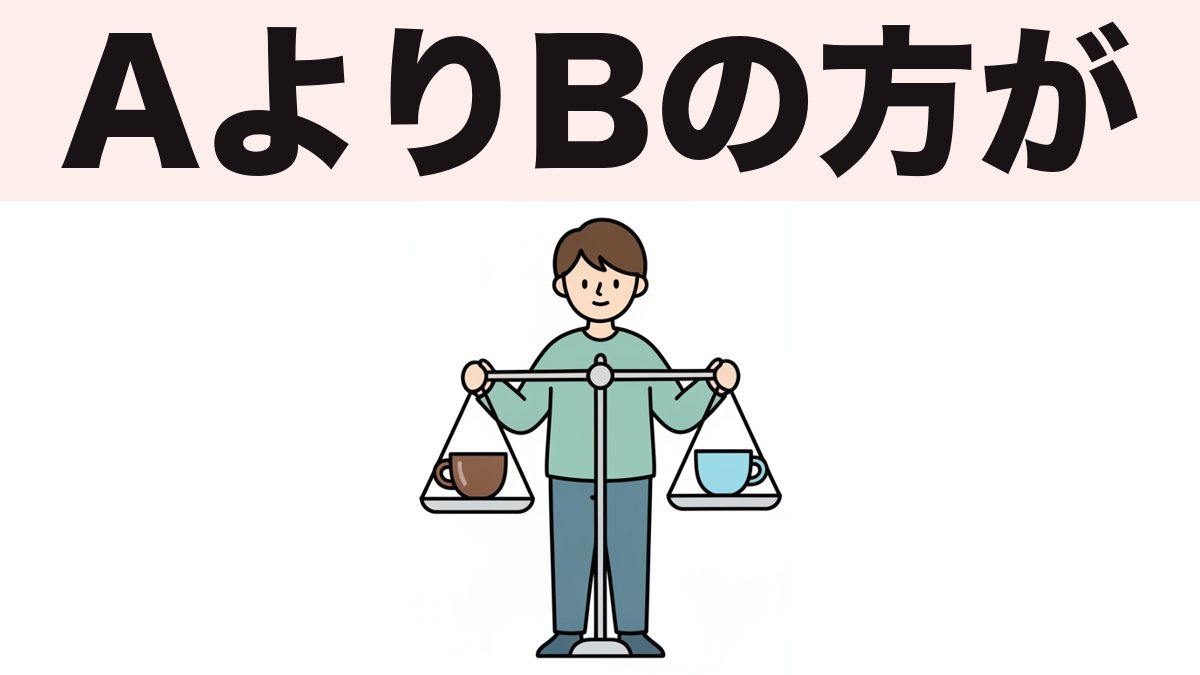
〜より〜の方が means "B, more than A" — and the part that trips learners up is that the thing being praised (B) comes second in the sentence, not first.
〜より〜の方が は「Bの方がAより上」という意味です。むずかしいのは、ほめる方(B)が後に来ることです。英語の感覚とは反対です。
English says "B is more than A": tea is better than coffee. Japanese builds the same sentence backward from an English speaker's instinct — the thing you're not choosing comes first, marked with より, and the winner comes second, marked with の方が. Once the order clicks, the rest of Japanese comparison grammar is mostly small variations on this one pattern.
The basics
How does AよりBの方が actually work?
Break down the pieces:
- A より — "compared to A" / "more than A" (A is the thing being measured against)
- B の方が — "B's direction/side is" (B is the one coming out ahead)
コーヒーより紅茶の方が好きです。 — I like tea more than coffee. (polite, literally "compared to coffee, tea's side is liked") 電車よりバスの方が安いです。 — The bus is cheaper than the train. (polite)
The winner (紅茶, バス) sits right before の方が. The loser (コーヒー, 電車) sits right before より. If you remember nothing else, remember that の方が marks the thing winning the comparison — that's the anchor everything else hangs off of.
Can you drop either half of the sentence?
Yes, and in real conversation you usually do. Both よりA and の方が can stand alone if context already supplies the missing half:
紅茶の方が好きです。 — I like tea more. (the "than what" is already obvious from context) バスより安いです。 — It's cheaper than the bus. (the "than" comparison stands without の方が)
This is closer to how comparisons actually get used — you rarely state both sides in full unless you're setting up the comparison for the first time in a conversation.
What order do the pieces go in when you also add a topic?
When the sentence has its own topic (は), より and の方が usually cluster together, with the topic marker doing separate work:
私は、コーヒーより紅茶の方が好きです。 — As for me, I like tea more than coffee. (私は sets the topic — "speaking of me" — separately from the AよりBの方が comparison itself)
Think of は as answering "whose opinion is this," while より…の方が answers "which of the two wins." They're doing different jobs and can sit in the same sentence without conflict.
Beyond the basics
How do you say two things are equally matched?
Use ほど…ない for "not as much as," which sounds negative in English but is Japan's standard way to express a close-but-not-quite comparison:
今日は昨日ほど暑くないです。 — Today isn't as hot as yesterday. (polite) 私は兄ほど背が高くないです。 — I'm not as tall as my older brother. (polite)
The structure is B は A ほど [adjective] ない — B doesn't reach A's level. There's no direct positive equivalent ("as X as") in the same shape; Japanese approaches "equally matched" from the negative side by default.
How do you say something is the best / most, out of everyone?
一番 (ichiban, literally "number one") handles superlatives, and it drops the より entirely since there's no single thing being compared against — it's everyone at once:
クラスで一番背が高いです。 — I'm the tallest in the class. (polite, 一番 + adjective, no より needed) これが一番好きです。 — I like this one the most. (polite)
一番 pairs naturally with a group marker like で (クラスで, 中で) to establish the field being compared — "tallest in the class," not tallest in some unstated universal sense.
What's the actual difference between より and の方が when both could work?
Native speakers use より alone (without の方が) in more formal or written contexts, and の方が for the everyday spoken comparison:
去年より今年の方が忙しいです。 — This year is busier than last year. (spoken, natural, の方が does the heavy lifting) 予想より難しかったです。 — It was harder than expected. (より alone, no の方が — common when there's no explicit "winner" noun, just a fact stated against a baseline)
より alone without の方が tends to show up when you're comparing against an expectation or baseline rather than two concrete options sitting side by side — "harder than expected" doesn't have a clean B to put in the の方が slot.
What about 〜と比べて and 〜に比べて?
比べる (くらべる) means "to compare," and both 〜と比べて and 〜に比べて translate as "compared with." They are heavier than より and they do a different job: より sits inside the comparison, while 比べて sets up a whole clause against a reference point.
去年と比べて、今年は忙しいです。 — Compared with last year, this year is busy. (polite) 去年に比べて、売上が増えました。 — Compared with last year, sales have increased. (polite, written register)
The difference between the two particles is small and mostly register: と比べて is the conversational one and treats the two things as a pair, に比べて is more written and treats the first item as a baseline you are measuring against. Neither takes の方が — the second half is a plain statement, not a winner.
You cannot swap them into a simple two-item comparison. 犬と比べて猫の方が好きです is awkward; 犬より猫の方が好きです is the sentence you want. Use 比べて when the second half is a situation rather than a preference.
Does this grammar pattern show up differently in casual speech?
The core order doesn't change, but の方が commonly shrinks to の方 or even just ほう in fast casual speech, and です gets dropped the way it does everywhere else — see our post on plain vs polite endings for the general mechanics of that switch.
こっちの方がいい。 — This one's better. (casual, の方が survives even in casual speech — it's not a politeness marker itself) こっちのほうがよくない? — Isn't this one better? (casual, seeking agreement)
Worth noting: の方が isn't a politeness level marker the way です/ます is — it stays in the sentence regardless of register, only the ending around it changes.
How to practise it
Pick three pairs of things you actually have opinions about — two foods, two seasons, two modes of transport — and build one AよりBの方が sentence for each, saying the winner out loud last. The habit you're building is physically reaching for の方が only after より, since that's the reverse of the English instinct to name the winner first.
Then try dropping half the sentence, the way native speakers do. Say only B の方が好きです in response to an imagined "which do you like?" and notice that it still lands as a complete, natural answer — you don't need to restate the loser every time.
どっちが好き? — Which do you like better? (casual — the natural question that this whole grammar point answers) うーん、こっちの方かな。 — Hmm, I think this one. (casual, かな softens it into a half-decided answer)
Common mistakes
- Putting the winner after より instead of before の方が. コーヒーより紅茶が好き still technically works informally, but 紅茶の方が好きです is the cleaner, standard shape — the mistake is skipping の方が entirely and assuming より alone always marks the loser correctly on its own.
- Trying to build a positive "as X as" with ほど. ほど only works in the negative (ほど…ない). There's no direct ほど…だ construction for "just as tall as" — that idea is usually expressed a different way (同じくらい, for example), a separate topic from this comparison pattern.
- Forgetting 一番 doesn't take より. 一番より is not standard grammar — 一番 already means "beats everyone," so there's nothing left to mark with より.
- Assuming の方が always needs both halves spoken. Non-native speech sometimes over-explains by restating both A and B every time; native speech drops whichever half is already obvious from context, as shown above.
The comparison set at a glance
| Pattern | Meaning | Example |
|---|---|---|
| AよりBの方が | B is more than A | コーヒーより紅茶の方が好きです |
| Aほど〜ない | Not as much as A | 昨日ほど暑くない |
| 一番 | The most / -est (of a group) | クラスで一番背が高い |
| より (alone, no の方が) | More than [a baseline/expectation] | 予想より難しかった |
Practice
Answers are hidden — build yours first, then open. Questions 1 and 2 are a pair: the same preference, with and without the "than."
1. Say "I like tea more than coffee."
Show answer
コーヒーより紅茶の方が好きです — literally "compared to coffee, tea's side is liked." A より B の方が.
2. Say "I like tea more," where the comparison is already obvious.
Show answer
紅茶の方が好きです — you can drop the より half when context supplies it. This is the pair to question 1.
3. Say "the bus is cheaper than the train."
Show answer
電車よりバスの方が安いです — the thing that wins takes の方が.
4. Add a topic: "as for me, I prefer tea to coffee."
Show answer
私は、コーヒーより紅茶の方が好きです — 私は sets the topic separately, before the comparison starts.
5. Say "today isn't as hot as yesterday."
Show answer
今日は昨日ほど暑くないです — ほど + negative is how Japanese says "not as… as." より does not do this job.
6. Say "I'm the tallest in the class."
Show answer
クラスで一番背が高いです — for a superlative you need 一番 and no より at all.
7. Say "it was harder than expected."
Show answer
予想より難しかったです — より alone, because there is no explicit winner noun, just a baseline.
8. Say "this one's better," casually.
Show answer
こっちの方がいい — の方が survives in casual speech; it is not a politeness marker.
9. Ask a friend which of two things they prefer.
Show answer
どっちが好き? — the natural question that this whole grammar point answers.
10. Say "this year is busier than last year."
Show answer
去年より今年の方が忙しいです — the natural spoken shape, with の方が doing the heavy lifting.
FAQ
Do I need より and の方が in the same sentence every time? No — once the comparison is established in conversation, native speakers usually drop one half. Both よりA and Bの方が can carry a comparison on their own once context fills in the rest.
Is ほど only used for physical comparisons like height? No — it works for any gradable quality: difficulty, speed, cost, enjoyment. 今日は昨日ほど忙しくない (today isn't as busy as yesterday) uses the exact same structure as the height example.
Can I use もっと with this pattern? Yes — もっと ("more") often pairs with の方が to intensify it: もっと紅茶の方が好きです sounds a little redundant on its own, but もっと commonly shows up right before an adjective in a related, separate construction (もっと安い方がいい — I'd prefer something cheaper).
What's the difference between 一番 and 最も? They mean the same thing, but 最も (mottomo) is more formal and written, closer to English "most" in an essay, while 一番 is what you'll hear in everyday spoken Japanese.
Does word order ever flip in casual speech — B first, then A? It can, especially when the speaker adds the comparison as an afterthought: 紅茶の方が好き、コーヒーより, tacking より onto the end. It's not the textbook order, but it's a natural pattern in real speech where the main point comes first and the comparison gets added after.
Is there a grammar point related to this that goes further? For a construction that expresses one thing changing depending on another — a related but different kind of relationship between two things — see our post on によって.
Vocabulary from this article
Tap the block to select all of it, then copy. In Anki: File → Import, note type Basic, separator Tab — the first column becomes the front, the second the back.
紅茶	こうちゃ — black tea
好き	すき — to like
電車	でんしゃ — train
安い	やすい — cheap
私	わたし — I
今日	きょう — today
昨日	きのう — yesterday
暑い	あつい — hot
兄	あに — older brother
背	せ — height
高い	たかい — tall, expensive
一番	いちばん — the most
去年	きょねん — last year
今年	ことし — this year
忙しい	いそがしい — busy
予想	よそう — expectation
難しい	むずかしい — difficult
方	ほう — side, direction
I'm Yuuki, a Japanese teacher based in Tokyo. I've taught on italki as a Top 1% teacher and watched over 1,500 anime, and this is one of the grammar points where students consistently get the meaning right but the word order backward — worth drilling out loud until B の方が becomes reflex.
Sources: the author's own lessons and standard reference grammars.
英語は「BはAより上」と言います。例:tea is better than coffee。日本語は、英語話者の感覚とは反対の順番で作ります。選ばない方(A)が先に来て「より」がつきます。勝つ方(B)が後に来て「の方が」がつきます。この順番がわかれば、日本語の比較の文法は、だいたいこのパターンの小さいバリエーションです。
基本の形
AよりBの方が は、どう働く?
パーツに分けます。
- Aより — 「Aに比べて」「Aより」(Aは比べられる方)
- Bの方が — 「Bの方向・側が」(Bは比較で勝つ方)
コーヒーより紅茶の方が好きです。 — I like tea more than coffee. (ていねい・直訳は「コーヒーに比べて、紅茶の方が好かれている」) 電車よりバスの方が安いです。 — The bus is cheaper than the train. (ていねい)
勝つ方(紅茶、バス)は「の方が」のすぐ前にあります。負ける方(コーヒー、電車)は「より」のすぐ前にあります。1つだけ覚えるなら、「の方が」は比較で勝つ方につく、ということです。これが全部の土台になります。
片方だけ省略してもいい?
いいです。実際の会話では、たいてい片方だけを言います。「よりA」「の方が」は、文脈からもう片方がわかっていれば、それだけで使えます。
紅茶の方が好きです。 — I like tea more. (「何より」かはすでに文脈でわかっている) バスより安いです。 — It's cheaper than the bus. (「の方が」なしでも、比較として成り立つ)
これが、実際の比較の使われ方に近いです。会話の中で初めて比較を出すとき以外は、両方をフルで言うことはあまりありません。
「は」もいっしょに使うときの順番は?
文に「は」で示す話題があるとき、「より」と「の方が」はだいたいセットで動きます。話題を示す「は」は、別の仕事をしています。
私は、コーヒーより紅茶の方が好きです。 — As for me, I like tea more than coffee. (私は が話題「私について言うと」を作り、AよりBの方が が「どちらが勝つか」を作る)
「は」は「これは誰の意見か」を答え、「より…の方が」は「どちらが勝つか」を答えます。仕事がちがうので、同じ文の中でぶつかりません。
もっと深く
2つがほぼ同じくらいのときは、どう言う?
「ほど〜ない」を使います。「〜ほどではない」は英語では否定に聞こえますが、日本語では「かなり近いけど、そこまでではない」という比較の標準の言い方です。
今日は昨日ほど暑くないです。 — Today isn't as hot as yesterday. (ていねい) 私は兄ほど背が高くないです。 — I'm not as tall as my older brother. (ていねい)
形は「B は A ほど〔形容詞〕ない」です。Bは、Aのレベルに届いていません。同じ形のまま「ちょうど同じくらい」という肯定の言い方はありません。日本語は「同じくらい」を、否定の形から近づく形で表します。
「一番」(グループの中で一番)は、どう言う?
一番(いちばん、文字通り「番号1」)は最上級を表します。比べる相手が1つではなく全員なので、「より」はいりません。
クラスで一番背が高いです。 — I'm the tallest in the class. (ていねい・一番+形容詞、より不要) これが一番好きです。 — I like this one the most. (ていねい)
「一番」は「で」のようなグループを示す言葉(クラスで、〜の中で)とよくセットになります。「クラスの中で一番」というように、比べる範囲をはっきりさせます。
より と の方が、両方使える場面での実際のちがいは?
日本語話者は、「の方が」なしの「より」だけを、より正式・書き言葉的な場面で使う傾向があります。「の方が」は、日常会話の比較で自然に使われます。
去年より今年の方が忙しいです。 — This year is busier than last year. (話し言葉・自然・の方が が中心の働きをしている) 予想より難しかったです。 — It was harder than expected. (より だけ・の方が なし・はっきりした「勝つ方」の名詞がないときによく使う)
「の方が」なしの「より」だけは、目の前に並ぶ2つの選択肢ではなく、期待や基準に対して比べるときによく出てきます。「予想より難しい」には、「の方が」の場所に入れるきれいな「B」がありません。
「〜と比べて」「〜に比べて」は?
「比べる(くらべる)」は「くらべる」という動詞です。「〜と比べて」も「〜に比べて」も英語の "compared with" です。「より」より重く、はたらきもちがいます。「より」は文の中に入りますが、「比べて」は文全体をある点と くらべます。
去年と比べて、今年は忙しいです。 — Compared with last year, this year is busy. (polite) 去年に比べて、売上が増えました。 — Compared with last year, sales have increased. (polite, 書きことば)
「と」と「に」のちがいは小さいです。「と比べて」は会話で、2つを並べる感じ。「に比べて」は書きことばで、前のものを基準にする感じです。どちらも「の方が」とはいっしょに使いません。
2つのものを比べるだけの文には使えません。「犬と比べて猫の方が好きです」は不自然で、「犬より猫の方が好きです」と言います。「比べて」は、うしろが好みではなく「状況」のときに使います。
カジュアルな会話では、この文法はちがって聞こえる?
基本の順番は変わりませんが、「の方が」は速いカジュアルな会話で「の方」や「ほう」だけに縮むことがあります。「です」も、ほかの場面と同じように省略されます。この切りかえの一般的な仕組みは、だ・です の記事を見てください。
こっちの方がいい。 — This one's better. (カジュアル・の方が はカジュアルな会話でも残る。ていねいさを表す言葉ではない) こっちのほうがよくない? — Isn't this one better? (カジュアル・相手に同意を求める)
覚えておくとよいのは、「の方が」はです・ますのようなていねいさのレベルを表す言葉ではないということです。文が変わっても「の方が」自体は残り、まわりの語尾だけが変わります。
練習のしかた
実際に好みがある3つの組み合わせを選んでください。食べ物2つ、季節2つ、乗り物2つ、などです。それぞれについて「AよりBの方が」の文を1つ作り、勝つ方を最後に声に出してください。作っている習慣は、「より」の後に「の方が」に手を伸ばす動きです。これは、勝つ方を先に言う英語の感覚とは反対です。
次に、実際の会話のように片方を省略してみてください。「どれが好き?」という想像の質問に対して、「Bの方が好きです」だけで答えてみましょう。それだけで自然な、完全な答えになることに気づくはずです。毎回、負ける方を言い直す必要はありません。
どっちが好き? — Which do you like better? (カジュアル・この文法全体への自然な質問) うーん、こっちの方かな。 — Hmm, I think this one. (カジュアル・「かな」が、半分決まった答えをやわらかくする)
よくあるまちがい
- 勝つ方を「より」の後に置いてしまう。 「コーヒーより紅茶が好き」もカジュアルには通じますが、「紅茶の方が好きです」の方が、きれいで標準の形です。まちがいは、「の方が」を丸ごと省略して、「より」だけで負ける方が正しく示せると思ってしまうことです。
- 「ほど」で肯定の「同じくらい」を作ろうとしてしまう。 「ほど」は否定(ほど〜ない)でしか使いません。「ちょうど同じ高さ」のような肯定の「ほど〜だ」という形はありません。その意味は、別の言い方(例えば「同じくらい」)で表します。これは、この比較のパターンとは別の話です。
- 「一番」に「より」をつけてしまう。 「一番より」は標準の文法ではありません。「一番」はすでに「全員に勝つ」という意味なので、「より」で比べる相手が残っていません。
- 「の方が」はいつも両方セットで言うものだと思ってしまう。 非ネイティブの話し方は、毎回AとBの両方を言い直してしまうことがあります。ネイティブの話し方は、文脈からすでにわかっている方を省略します。上で見た通りです。
比較の形、一覧
| パターン | 意味 | 例 |
|---|---|---|
| AよりBの方が | BはAより上 | コーヒーより紅茶の方が好きです |
| Aほど〜ない | Aほどではない | 昨日ほど暑くない |
| 一番 | 一番/〜すぎ(グループの中で) | クラスで一番背が高い |
| より(単独・の方がなし) | 〔基準・期待〕より | 予想より難しかった |
練習
答えはかくれています。まず自分で作ってから開いてください。1番と2番が対です。同じこのみで、「より」があるかどうかだけがちがいます。
1. 「コーヒーより紅茶が好き」を、この文法で言ってください。
答えを見る
コーヒーより紅茶の方が好きです — 「AよりBの方が」。勝つ方に「の方が」がつきます。
2. くらべる相手が分かっている時は?
答えを見る
紅茶の方が好きです — 「より」の部分は落とせます。1番と対です。
3. 「バスの方が安い」を、電車とくらべて言ってください。
答えを見る
電車よりバスの方が安いです
4. 「私は」を足してください。どこに入りますか。
答えを見る
私は、コーヒーより紅茶の方が好きです — 話だいは、くらべる前に置きます。
5. 「今日は昨日ほど暑くない」— どうして「より」ではないですか。
答えを見る
「〜ほど+うちけし」が「as … as ではない」だから — 「より」はこの仕事をしません。
6. 「クラスでいちばん背が高い」を言ってください。「より」はいりますか。
答えを見る
クラスで一番背が高いです — 「より」はいりません
7. 「思ったよりむずかしかった」を言ってください。
答えを見る
予想より難しかったです — 勝つ名詞がないので「より」だけです。
8. 「こっちがいい」をこの文法でくだけて言ってください。
答えを見る
こっちの方がいい — 「の方が」はくだけた話し方でものこります。ていねいさのしるしではありません。
9. 友だちに「どちらが好き?」と聞いてください。
答えを見る
どっちが好き?
10. 「今年は去年より忙しい」を「の方が」で言ってください。
答えを見る
去年より今年の方が忙しいです
FAQ
より と の方が は、毎回同じ文の中で両方必要? いいえ。会話の中で一度比較が出てきたら、たいていどちらか片方だけになります。「よりA」だけでも、「Bの方が」だけでも、文脈が残りを補ってくれれば、それだけで比較を伝えられます。
「ほど」は身長のような物理的な比較にしか使えない? いいえ。むずかしさ、速さ、値段、楽しさなど、段階がある性質ならなんでも使えます。「今日は昨日ほど忙しくない」は、身長の例とまったく同じ形です。
この文法と「もっと」はいっしょに使える? 使えます。「もっと」(more)は、「の方が」をさらに強めるためによく組み合わされます。「もっと紅茶の方が好きです」は少し重複した感じがしますが、「もっと」は形容詞の直前に来る、別の関連した表現でよく登場します(もっと安い方がいい)。
「一番」と「最も」のちがいは? 意味は同じですが、「最も」(もっとも)は、より書き言葉的・正式で、エッセイの中の英語の"most"に近いです。「一番」は、日常会話でよく聞く言い方です。
カジュアルな会話で、B・Aの順番が入れかわることはある? あります。特に、話し手が後から比較を付け足すときです。「紅茶の方が好き、コーヒーより」のように、「より」を最後にくっつけます。教科書通りの順番ではありませんが、言いたいことを先に言って、あとから比較を付け足す、実際の会話でよくあるパターンです。
これに関連した、もっと先の文法はある? 片方がもう片方によって変わる、という別の関係を表す文法もあります。この比較とは別の関係です。によって の記事を見てください。
この記事に出た単語
ブロックをタップすると全部選べます。そのままコピーしてください。Anki では ファイル → 読み込み、ノートタイプ 基本、区切り タブ。1列目が表、2列目が裏になります。
紅茶	こうちゃ — black tea
好き	すき — to like
電車	でんしゃ — train
安い	やすい — cheap
私	わたし — I
今日	きょう — today
昨日	きのう — yesterday
暑い	あつい — hot
兄	あに — older brother
背	せ — height
高い	たかい — tall, expensive
一番	いちばん — the most
去年	きょねん — last year
今年	ことし — this year
忙しい	いそがしい — busy
予想	よそう — expectation
難しい	むずかしい — difficult
方	ほう — side, direction
More drills like the ones above, plus a timed JLPT-style mock test: Practice · N5上のような練習問題と、時間つきのJLPT形式のもぎ試験: 練習ページ · N5
Want to try this in a real conversation?
本当の会話で、ためしてみませんか?
30-minute trial lesson, $13. Times shown in your own timezone.
30分の体験レッスン、$13。時間はあなたのタイムゾーンで表示されます。
Book a trial lesson · $13