How to say goodbye in Japanese: さようなら is almost never the right oneさようならは、ほとんど使わない: 日本語の「さよなら」の言い方
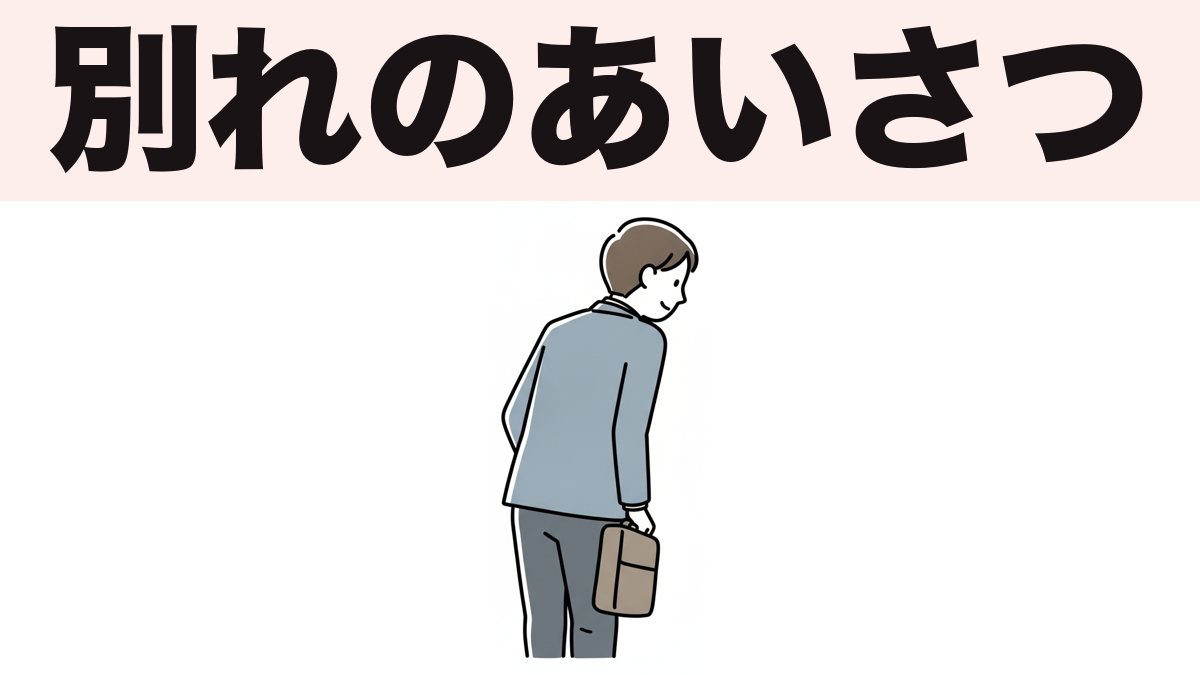
さようなら is the goodbye every textbook teaches and almost no Japanese adult says — it carries a sense of "we will not see each other for a long time," so the real goodbyes are お疲れさま at work, 失礼します when you leave a room, and じゃあね or また明日 with everyone else.
「さようなら」は教科書で最初に習います。でも、大人はあまり言いません。「もう長く会えない」という感じがあるからです。実際に使うのは、仕事なら「お疲れさま」、部屋を出る時は「失礼します」、友だちには「じゃあね」「また明日」です。
Goodbye is the single place where beginners most reliably sound like a textbook. The fix is not a longer word list — it is knowing that Japanese picks the goodbye by situation and direction of travel, not by politeness level alone.
The basics
Why is さようなら wrong, exactly?
It is not wrong. It is heavy. さようなら originally meant something like "if that is how it is" — a goodbye that accepts a parting, which is why it lands with finality.
さようなら。 — Goodbye. (polite, but implies a long or permanent parting)
Where you will genuinely hear it: schoolchildren to a teacher at the end of the day, a formal farewell to someone moving away, and the end of a relationship. Where you will not hear it: an office at 6pm, a friend leaving a café, a family member heading out. Say it to a colleague every evening and the effect is somewhere between theatrical and worrying.
What do people say at work?
お疲れさまです and its past form お疲れさまでした do almost all the work. It means something like "thank you for your effort," and at the end of the day it functions as the goodbye.
お疲れさまでした。 — Goodbye / thanks for your work today. (polite, leaving work) お先に失礼します。 — Excuse me for leaving before you. (polite, said by the person leaving first)
The pair runs in both directions: the person leaving says お先に失礼します, and the people staying answer お疲れさまでした. That exchange is the entire ritual, and it happens thousands of times a day across Japan. The word itself is doing more jobs than any dictionary entry suggests, which is the subject of お疲れさま on its own.
What do friends say?
Short things, usually with a ね or a plan attached.
じゃあね。 — See you. (casual, the everyday default) また明日。 — See you tomorrow. (casual, when you actually will) バイバイ。 — Bye bye. (casual, common with friends and children)
またね, じゃあ, じゃ and また今度 ("see you next time") all sit in the same zone. The pattern worth noticing is that Japanese goodbyes prefer to name the next meeting: また明日, また来週, また後で. A goodbye that specifies when is warmer than one that does not.
What do you say when leaving a room?
失礼します — literally "I am being rude" — is the all-purpose phrase for entering and leaving a space that belongs to someone else.
失礼します。 — Excuse me. (polite, leaving an office, a meeting, a teacher's room)
It is also how you end a phone call politely, which surprises learners who expect a goodbye word. さようなら on the phone sounds strange; 失礼します is the standard sign-off.
What about leaving your own home?
Home has its own fixed pair, and neither half is a goodbye in the English sense.
行ってきます。 — I'm off (and I'll be back). (casual, said by the person leaving) 行ってらっしゃい。 — Go and come back. (casual, said by the person staying)
These are obligatory in a way English goodbyes are not. Walking out of a Japanese home in silence reads as sulking. The full set of four house phrases — including the two for coming back — is laid out in ただいま and おかえり.
Beyond the basics
Which goodbye goes with which situation?
| Situation | What you say | Register |
|---|---|---|
| Leaving work, others still there | お先に失礼します | Polite |
| Someone else leaving work | お疲れさまでした | Polite |
| Leaving a room, office, phone call | 失礼します | Polite |
| Leaving your own home | 行ってきます | Neutral, household only |
| Friends, no fixed next meeting | じゃあね / またね | Casual |
| Friends, meeting again soon | また明日 / また来週 | Casual |
| Seeing someone off on a journey | 気をつけて | Any |
| To someone unwell | お大事に | Polite |
| Genuine long parting | さようなら | Polite, heavy |
| Shop staff to customer | ありがとうございました | Service |
The table is the actual answer to "how do you say goodbye in Japanese." There is no single word, and hunting for one is what keeps さようなら in textbooks.
What do you say to the person who is leaving?
The goodbye is often split between two different phrases. If you are the one staying, your line is usually about the other person's journey or condition.
気をつけて。 — Take care / travel safe. (any register, said to someone heading out) お大事に。 — Take care of yourself. (polite, to someone ill — never as a general goodbye)
お大事に is specifically for illness or injury. Saying it to a healthy colleague is the conversational equivalent of handing them a get-well card for no reason — a distinction covered alongside the rest of the illness vocabulary in how to say "I'm sick".
How do shop staff say goodbye?
They do not, technically. They thank you.
ありがとうございました。 — Thank you (for your custom). (service register, as you leave)
You are not expected to answer with a goodbye. A small nod, or どうも, is enough. Learners who reply さようなら to a convenience store clerk get a brief look of confusion, because the clerk did not say goodbye in the first place.
What are the anime goodbyes, and can you use them?
Fiction runs on the dramatic end of the range, which is exactly where real speech does not go.
さらば。 — Farewell. (archaic, theatrical — samurai, villains, parody) あばよ。 — So long. (rough, old-fashioned tough-guy register) じゃあな。 — See ya. (casual masculine, common in fiction and among close male friends) ごきげんよう。 — Fare thee well. (archaic-elegant, used seriously by a small set of speakers and constantly by anime characters at girls' schools)
じゃあな is genuinely usable between close friends. The other three will get a laugh — which is fine if you meant to be funny, and a problem if you did not. This is the same register trap that makes anime a brilliant listening resource and a risky speaking model; why anime Japanese sounds rude works through the general version.
Does the goodbye change if you are the junior person?
Yes, in one specific way: leaving before your seniors requires an apology built into the phrase. That is what お先に ("ahead of you") is doing in お先に失礼します. Drop the お先に and you have only said "excuse me," which misses the point of the ritual.
お先に失礼します。 — I'm leaving ahead of you, excuse me. (polite, junior to senior) お先に。 — See you, I'm off. (casual, between colleagues who know each other well)
The trimmed お先に is friendly, not rude — but only among equals. Choosing between the two is the everyday form of the switch described in keigo vs casual.
Common mistakes
- Using さようなら as a daily goodbye. It reads as a long parting. Colleagues will wonder if you are quitting; a partner will wonder something worse.
- Answering ありがとうございました with さようなら. Shop staff thanked you; they did not say goodbye. A nod or どうも closes it.
- Saying お大事に to a healthy person. It means "take care of your health," and only fits when there is a health problem to take care of.
- Saying バイバイ to a boss or client. It is fine with friends and small children and lands as childish upward.
- Forgetting お先に when leaving first. 失礼します alone is not wrong, but お先に失礼します is the phrase the room is waiting for.
- Ending a phone call with さようなら. 失礼します is the standard. Business calls often end with 失礼いたします.
Practice
Answers are hidden — build yours first, then open. Questions 3 and 4 are a pair: the same office, two different speakers.
1. It is 6pm. You are leaving the office while your colleagues are still working. What do you say?
Show answer
お先に失礼します — お先に marks that you are leaving ahead of them, and 失礼します apologises for it. Dropping お先に loses the whole point.
2. A friend is walking away after coffee. You will see them next week.
Show answer
また来週 — Japanese goodbyes prefer to name the next meeting. じゃあね also works, but また来週 is warmer because it is specific.
3. Your colleague says お先に失礼します. What do you answer?
Show answer
お疲れさまでした — the fixed reply from the person staying. The two phrases are a pair; answering さようなら would break the ritual.
4. Now you are the one leaving, and everyone else has already gone home. Nobody is there to apologise to.
Show answer
お疲れさまでした — with no one senior still working, there is nothing to say お先に about. If the room is truly empty you say nothing at all; the phrase exists for the people in it.
5. You are leaving your house in the morning.
Show answer
行ってきます — literally "I'll go and come back." Leaving a Japanese home without it reads as being in a bad mood.
6. Your friend is heading out into a typhoon. Say something as they go.
Show answer
気をつけて — "be careful / take care on the way." This is the line for the person staying, and it works in any register.
7. A coworker is going home early with a fever.
Show answer
お大事に — reserved for illness and injury. 気をつけて would be about the journey; お大事に is about their health.
8. You are ending a business phone call.
Show answer
失礼します — or 失礼いたします to be more formal. さようなら on the phone sounds oddly final.
9. You are leaving a classmate you see every day at school, and you are both sixteen.
Show answer
じゃあね or また明日 — バイバイ is also completely normal at this age. さようなら is what you say to the teacher, not to each other.
10. A friend is emigrating next week and you will not see them for years.
Show answer
さようなら — this is the situation the word was built for. Here its weight is the point rather than a mistake.
FAQ
Is さようなら ever used normally? Yes — by children to teachers, and in genuinely long partings. It is not an archaic word; it is a heavy one, and the heaviness is why it does not fit ordinary daily goodbyes.
What is the most useful goodbye to learn first? お疲れさまです, if you will be around Japanese workplaces at all. Otherwise じゃあね for friends and 失礼します for anyone else. Those three cover nearly every situation a visitor meets.
Is バイバイ too childish for adults? No, between friends. Adult women use it freely, adult men less so, and nobody uses it to a superior. It is the register, not the age, that decides.
What is the difference between じゃあね and またね? Almost nothing. じゃあね leans on "well then," またね on "again." Both are casual, both are extremely common, and no Japanese speaker would notice which one you chose.
Do I bow when I say goodbye? A small nod is enough in casual situations and is close to automatic in polite ones. Nobody expects a foreign learner to calibrate the depth — matching roughly what the other person does is fine.
How do I say goodbye in a text message? じゃあ, じゃね, またね, or nothing at all. Japanese messaging often just stops, the same way a conversation trails off, and that is not considered rude.
Vocabulary from this article
Tap the block to select all of it, then copy. In Anki: File → Import, note type Basic, separator Tab — the first column becomes the front, the second the back.
さようなら	さようなら — goodbye (final, long parting)
お疲れさま	おつかれさま — thanks for your work; the everyday work goodbye
お先に失礼します	おさきにしつれいします — excuse me for leaving first
失礼します	しつれいします — excuse me (entering or leaving)
じゃあね	じゃあね — see you (casual)
またね	またね — see you again (casual)
また明日	またあした — see you tomorrow
また来週	またらいしゅう — see you next week
また今度	またこんど — see you next time
バイバイ	バイバイ — bye bye (casual)
行ってきます	いってきます — I'm off (leaving home)
行ってらっしゃい	いってらっしゃい — go and come back safely
気をつけて	きをつけて — take care, be safe
お大事に	おだいじに — take care of your health (to someone ill)
ありがとうございました	ありがとうございました — thank you (as a customer leaves)
どうも	どうも — thanks; hi; a light all-purpose word
さらば	さらば — farewell (archaic, theatrical)
あばよ	あばよ — so long (rough, old-fashioned)
じゃあな	じゃあな — see ya (casual masculine)
ごきげんよう	ごきげんよう — fare thee well (archaic-elegant)
お先に	おさきに — ahead of you; I'm off first
失礼いたします	しつれいいたします — excuse me (very formal)
I'm Yuuki, a Japanese teacher based in Tokyo. I've taught on italki as a Top 1% teacher and watched over 1,500 anime. Goodbye is the phrase my beginners get wrong longest, because さようなら is taught in week one and never corrected — most students say it to me for months before anyone tells them it sounds like we are parting for good.
Sources: the author's own lessons and standard reference grammars.
別れのあいさつは、学習者がいちばん「教科書っぽく」なるところです。単語を増やすことより、「場面」と「どっちが行く側か」で選ぶと分かります。
基本
「さようなら」はどうしてだめ?
だめではありません。重いのです。「さようなら」はもともと「そういうことなら」という意味でした。だから、別れを受け入れる感じが残っています。
さようなら。 — Goodbye. (ていねい。でも長い別れの感じ)
使う場面はあります。子どもが先生に言う時。遠くへ行く人に言う時。関係が終わる時です。会社で毎日言うと、「辞めるの?」と思われます。
仕事では何と言う?
「お疲れさまです」「お疲れさまでした」です。「がんばってくれてありがとう」という意味で、帰る時のあいさつにもなります。
お疲れさまでした。 — Goodbye / thanks for your work today. (ていねい。仕事が終わって帰る時) お先に失礼します。 — Excuse me for leaving before you. (ていねい。先に帰る人が言う)
2つで1組です。先に帰る人が「お先に失礼します」、残る人が「お疲れさまでした」と返します。この言葉の広さは お疲れさま の記事にまとめました。
友だちには?
短い言葉です。「ね」を付けたり、次に会う日を言ったりします。
じゃあね。 — See you. (カジュアル。いちばんよく使う) また明日。 — See you tomorrow. (カジュアル。本当に明日会う時) バイバイ。 — Bye bye. (カジュアル。友だち・子ども)
「またね」「じゃあ」「また今度」も同じ仲間です。日本語の別れのあいさつは、次に会う時を言うことが多いです。「また明日」「また来週」「また後で」。時を言う方が、あたたかく聞こえます。
部屋を出る時は?
「失礼します」です。意味は「失礼なことをします」。人の場所に入る時も、出る時も使います。
失礼します。 — Excuse me. (ていねい。会社・会議・先生の部屋を出る時)
電話を切る時も「失礼します」です。電話で「さようなら」と言うと、少し変に聞こえます。
家を出る時は?
家には決まった言い方があります。2つで1組です。
行ってきます。 — I'm off (and I'll be back). (家を出る人) 行ってらっしゃい。 — Go and come back. (家にいる人)
日本の家では、これを言わないと「きげんが悪いのかな」と思われます。帰った時の2つも入れた4つの形は ただいまとおかえり にあります。
もう少し先へ
場面と言葉の表
| 場面 | 言う言葉 | 丁寧さ |
|---|---|---|
| 自分が先に帰る(まだ人がいる) | お先に失礼します | ていねい |
| ほかの人が帰る | お疲れさまでした | ていねい |
| 部屋を出る・電話を切る | 失礼します | ていねい |
| 自分の家を出る | 行ってきます | 家の中だけ |
| 友だち(次はいつか分からない) | じゃあね / またね | カジュアル |
| 友だち(すぐまた会う) | また明日 / また来週 | カジュアル |
| 出かける人を見送る | 気をつけて | どれでも |
| 体調が悪い人に | お大事に | ていねい |
| 本当に長い別れ | さようなら | ていねい・重い |
| 店の人がお客に | ありがとうございました | 店の言葉 |
「日本語のさよならは何ですか」の答えは、この表です。1つの言葉ではありません。1つを探すから「さようなら」が教科書に残ります。
行く人に言う言葉は?
残る人は、別れの言葉より「相手のこと」を言います。
気をつけて。 — Take care / travel safe. (出かける人に) お大事に。 — Take care of yourself. (ていねい。体調が悪い人に)
「お大事に」は病気やけがの時だけです。元気な同僚に言うと、変です。病気の言葉は 「病気です」の言い方 にまとめました。
店の人は何と言う?
別れのあいさつは言いません。お礼を言います。
ありがとうございました。 — Thank you. (店の言葉。お客が出る時)
答えなくて大丈夫です。軽く会釈するか、「どうも」で十分です。「さようなら」と返すと、店の人は少し困ります。
アニメの別れの言葉は使える?
アニメは、いちばん大げさなところを使います。そこは、実際の会話では使わないところです。
さらば。 — Farewell. (古い・しばい風。侍・悪役・パロディ) あばよ。 — So long. (乱暴・古い感じ) じゃあな。 — See ya. (カジュアル・男性的。作品でよく使う) ごきげんよう。 — Fare thee well. (古くて上品。アニメのお嬢様学校の定番)
「じゃあな」は、仲のいい友だちになら本当に使えます。ほかの3つは笑われます。わざとなら大丈夫です。この線引きは アニメの日本語が失礼に聞こえる理由 と同じ話です。
自分が下の立場の時は?
1つだけ変わります。先に帰る時は、あやまる言葉を入れます。それが「お先に」(あなたより先に)です。「お先に」を取ると、ただの「失礼します」になって、意味が半分になります。
お先に失礼します。 — I'm leaving ahead of you, excuse me. (ていねい。下の人から上の人へ) お先に。 — See you, I'm off. (カジュアル。仲のいい同僚に)
短い「お先に」は失礼ではありません。でも、同じくらいの立場の人だけです。この使い分けは ていねいとカジュアルの切りかえ の毎日の形です。
よくある間違い
- 毎日「さようなら」を使う。 長い別れに聞こえます。会社なら「辞めるの?」と思われます。
- 店で「ありがとうございました」に「さようなら」と返す。 店の人はお礼を言っただけです。会釈か「どうも」で終わりです。
- 元気な人に「お大事に」。 体の心配の言葉です。病気やけがの時だけ使います。
- 上の人に「バイバイ」。 友だちと子どもには大丈夫です。上の人には子どもっぽく聞こえます。
- 先に帰る時に「お先に」を言わない。 「失礼します」だけでも間違いではありません。でも、周りが待っているのは「お先に失礼します」です。
- 電話を「さようなら」で切る。 「失礼します」がふつうです。仕事なら「失礼いたします」。
練習
答えはかくしてあります。先に自分で作ってから開いてください。3と4は同じ会社の、別の人の言葉です。
1. 夕方6時です。同僚はまだ仕事をしています。あなたは帰ります。何と言いますか。
答えを見る
お先に失礼します — 「お先に」で「あなたより先に」と言い、「失礼します」であやまります。「お先に」を取ると意味が半分になります。
2. 友だちと別れます。次に会うのは来週です。
答えを見る
また来週 — 日本語は次に会う時を言うことが多いです。「じゃあね」でもいいですが、「また来週」の方があたたかいです。
3. 同僚が「お先に失礼します」と言いました。何と返しますか。
答えを見る
お疲れさまでした — 残る人の決まった返事です。2つで1組なので、「さようなら」と返すと形がくずれます。
4. 今度はあなたが帰ります。でも、ほかの人はもう全員帰っています。
答えを見る
お疲れさまでした — 先に帰る相手がいないので「お先に」はいりません。だれもいなければ、何も言わなくて大丈夫です。
5. 朝、家を出ます。
答えを見る
行ってきます — 「行って、帰ってきます」という意味です。言わないで出ると、きげんが悪いように見えます。
6. 友だちが台風の中を出かけます。
答えを見る
気をつけて — 残る人が言う言葉です。ていねいでもカジュアルでも使えます。
7. 同僚が熱で早く帰ります。
答えを見る
お大事に — 病気とけがの時だけです。「気をつけて」は道の話、「お大事に」は体の話です。
8. 仕事の電話を切ります。
答えを見る
失礼します — もっとていねいにするなら「失礼いたします」。電話で「さようなら」は重いです。
9. 毎日会う同級生と別れます。2人とも16歳です。
答えを見る
じゃあね / また明日 — 「バイバイ」もふつうです。「さようなら」は先生に言う言葉で、友だちには言いません。
10. 友だちが来週、外国へ引っこします。何年も会えません。
答えを見る
さようなら — この場面のための言葉です。ここでは、重いことがそのまま意味になります。
よくある質問
「さようなら」はふつうに使いますか。 使う場面はあります。子どもから先生へ。長い別れの時。古い言葉ではありません。重い言葉です。だから毎日のあいさつには合いません。
最初に覚えるならどれですか。 日本の会社に行くなら「お疲れさまです」です。そうでなければ、友だちに「じゃあね」、ほかの人に「失礼します」。この3つでほとんど足ります。
大人が「バイバイ」を使うのは子どもっぽいですか。 友だちになら大丈夫です。女性はよく使います。男性は少なめです。上の人には使いません。年ではなく、相手との関係で決まります。
「じゃあね」と「またね」はちがいますか。 ほとんど同じです。「じゃあ」は「それでは」、「また」は「もう一度」の感じです。どちらを使っても、だれも気にしません。
おじぎはしますか。 カジュアルなら軽い会釈で十分です。ていねいな場面ではほぼ自動で出ます。深さは気にしなくて大丈夫です。相手と同じくらいで合います。
メッセージではどう書きますか。 「じゃあ」「じゃね」「またね」。何も書かないこともあります。会話が自然に終わるのと同じで、失礼ではありません。
この記事に出た単語
ブロックをタップすると全部選べます。そのままコピーしてください。Anki では ファイル → 読み込み、ノートタイプ 基本、区切り タブ。1列目が表、2列目が裏になります。
さようなら	さようなら — goodbye (final, long parting)
お疲れさま	おつかれさま — thanks for your work; the everyday work goodbye
お先に失礼します	おさきにしつれいします — excuse me for leaving first
失礼します	しつれいします — excuse me (entering or leaving)
じゃあね	じゃあね — see you (casual)
またね	またね — see you again (casual)
また明日	またあした — see you tomorrow
また来週	またらいしゅう — see you next week
また今度	またこんど — see you next time
バイバイ	バイバイ — bye bye (casual)
行ってきます	いってきます — I'm off (leaving home)
行ってらっしゃい	いってらっしゃい — go and come back safely
気をつけて	きをつけて — take care, be safe
お大事に	おだいじに — take care of your health (to someone ill)
ありがとうございました	ありがとうございました — thank you (as a customer leaves)
どうも	どうも — thanks; hi; a light all-purpose word
さらば	さらば — farewell (archaic, theatrical)
あばよ	あばよ — so long (rough, old-fashioned)
じゃあな	じゃあな — see ya (casual masculine)
ごきげんよう	ごきげんよう — fare thee well (archaic-elegant)
お先に	おさきに — ahead of you; I'm off first
失礼いたします	しつれいいたします — excuse me (very formal)
More drills like the ones above, plus a timed JLPT-style mock test: Practice · N5上のような練習問題と、時間つきのJLPT形式のもぎ試験: 練習ページ · N5
Want to try this in a real conversation?
本当の会話で、ためしてみませんか?
30-minute trial lesson, $13. Times shown in your own timezone.
30分の体験レッスン、$13。時間はあなたのタイムゾーンで表示されます。
Book a trial lesson · $13