Nani mo: how do you say "nothing" in Japanese?何も・誰も・どこにも: 「なにもない」の作り方
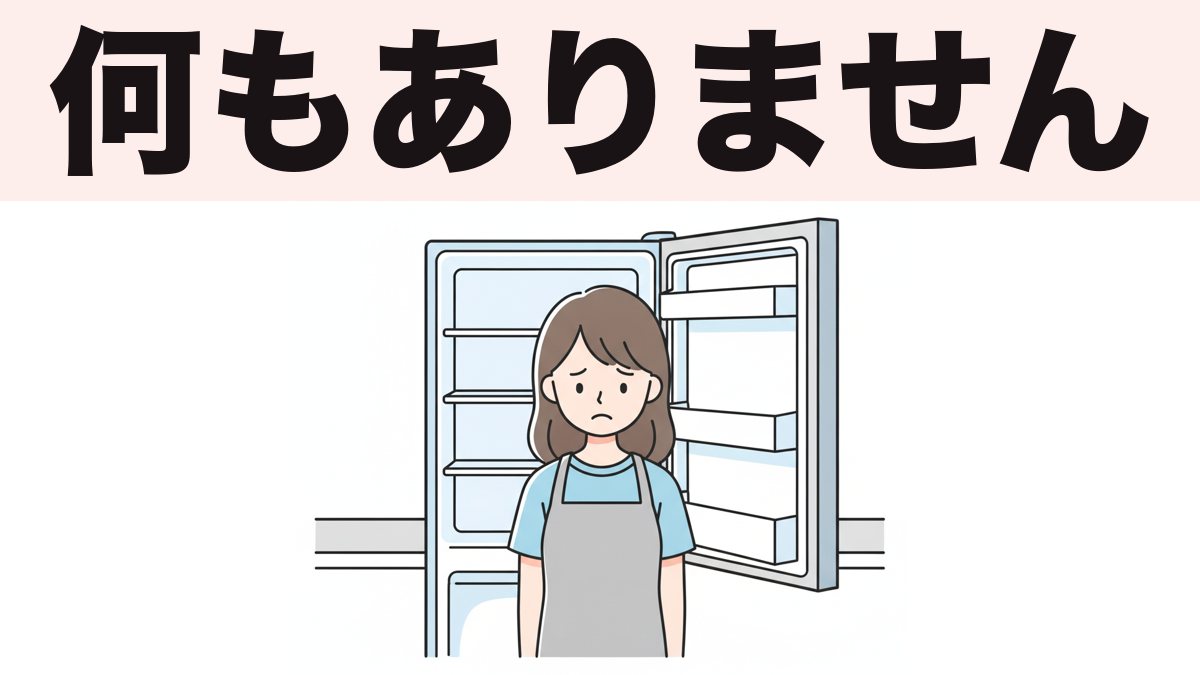
Japanese has no word for "nothing." It builds the idea out of three pieces — a question word, も, and a negative verb — and the negative verb is not optional. 何も食べません is "I eat nothing"; 何も食べます is not a sentence.
日本語には「nothing」にあたる1つの単語がありません。「ぎもんし+も+うちけしの動詞」の3つで作ります。そして動詞は、かならずうちけしです。「何も食べません」は言えますが、「何も食べます」は言えません。
This is one of the fastest-appearing walls in beginner Japanese, because English hides the structure. "I can't do anything" and "I can do nothing" both exist in English, so learners assume Japanese picks one. It doesn't. It has exactly one shape, and the negative lives on the verb.
The basics
What is the formula?
Take a question word, add も, and make the verb negative. That's the entire pattern.
question word + も + negative verb
何も食べませんでした。 — I didn't eat anything. (polite past) 誰も来ませんでした。 — Nobody came. (polite past)
If you already know the question words themselves, you have already learned most of this grammar point — you are just adding a particle and a rule about the verb.
Which question words does it work with?
| Question word | + も + negative | Meaning |
|---|---|---|
| 何 (what) | 何も〜ない | nothing |
| 誰 (who) | 誰も〜ない | nobody |
| どこ (where) | どこにも〜ない | nowhere |
| どちら / どっち (which of two) | どちらも〜ない | neither |
| どれ (which of many) | どれも〜ない | none of them |
| 何度 / 一度 (how many times / once) | 一度も〜ない | not even once |
どこにも行きませんでした。 — I didn't go anywhere. (polite past — note the に survives) 一度も見たことがありません。 — I've never seen it, not even once. (polite, emphatic)
What happens to を and が?
They vanish. This is the part textbooks state in one line and then never return to.
を and が are swallowed by も. You never say 何をも or 誰がも — the も replaces them:
何も買いませんでした。 — I didn't buy anything. (not 何をも) 誰も知りません。 — Nobody knows. (not 誰がも)
But に, で, と and から survive and stack in front of も:
どこにも行きたくないです。 — I don't want to go anywhere. (に stays: どこ + に + も) 誰とも話しませんでした。 — I didn't talk to anyone. (と stays)
The rule is worth memorising as a shape rather than a list: the two particles that mark subject and object disappear; the ones that carry direction or relationship stay. The same logic governs the も that means "also" — it has always been a particle that pushes を and が out of the way.
Beyond the basics
か, も, and でも: one question word, three different words
Change the particle after a question word and you change the whole meaning. Learners memorise these as six unrelated vocabulary items and then can't produce any of them under pressure. They are one system:
| 何 | 誰 | どこ | |
|---|---|---|---|
| + か = some- | 何か (something) | 誰か (someone) | どこか (somewhere) |
| + も = no- (negative verb) | 何も (nothing) | 誰も (nobody) | どこにも (nowhere) |
| + でも = any- | 何でも (anything) | 誰でも (anyone) | どこでも (anywhere) |
何か食べましたか。 — Did you eat something? (か — existence unknown) 何も食べていません。 — I haven't eaten anything. (も + negative) 何でも食べます。 — I'll eat anything. (でも — positive, no restriction)
Notice that the middle row is the only one that forces a negative verb. If you can say all three rows for 何, you can say them for every question word.
誰も with a positive verb means the opposite
Here is the exception that catches intermediate learners. 誰も can also appear with a positive verb, where it means "everyone":
誰も知っています。 — Everyone knows. (positive verb — reads as "everybody," not "nobody")
In practice this is rare and mostly literary; modern speech prefers みんな or 誰もが. Recognise it, don't produce it. The safe rule for your own sentences stays: use 誰も only with a negative.
何も vs 何にも: adding one syllable adds feeling
In casual speech, 何にも (nan-ni-mo) is an emphatic 何も — "not a single thing." It is not a different grammar point, just the spoken intensifier.
何にもしてないよ。 — I haven't done a thing. (casual, defensive — the extra に carries the protest)
You will hear this constantly in anime the moment a character is accused of something. Compare the flat 何もしていません, which reports a fact, with 何にもしてないよ, which argues.
全然 wants this pattern
全然 ("not at all") is a negative-seeking adverb, and it sits naturally in front of these:
全然何も分かりません。 — I don't understand anything at all. (polite, emphatic)
Modern casual speech does use 全然 with positives (全然いいよ = "totally fine"), but that is slang. With a question word + も, the negative is still required.
いつも is not this pattern
いつ means "when," so いつも should mean "never" by the rule above. It doesn't — いつも means always, and it takes positive verbs. It is a frozen, separate word that happens to share the shape.
To say "never," Japanese reaches for a different tool: 一度も + negative ("not even once"), 全然 + negative, or the plain negative with 決して.
決してあきらめません。 — I will never give up. (formal, emphatic)
Common mistakes
- Forgetting the negative verb. 何も食べます is not a sentence. If 何も, 誰も or どこにも appears, the verb must end in ない / ません / なかった / ませんでした.
- Keeping を or が. 何を も食べません and 誰が も来ません are both wrong. も replaces them.
- Dropping に from どこにも. どこも行きません sounds broken; どこにも行きません is the natural form. (どこも on its own does exist — どこも混んでいる, "everywhere is crowded" — but that is the "everywhere" use, not this one.)
- Translating "I can't do anything" word by word. English negates the verb and uses "anything." Japanese negates the verb and uses 何も. 何もできません is the whole sentence — see できる and the potential form for what できません is doing there.
- Using いつも for "never." いつも is "always." The mismatch feels arbitrary but it is fixed.
Practice
Answers are hidden — write yours first, then open. Questions 3 and 4 are a pair: same idea, and the particle is the only thing that moves.
1. Say "I didn't buy anything" politely, in the past.
Show answer
何も買いませんでした — question word + も + negative verb. The を is gone: not 何をも.
2. Something is wrong here: 誰が も来ませんでした。
Show answer
誰も来ませんでした — も swallows が. Subject and object particles disappear before も.
3. Say "I didn't go anywhere."
Show answer
どこにも行きませんでした — に survives and stacks in front of も, because it marks direction, not the subject or object.
4. Say "I didn't talk to anyone."
Show answer
誰とも話しませんでした — と survives too, for the same reason as に in question 3. This is the pair: only が and を vanish.
5. What is the difference between 何か食べましたか and 何も食べましたか?
Show answer
The second one is not a sentence — 何か asks "did you eat something?", but 何も requires a negative verb, so 何も食べましたか cannot exist. You would need 何も食べませんでしたか.
6. Fill the gap: I'll eat ___ → 何_食べます。
Show answer
何でも食べます — でも is the "any-" row: positive verb, no restriction. も alone would demand a negative.
7. Say "I've never been to Japan" using 一度も.
Show answer
日本に一度も行ったことがありません — 一度も + negative is how Japanese says "never," because いつも is taken and means "always."
8. Why does 何にもしてないよ sound different from 何もしていません?
Show answer
The extra に is emphasis, and the casual ending is a protest — 何にも means "not a single thing." The polite version reports; the casual one argues back.
9. Something is wrong here: いつも日本に行きませんでした。(intended: "I have never been to Japan")
Show answer
一度も日本に行ったことがありません — いつも means "always," not "never," despite いつ meaning "when." It is a frozen word outside this pattern.
10. Someone asks 何か飲みますか. Refuse politely in one word plus a verb.
Show answer
何も飲みません — the answer flips か to も and the verb to negative. This か → も swap is the most common real-life use of the pattern.
FAQ
Does the negative have to be on the same verb? Yes — on the main verb of that clause. 何も食べたくないです works because the negative sits on たくない. Splitting them across clauses breaks the pattern.
Can I use 何も with an adjective? Not directly. 何も is a noun-slot word, so it needs a verb. For "nothing is interesting," you would say 何も面白くないです — where 面白くない is doing the negating and 何も is the subject. That works fine.
Is 誰も rude compared to 誰か? No, they mean different things rather than differing in politeness. 誰か is "someone," 誰も is "nobody." Register is carried by the verb ending, as always.
Why does どこも sometimes appear without に? Because どこも with a positive verb means "everywhere": どこも人でいっぱいです ("everywhere is packed"). The negative "nowhere" version takes に. Same syllables, different job.
What about なにも in writing — kanji or kana? 何も with kanji is standard. 何にも is usually written the same way and disambiguated by context and speech rhythm.
Is 全然 required for emphasis? No, it just raises the volume. 何も分かりません is already complete; 全然何も分かりません is "I don't understand a single thing."
Vocabulary from this article
Tap the block to select all of it, then copy. In Anki: File → Import, note type Basic, separator Tab — the first column becomes the front, the second the back.
何	なに — what
誰	だれ — who
何度	なんど — how many times
一度	いちど — once, one time
食べる	たべる — to eat
買う	かう — to buy
来る	くる — to come
行く	いく — to go
知る	しる — to know
話す	はなす — to talk, to speak
見る	みる — to see, to watch
飲む	のむ — to drink
分かる	わかる — to understand
全然	ぜんぜん — (not) at all
決して	けっして — never, by no means
日本	にほん — Japan
面白い	おもしろい — interesting
混む	こむ — to get crowded
I'm Yuuki, a Japanese teacher based in Tokyo. I've taught on italki as a Top 1% teacher and watched over 1,500 anime. This is the pattern I have re-explained more times than any other: a learner reaches for "anything," the verb comes out positive, and the sentence collapses. Once the negative becomes automatic, a whole class of sentences opens up at once.
Sources: the author's own lessons and standard reference grammars.
これは初級のはやい時期に出てくるかべです。英語では "I can't do anything" と "I can do nothing" の2つの形があるので、日本語もどちらかを選ぶと思ってしまいます。でも日本語の形は1つだけです。うちけしは動詞につきます。
基本
作り方
ぎもんしに「も」をつけて、動詞をうちけしにします。それだけです。
ぎもんし + も + うちけしの動詞
何も食べませんでした。 — I didn't eat anything. 誰も来ませんでした。 — Nobody came.
ぎもんしをもう知っているなら、この文法はほとんど終わっています。あとは「も」と、動詞のうちけしのルールだけです。
どのぎもんしで使えるか
| ぎもんし | +も+うちけし | 意味 |
|---|---|---|
| 何 | 何も〜ない | nothing |
| 誰 | 誰も〜ない | nobody |
| どこ | どこにも〜ない | nowhere |
| どちら・どっち | どちらも〜ない | neither |
| どれ | どれも〜ない | none |
| 一度 | 一度も〜ない | not even once |
どこにも行きませんでした。 — I didn't go anywhere. 一度も見たことがありません。 — I've never seen it, not even once.
「を」と「が」は消えます
ここが大事です。「を」と「が」は「も」に食べられます。「何をも」「誰がも」とは言いません。
何も買いませんでした。 — I didn't buy anything. 誰も知りません。 — Nobody knows.
でも「に」「で」「と」「から」はのこります。「も」の前にならびます。
どこにも行きたくないです。 — I don't want to go anywhere. 誰とも話しませんでした。 — I didn't talk to anyone.
おぼえ方: しゅご(が)と、もくてきご(を)だけが消える。ほうこうやかんけいを言う助詞はのこる。
もう少しくわしく
「か」「も」「でも」は3つでひとつ
ぎもんしのうしろの助詞を変えると、意味がぜんぶ変わります。ばらばらに6つおぼえる人が多いですが、1つのしくみです。
| 何 | 誰 | どこ | |
|---|---|---|---|
| +か(some-) | 何か | 誰か | どこか |
| +も(no-・うちけし) | 何も | 誰も | どこにも |
| +でも(any-) | 何でも | 誰でも | どこでも |
何か食べましたか。 — Did you eat something? 何も食べていません。 — I haven't eaten anything. 何でも食べます。 — I'll eat anything.
まん中の行だけが、うちけしの動詞をひつようとします。
「誰も」+ふつうの動詞は、反対の意味
「誰も」はふつうの動詞といっしょに使うと「everyone」になります。
誰も知っています。 — Everyone knows.
でもこれは古い書き方で、今の会話では「みんな」を使います。読めればいいです。自分で作る文では、「誰も」はうちけしだけにしてください。
「何も」と「何にも」
くだけた話し方では「何にも」と言います。強い「何も」です。文法が変わるのではなく、気もちが強くなります。
何にもしてないよ。 — I haven't done a thing.
アニメでは、キャラクターがうたがわれた時によく出てきます。「何もしていません」はじじつを言うだけ。「何にもしてないよ」は言い返しています。
「全然」といっしょに使う
「全然」はうちけしとセットの言葉です。この形の前によく来ます。
全然何も分かりません。 — I don't understand anything at all.
今の会話では「全然いいよ」のようにふつうの形でも使いますが、それはスラングです。
「いつも」はちがいます
「いつ」+「も」なので「never」になりそうですが、なりません。「いつも」は always で、ふつうの動詞といっしょに使います。形はにていますが、べつの言葉です。
「never」は「一度も+うちけし」「全然+うちけし」「決して+うちけし」で言います。
決してあきらめません。 — I will never give up.
よくある間違い
- 動詞をうちけしにしない。 「何も食べます」は文になりません。
- 「を」「が」をのこす。 「何をも」「誰がも」は間違いです。
- 「どこにも」の「に」を落とす。 「どこも行きません」は変です。(「どこも混んでいる」のような「everywhere」の使い方はべつです。)
- 「いつも」を「never」に使う。 「いつも」は「always」です。
練習
答えはかくれています。まず自分で作ってから開いてください。3番と4番は対です。助詞だけが動きます。
1. 「I didn't buy anything」をていねいに、かこ形で。
答えを見る
何も買いませんでした — ぎもんし+も+うちけし。「を」は消えます。
2. 直してください: 誰が も来ませんでした。
答えを見る
誰も来ませんでした — 「も」が「が」を食べます。
3. 「I didn't go anywhere」を言ってください。
答えを見る
どこにも行きませんでした — 「に」はのこります。ほうこうを言う助詞だからです。
4. 「I didn't talk to anyone」を言ってください。
答えを見る
誰とも話しませんでした — 「と」ものこります。消えるのは「が」と「を」だけです。
5. 「何か食べましたか」と「何も食べましたか」のちがいは?
答えを見る
2つ目は文になりません — 「何も」はうちけしの動詞をひつようとします。「何も食べませんでしたか」なら言えます。
6. 「何_食べます」(I'll eat anything)の空らんは?
答えを見る
何でも食べます — 「でも」は any- の行です。ふつうの動詞でいいです。
7. 「一度も」を使って「日本に行ったことがない」と言ってください。
答えを見る
日本に一度も行ったことがありません — 「never」は「一度も+うちけし」です。「いつも」は使えません。
8. 「何にもしてないよ」は「何もしていません」とどうちがいますか。
答えを見る
「に」が強めていて、言い方が言い返しになっています — ていねいな方はじじつを言うだけです。
9. 直してください: いつも日本に行きませんでした。(日本に行ったことがない)
答えを見る
一度も日本に行ったことがありません — 「いつも」は「always」です。「いつ」から作った言葉ですが、この形の外にあります。
10. 「何か飲みますか」と聞かれました。ていねいにことわってください。
答えを見る
何も飲みません — 「か」を「も」に変えて、動詞をうちけしにします。じっさいの会話でいちばんよく使う形です。
この記事に出た単語
ブロックをタップすると全部選べます。そのままコピーしてください。Anki では ファイル → 読み込み、ノートタイプ 基本、区切り タブ。1列目が表、2列目が裏になります。
何	なに — what
誰	だれ — who
一度	いちど — once, one time
食べる	たべる — to eat
買う	かう — to buy
来る	くる — to come
行く	いく — to go
知る	しる — to know
話す	はなす — to talk, to speak
見る	みる — to see, to watch
飲む	のむ — to drink
分かる	わかる — to understand
全然	ぜんぜん — (not) at all
決して	けっして — never, by no means
日本	にほん — Japan
混む	こむ — to get crowded
助詞	じょし — particle
動詞	どうし — verb
私はユウキです。東京で日本語を教えています。 italki の Top 1% の先生で、アニメは1,500本以上見ました。この形は、いちばん多く説明し直した文法です。「anything」と言おうとして、動詞がふつうの形のまま出てきて、文がくずれます。うちけしが自動で出るようになると、たくさんの文が一度に言えるようになります。
More drills like the ones above, plus a timed JLPT-style mock test: Practice · N5上のような練習問題と、時間つきのJLPT形式のもぎ試験: 練習ページ · N5
Want to try this in a real conversation?
本当の会話で、ためしてみませんか?
30-minute trial lesson, $13. Times shown in your own timezone.
30分の体験レッスン、$13。時間はあなたのタイムゾーンで表示されます。
Book a trial lesson · $13