先輩 and 後輩: the relationship anime is built on, and how to use the words先輩と後輩: アニメでよく見る関係と、その言葉の使い方
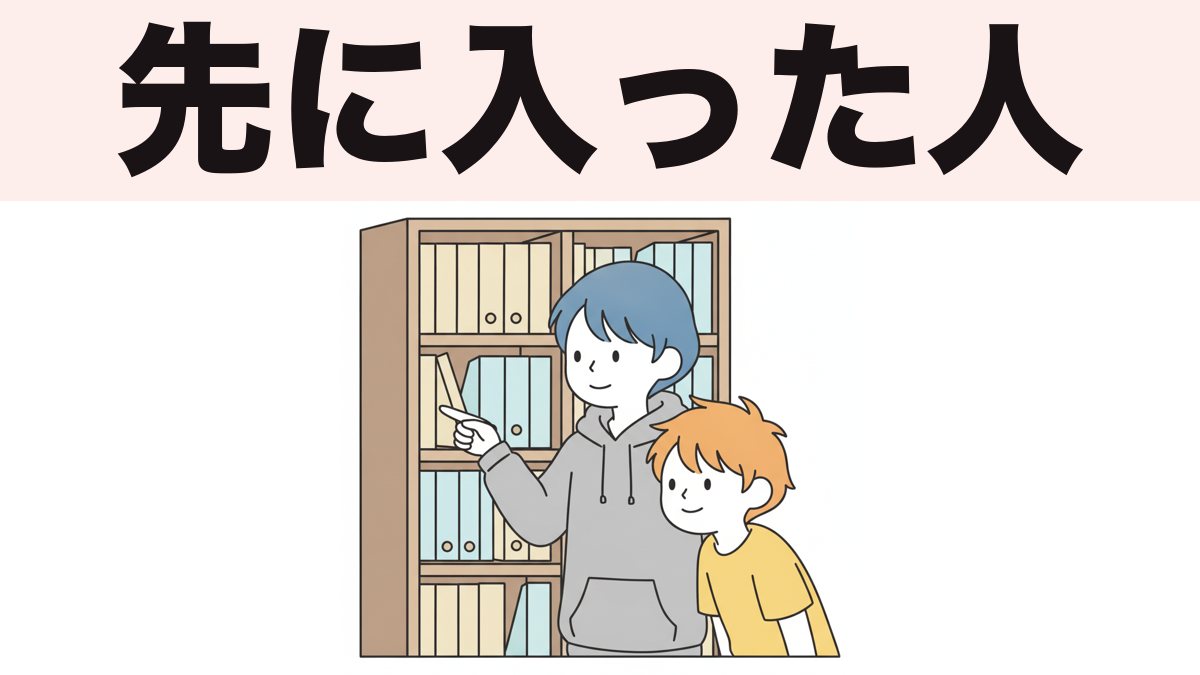
先輩 means someone who came before you in a shared group or field, while 後輩 means someone who came after. I start with one practical difference: 先輩 can address someone directly, but 後輩 normally describes a relationship rather than serving as a title.
「先輩」は自分より先に入った人、「後輩」は後に入った人です。大事なちがいは一つです。「先輩」は本人に向かって言えますが、「後輩」は本人に向かって言いません。
Anime makes 先輩 familiar before its everyday meaning becomes clear. An admired student is one possible senpai, but so is the colleague who explains where the forms are kept. I explain the pair through the shared setting first, then through the language used inside it. Neither word automatically tells me someone's age, job title, personality, or feelings toward another person.
The examples below are constructed examples. I use them to separate describing someone, addressing someone, and choosing a level of politeness. Those are related decisions, but knowing the relationship does not settle every wording choice.
The basics
What the words are made of
先輩 (せんぱい) combines 先, meaning “before” or “ahead,” with 輩, meaning a fellow or member of a group. 後輩 (こうはい) uses 後, meaning “after” or “behind,” with the same second character. I read the pair as a relationship between people, rather than as permanent labels attached to individuals.
At school, in a club, or in a company, the starting point is usually when each person entered that setting. A thirty-year-old who joined a company last year can be 後輩 to a twenty-four-year-old who joined three years ago. The older person may have more experience elsewhere. That does not erase the other person's longer membership in this particular workplace.
田中さんは私の先輩です。 — Tanaka-san is my senior in the group. (polite; describing the relationship) 会社の後輩です。 — This is a junior colleague from my company. (polite; the person is understood from context)
In the first sentence, 私の identifies the relationship to me. In the second, 会社の identifies the setting. I include that information when the listener does not already know which part of my life I mean. English “senior” and “junior” can suggest formal job grades, so those translations need context too.
The words side by side
| Word | Reading | Relationship | Ordinary form of address? |
|---|---|---|---|
| 先輩 | せんぱい | Someone ahead of me in a shared group or field | Yes, alone or after a name, where customary |
| 後輩 | こうはい | Someone who came after me | Usually no; I use the person's name |
| 同期 | どうき | Someone who entered at the same time | Usually no; I use the person's name |
| 先生 | せんせい | A teacher, or another person addressed with this professional title | Yes; it describes a different relationship |
I keep 先生 in this table because a helpful senior student can teach me something without becoming my teacher. Giving an explanation does not automatically change 先輩 into 先生. The title depends on the person's role and the setting, as I explain in the meaning of 先生.
Addressing someone and talking about someone
先輩 can stand alone when I speak directly to the person. It can also follow a surname in groups that use that convention. It is especially recognizable in school and club settings. At work, a surname with さん may be the local norm even when the person is clearly my 先輩.
先輩、ちょっといいですか。 — Senpai, do you have a moment? (polite; getting someone's attention) 山田先輩、おはようございます。 — Good morning, Yamada-senpai. (polite; surname plus title)
I do not normally build a matching title with 後輩. 山田後輩 would sound marked rather than like an ordinary counterpart to 山田先輩. A fictional character or a friend joking around might deliberately use it, but that is a poor default for an introduction.
山田さん、ちょっといいですか。 — Yamada-san, do you have a moment? (polite; usable when addressing a junior colleague too)
The difference is easier to hear if I imagine the listener changing. Speaking about Yamada, I can say 山田さんは私の後輩です, “Yamada-san is my junior.” Speaking to Yamada, I use the name. A relationship noun does not automatically become a suitable way to call across a room.
I also avoid stacking さん after 先輩 in ordinary address. 山田先輩 already contains a title; 山田さん is a separate choice. The broader pattern is covered in さん, くん, ちゃん, and 様. Some groups use くん for juniors, but I do not assume that every junior wants that form. さん gives me a useful starting point while I learn the group's habits.
Choosing polite or plain speech
I start with です and ます when speaking to an unfamiliar senior. A senior may use plain forms with a junior, especially in an established club relationship, but the reverse pattern is not a rule requiring seniors to speak casually. Polite speech can run in both directions.
先輩、これ見ましたか。 — Senpai, have you seen this? (polite; a conversational omission of を) これ見た? — Have you seen this? (plain; suitable when the relationship allows it)
Both sentences ask about the same thing. The verb ending changes how the speaker presents the relationship. I would not switch to the plain version merely because I discovered that someone joined after me. Familiarity, the activity, and workplace expectations still matter.
A senior using casual language with me is also not an automatic invitation for me to copy it. I listen for how people address each other and keep my own speech polite until the situation is clearer. Keigo and casual Japanese develops that decision beyond this pair of words.
Beyond the basics
Describing the gap without describing age
A year expression before 先輩 or 後輩 can describe the distance between entry years or school cohorts. It does not necessarily describe the difference between birthdays.
一年後輩です。 — He is one year below me. (polite; in the relevant school or group) 田中さんは三年先輩です。 — Tanaka-san is three years ahead of me. (polite; describing seniority in the shared setting)
I use these shorter sentences when the reference point is already established. Outside that context, “one year below” leaves the listener wondering whether I mean school, work, or something else. The same person can be my 先輩 in one activity and a newcomer in another. That is why I avoid translating the word simply as “an older person.”
Expectations can run both ways
The traditional picture includes support from the 先輩 as well as respect from the 後輩. A senior might explain a task, answer questions, or help a newcomer understand an unfamiliar routine. I find that more useful for understanding everyday dialogue than imagining only commands and obedience.
先輩に仕事を教えてもらいました。 — I had my senior colleague teach me the work. (polite; receiving help) 先輩がおごってくれました。 — My senpai paid for me. (polite; receiving a treat)
In the first example, 先輩に identifies the person I received help from. In the second, 先輩が identifies the person who performed the action. 教える means “to teach,” and おごる means “to treat someone” or pay for them. The forms もらう and くれる frame the actions as help or a benefit received, as explained in giving and receiving in Japanese.
Paying for a junior's meal belongs to the familiar traditional picture, but I do not treat it as a promise contained in the word 先輩. A meal invitation still needs its own context. Similarly, expectations that juniors arrive early or handle small tasks describe some group customs, not a universal definition of 後輩.
The useful underlying idea is continuity: someone learns how the group works, then may help the people who join later. I can therefore be a 後輩 in one conversation and a 先輩 in the next. Neither role means that every request is reasonable or that one person has formal authority over the other.
同期: people who entered together
同期 (どうき) fills the space between “before me” and “after me.” It refers to people who entered at the same time, such as the same company intake. It does not mean everyone who happens to work beside me, and it does not require the same age.
彼女は同期です。 — She joined at the same time as me. (polite; identifying a shared intake)
I distinguish shared entry from personal closeness. 同期 can become lasting friends, and their speech may be casual, but the word itself does not say how close they are. A person can be 同期 and still use polite language in a meeting. I would use their name to address them, just as I would with a 後輩.
Where the relationship applies
The pattern extends beyond school and companies to martial arts dojos, university clubs, theatre companies, and hobby circles. An established online community can use the words too if its members recognize that kind of relationship. I check whether the group actually uses the convention instead of applying it to every person who registered earlier.
A stranger does not become my 先輩 simply by being older. A customer is not automatically my 先輩 either. My teacher's ordinary classroom title is 先生. These distinctions keep a learner from trying to use 先輩 as a general respectful word for anyone they meet.
There is also the broader expression 人生の先輩, a senior in life. It acknowledges someone's greater life experience without requiring a shared institution.
人生の先輩ですね。 — You have more life experience than I do. (polite; acknowledging experience)
I treat this as a broader expression rather than a reason to abandon the shared-setting explanation. Depending on the conversation, it can sound warm, respectful, or lightly playful. It is not my default form of address for an unfamiliar older person.
The anime version and everyday use
Anime often puts emotional weight on 先輩: admiration, nervousness, rivalry, or a crush. Those feelings come from the story and the characters. They are not built into the word. Hearing someone say 先輩 does not establish that they are attracted to the listener.
I keep the school setting separate from the workplace setting when interpreting a scene. A club member calling 山田先輩 and an employee asking a senior colleague about paperwork can be describing the same basic direction of seniority with very different emotional stakes.
For my own Japanese, I can borrow the useful distinction between a relationship noun and a title without copying a character's dramatic delivery. Why anime Japanese can sound rude explains more of the gap between a line that fits a character and one that fits an ordinary conversation.
Common mistakes
- Calling someone 後輩 as an ordinary title. I use their name when addressing them and 後輩 when describing the relationship. Deliberate jokes do not make it a neutral title.
- Deciding from age alone. I look at the shared group and entry order. An older newcomer can be a younger member's 後輩.
- Adding さん after 先輩. I choose 山田先輩 or 山田さん according to the setting. I do not combine the titles as 山田先輩さん.
- Calling a teacher 先輩 just because they teach me. I use 先生 for the teaching role. A senior club member explaining something remains a different case.
- Switching to plain speech as soon as someone is junior. I consider familiarity and the setting. Polite language is possible with juniors and 同期 too.
- Treating support or payment as automatic. I recognize the traditional expectations without assuming that every senior will provide mentoring or pay every bill.
- Reading romance into the word. I look for evidence in the conversation. 先輩 alone describes a relationship, not a confession.
Practice
I suggest choosing an answer before opening the explanation. These questions use the distinctions above: shared entry, direct address, speech level, and receiving help.
1. Address Yamada, who joined your club before you, using the club's customary senior title.
Show answer
山田先輩 — 先輩 can follow a surname as a title in a club that uses this convention.
2. Address Yamada, who joined after you, using a neutral polite form.
Show answer
山田さん — 後輩 describes the relationship but is not the ordinary title used to address a junior.
3. Correct the title in 山田先輩さん、おはようございます。
Show answer
山田先輩、おはようございます。 — 先輩 already serves as the title, so I do not add さん after it.
4. A thirty-year-old joined last year. You are twenty-four and joined three years ago. In terms of company entry, what are they to you?
Show answer
後輩 — they entered this company later, even though they are older and may have experience elsewhere.
5. Say “Tanaka-san is my senior in the group.”
Show answer
田中さんは私の先輩です。 — 私の connects the relationship to me, and 先輩 is a noun describing Tanaka here.
6. Say “My senpai paid for me,” presenting it as a kindness received.
Show answer
先輩がおごってくれました。 — おごる means to treat someone, and くれました presents the action as a benefit received by me.
7. Someone entered the company at the same time as you. Which relationship word fits?
Show answer
同期 — the word identifies a shared entry time, without requiring the same age or a close friendship.
8. You are addressing your Japanese teacher in class. Which title from the table fits that role?
Show answer
先生 — the relevant relationship is teacher and learner, rather than earlier and later membership of a club.
9. Say “He is one year below me,” with the school context already clear.
Show answer
一年後輩です。 — 一年 measures the gap in school cohorts here, rather than necessarily the difference in age.
10. A senior colleague uses plain speech with you. Does that alone mean you should use これ見た? with them?
Show answer
No; これ見ましたか is a reasonable polite starting point. — speech levels can differ between speakers, so the senior's casual wording alone does not establish that the same wording suits your side of the conversation.
FAQ
Can I call a Japanese friend 先輩 as a joke? Yes, when the relationship and tone make the joke clear. I would not assume that a stranger understands it as a friendly compliment.
Is 先輩 a formal job rank? The word itself is a social relationship term, not a job title. I keep seniority in the group separate from managerial authority, even when the same person has both.
What if I join a company mid-career? People who entered earlier may be my 先輩 there even if I am older. I still check local address and speech conventions, because entry order alone does not determine every interaction.
Do women and men use these words? Yes. 先輩, 後輩, and 同期 do not specify gender. I choose surrounding forms of address according to the person and setting.
Does the fandom meaning imply romance in Japanese? No. An admired student is one possible senpai, but romantic interest requires additional context. I also use the word for ordinary school and workplace relationships.
What is the senpai of my senpai called? They can still be my 先輩 if we share the relevant setting. I can add a year gap, such as 三年先輩, when that distinction matters.
Vocabulary from this article
Tap the block to select all of it, then copy. In Anki: File → Import, note type Basic, separator Tab.
先輩	せんぱい — senior in a shared group or field
後輩	こうはい — junior in a shared group or field
同期	どうき — someone who entered at the same time
先生	せんせい — teacher; professional title in some other roles
会社	かいしゃ — company
教える	おしえる — to teach
おごる	おごる — to treat someone, to pay for them
人生	じんせい — life
仕事	しごと — work
彼女	かのじょ — she; girlfriend
私	わたし — I, me
I'm Yuuki, a Japanese teacher based in Tokyo. I've taught on italki as a Top 1% teacher and watched over 1,500 anime. I explain 先輩 through ordinary situations: asking a question, describing a colleague, and choosing a greeting. I want the relationship behind the word to be as familiar as its sound.
Sources
The author's own lessons and standard reference grammars, as cited in the original article. The example sentences and practice prompts are constructed for this explanation.
アニメのおかげで「senpai」は世界中で知られています。でも、その関係の形はあまり知られていません。役職でも、年のちがいでもありません。同じ組織に入った順番です。そして、上にも下にも役わりがあります。
基本
言葉の形
- 先輩(せんぱい) — 「先」+「輩(なかま)」。先に来た人。
- 後輩(こうはい) — 「後」+「輩」。後から来た人。
分かれ目は「入った年」です。年れいではありません。去年入った30歳の人は、3年前に入った24歳の人の「後輩」です。
田中さんは私の先輩です。 — Tanaka-san is my senpai. (polite; stating the relationship) 一年後輩です。 — He's one year below me. (polite; the year count is the usual way to say it)
呼びかけに使えるのは一つだけ
「先輩」は名前のように使えます。
先輩、ちょっといいですか。 — Senpai, do you have a second? (polite-casual; extremely common) 山田先輩! — Yamada-senpai! (calling to someone)
「後輩」はこの使い方をしません。名前(名字+くん/さん)で呼びます。
どちらにどの言葉づかい?
先輩にはていねいな形、後輩にはふつうの形が基本です。時間がたつと、だんだんやわらかくなります。
先輩、これ見ましたか。 — Senpai, have you seen this? (polite; upward) これ見た? — Have you seen this? (casual; downward or between equals)
もう少し先へ
役わりは両方にあります
ここがいちばん大事です。「先輩」は、ただ大事にされる人ではありません。後輩を教える、質問に答える、こまっていたら気づく、そして食事代をはらう、というのが古くからの形です。
先輩がおごってくれました。 — My senpai paid for me. (polite; くれる marks it as done for my benefit)
「くれる」は、自分のためにしてくれた、という意味を出します。
後輩の側は、早く来る、小さい仕事をする、そして次の年には自分が先輩になる、ということです。
「同期」
「同期(どうき)」は、同じ年に入った人です。横の関係なので、いちばん気楽です。会社に入った年の同期と、何十年も友だちでいる人が多いです。
彼女は同期です。 — She joined at the same time as me. (polite; a genuinely important category)
学校と会社だけですか
ちがいます。道場、大学のサークル、げきだん、しゅみの会、ネットのコミュニティ。入る順番があるところなら、どこでも使います。
ただし、道で会った年上の人や、お客さんには使いません。先生は「先生」で、べつの言葉です。
アニメの「先輩」と、本当の「先輩」
アニメでは、あこがれの人として出ることが多いです。その形は、学校のころの気もちとしてはあります。でも、火曜日の朝9時の会社では、「先輩」は「書類の場所を知っている人」です。
アニメから来たイメージを直すなら、文法ではなく温度です。
組織がなくても使う形
「人生の先輩」という言い方があります。同じ会社でなくても、先に生きている人、という意味です。
人生の先輩ですね。 — You're ahead of me in life. (polite; respectful, a little playful)
よくあるまちがい
- 本人に「後輩」と言う。 名前で呼びます。
- 年のちがいだと思う。 入った年のちがいです。
- 「先輩さん」と言う。 「先輩」だけで十分です。名字+先輩の形もあります。
- 先生に使う。 先生は「先生」です。
- 上下だけの関係だと思う。 先輩には教える役わりがあります。
- アニメの温度のまま会社で使う。 会社の「先輩」は、仕事を教えてくれる人です。
3つの言葉
| 言葉 | 読み | 意味 | 呼びかけに使う? |
|---|---|---|---|
| 先輩 | せんぱい | 先に入った人 | 使う(名字+先輩も) |
| 後輩 | こうはい | 後から入った人 | 使わない(名前で呼ぶ) |
| 同期 | どうき | 同じ年に入った人 | 使わない(名前で呼ぶ) |
| 先生 | せんせい | 先生・医者・専門家 | 使う(べつの関係) |
FAQ
友だちにじょうだんで「先輩」と言えますか。 言えます。自分より上手な友だちに言うと、小さなほめ言葉になります。
この関係は決まりで決まっていますか。 決まりはありません。入った年をみんなが知っているだけです。
とちゅうで会社に入ったら? 先に入った人の「後輩」です。年れいは関係ありません。めずらしいことではありません。
男女で使い方はちがいますか。 ちがいません。
英語圏のファンの使い方は合っていますか。 だいたい合っています。ただし、学校のころの一部分だけです。会社の意味はほとんど伝わっていません。
先輩の先輩は何と呼びますか。 やはり「先輩」です。年の数で言います。「三年先輩」。
練習
答えを見る前に、自分で作ってください。1と2は組です。
1. 自分より先に入った山田さんを呼んでください。
答えを見る
山田先輩 — 「先輩」は名字につき、「さん」の代わりになります。2と組です。
2. 自分より後に入った山田さんを呼んでください。
答えを見る
山田さん(山田くん) — 「後輩」という呼びかけはありません。1と組です。
3. 「先輩さん、おはようございます」はどこがちがいますか。
答えを見る
先輩、おはようございます — 「先輩」だけでていねいなので、「さん」はつけません。
4. 30歳の人が去年入りました。自分は24歳で3年前に入りました。相手は何ですか。
答えを見る
後輩 — 分かれ目は入った年です。年れいではありません。
5. 「田中さんは私の先輩です」と言ってください。
答えを見る
田中さんは私の先輩です — ここでは関係の説明なので、ふつうの名詞として使います。
6. 「先輩がおごってくれました」と言ってください。
答えを見る
先輩がおごってくれました — 「くれる」で、自分のためにしてくれた、という意味になります。
7. 同じ年に入った人は何と言いますか。
答えを見る
同期 — 横の関係で、長く続くことが多いです。
8. 学校の先生は「先輩」ではありません。何ですか。
答えを見る
先生 — べつの関係で、医者や専門家にも使います。
9. 「一年後輩です」と言ってください。
答えを見る
一年後輩です — 年の数で言います。上なら「三年先輩」。
10. 先輩が後輩にすることを一つ言ってください。
答えを見る
教えること(そして、ごちそうすること) — 関係は両方向です。もらうだけの先輩は、そう言われます。
この記事に出た単語
ブロックをタップして全部を選んでから、コピーしてください。Anki では ファイル → 読み込み、ノートタイプは 基本、区切りは タブ です。左が表、右が裏になります。
先輩	せんぱい — someone who joined before you
後輩	こうはい — someone who joined after you
同期	どうき — someone who joined at the same time
先生	せんせい — teacher, doctor, expert
部活	ぶかつ — school club activity
会社	かいしゃ — company
入る	はいる — to enter, to join
教える	おしえる — to teach
おごる	おごる — to treat someone, to pay
人生	じんせい — life
年	とし — year; age
仕事	しごと — work
関係	かんけい — relationship
呼ぶ	よぶ — to call
彼女	かのじょ — she; girlfriend
私	わたし — I, me
私はユウキです。東京で日本語を教えています。 italki の Top 1% の先生で、アニメは1,500本以上見ました。「先輩」は、生徒が来る前から知っている言葉です。でも、思っている絵はたいていちがいます。直すのは文法ではなく、「先輩」はふつう「コピー用紙の場所を知っている人」だ、というところです。
More drills like the ones above, plus a timed JLPT-style mock test: Practice · N4上のような練習問題と、時間つきのJLPT形式のもぎ試験: 練習ページ · N4
Want to try this in a real conversation?
本当の会話で、ためしてみませんか?
30-minute trial lesson, $13. Times shown in your own timezone.
30分の体験レッスン、$13。時間はあなたのタイムゾーンで表示されます。
Book a trial lesson · $13